17 Best Christmas Markets in Germany for 2026
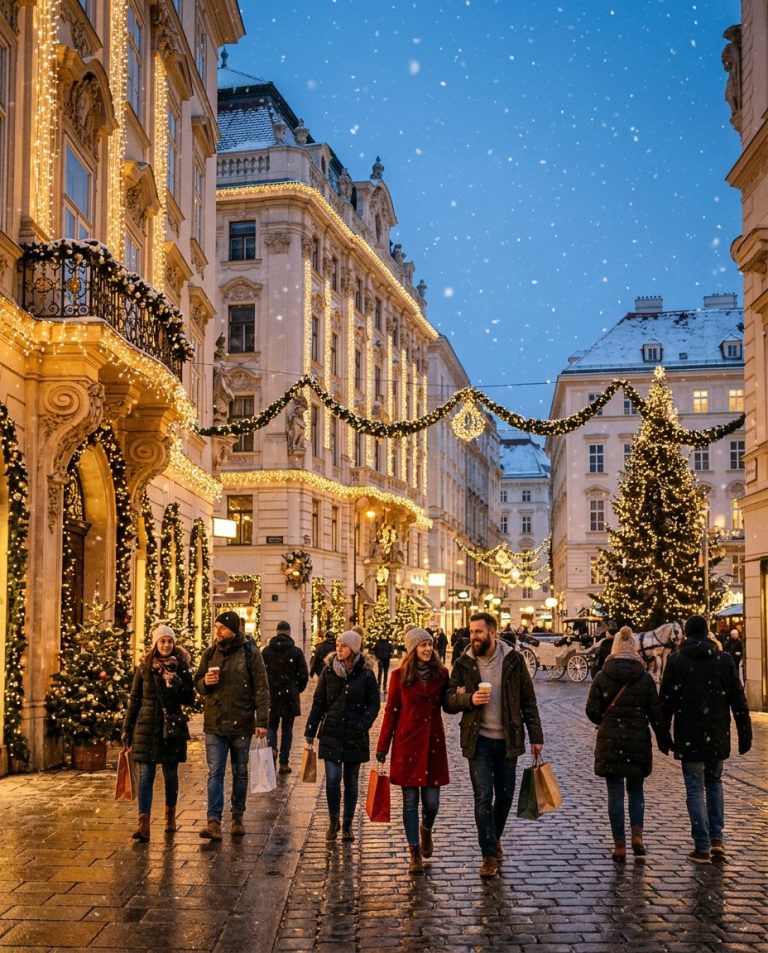
Germany at Christmas is one of those travel experiences that almost feels too perfectly staged. Historic squares glow beneath thousands of lights, timber-framed buildings become the backdrop for wooden market stalls, and the smell of gingerbread, roasted almonds and warm spiced drinks seems to follow you down every cobbled street.
And then there is the food. Let’s just say Germany has never been shy about giving us reasons to make “just one more lap” around a Christmas market.
Germany has thousands of Christmas markets, ranging from enormous city events to tiny village markets surrounded by medieval architecture. What makes them especially fun to explore is how different they can feel from one region to another. Nuremberg is famous for its traditional gingerbread and red-and-white stalls, Dresden has its historic Striezelmarkt and Christstollen, Aachen leans into its Printen tradition, while places such as Esslingen take visitors back into a medieval setting. (Germany Travel)
For 2026, many of Germany’s major Christmas markets are scheduled to open from late November through just before Christmas, while a few continue through the holidays and into the New Year. Here are 17 markets worth putting on your winter travel list.
What Makes German Christmas Markets So Special?
Christmas markets, or Weihnachtsmärkte, are deeply associated with the German Advent season. While each market has its own personality, many combine traditional crafts, festive decorations, regional food, music and historic architecture.
You will encounter familiar Christmas-market favorites such as Glühwein, Lebkuchen, roasted almonds, sausages and Christmas pastries, but regional specialties are part of the fun. Aachen is known for Printen, Frankfurt has Bethmännchen and hot apple wine, and Dresden is closely associated with its famous Christstollen. (Germany Travel)
Another reason these markets are so appealing is the setting. Rather than being confined to a modern exhibition ground, many take over historic squares and old-town streets. That means you can combine an evening of Christmas-market wandering with museums, cathedrals, castles, shopping streets and cozy cafés.
Here are 17 especially memorable options for 2026.
1. Nuremberg Christkindlesmarkt
Nuremberg, Bavaria
2026 dates: November 27 to December 24
The Nuremberg Christkindlesmarkt is one of Germany’s most famous Christmas markets and an obvious choice for travelers who want a traditional experience.
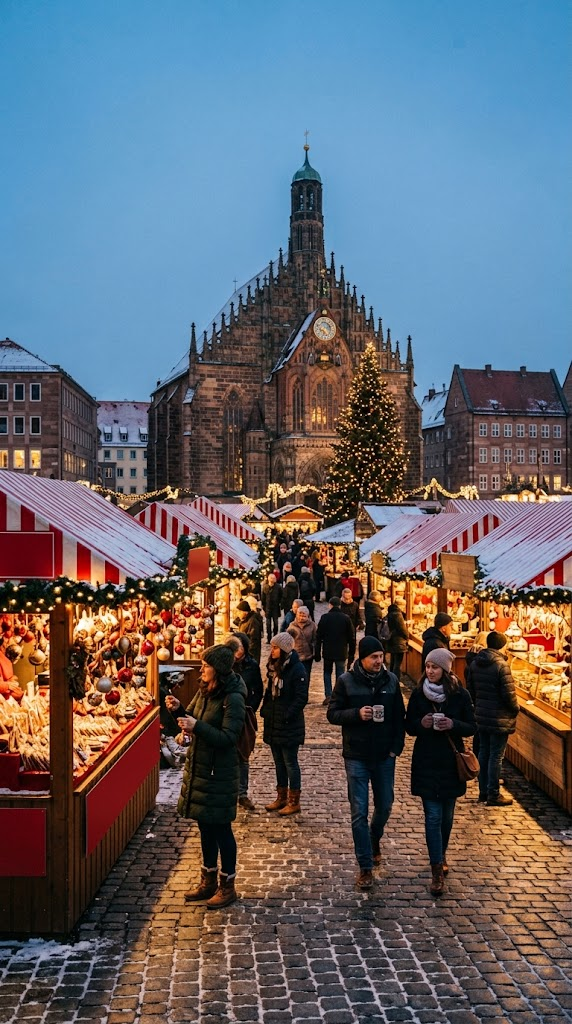
It takes place around the Hauptmarkt in Nuremberg’s historic center, with approximately 180 wooden stalls traditionally decorated with red-and-white fabric roofs. The market dates back centuries, and its opening ceremony features the Nuremberg Christkind delivering a traditional prologue from the balcony of the Church of Our Lady. (Nuremberg Tourism)
Nuremberg is also the place to sample Nürnberger Lebkuchen, along with grilled sausages, mulled wine and classic Christmas decorations. The market includes a children’s Christmas area and an international Sister Cities Market, adding a little variety to the traditional atmosphere. (Nuremberg Tourism)
Don’t miss: Lebkuchen, Nürnberger Rostbratwurst and the opening ceremony.
2. Dresden Striezelmarkt
Dresden, Saxony
2026 dates: November 25 to December 24
Dresden’s Striezelmarkt has a particularly impressive historical claim: the city describes it as Germany’s oldest Christmas market.
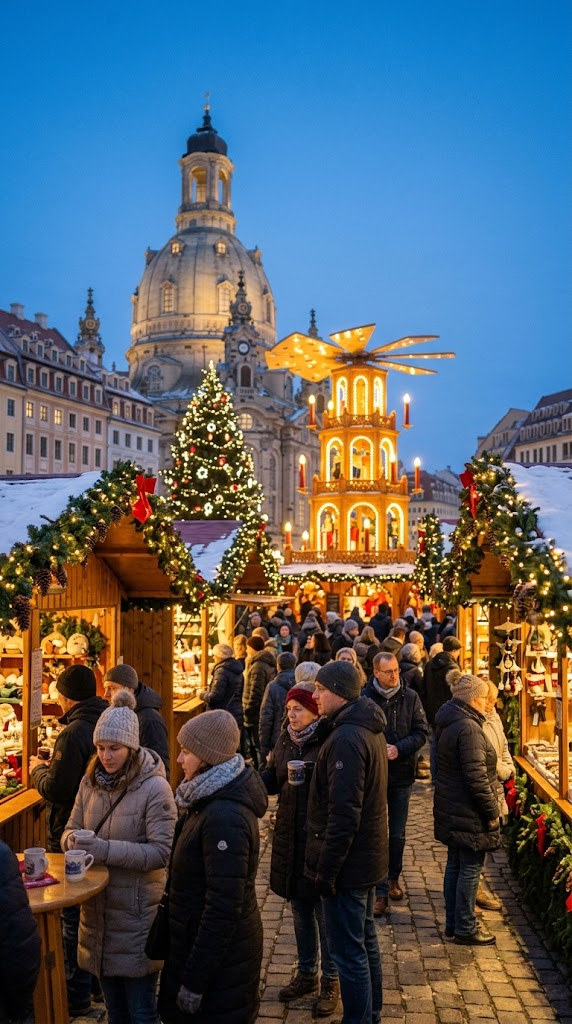
The 2026 edition takes place on Altmarkt and brings together more than 200 traders, traditional Saxon crafts, Erzgebirge wooden artwork and plenty of Christmas food. The market also highlights the connection between Dresden and Christstollen, the rich fruit bread that has become one of the city’s best-known culinary symbols. (
There are craft demonstrations, cultural performances and themed areas, making this more than somewhere to grab a mug of Glühwein and leave. The market is particularly interesting for travelers who enjoy regional traditions and handmade decorations.
Don’t miss: A slice of authentic Dresdner Christstollen and Erzgebirge Christmas craftsmanship.
3. Cologne Cathedral Christmas Market
Cologne, North Rhine-Westphalia
2026 dates: November 16 to December 23
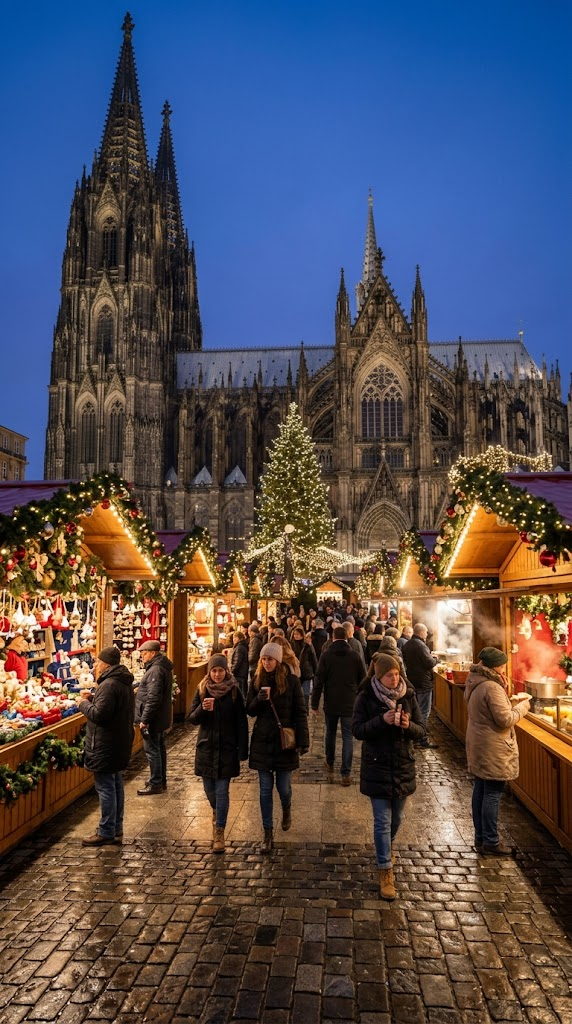
Imagine wandering through a Christmas market with the towering Gothic architecture of Cologne Cathedral rising behind the stalls. That’s the visual appeal of Cologne’s famous market at Roncalliplatz.
Cologne actually has several Christmas markets, but the one beside the cathedral is its best-known and attracts huge crowds. Other markets around the city include themed experiences at places such as the Altstadt, Rudolfplatz and the Rheinauhafen. (Stadtportal koeln.de)
The cathedral market combines a classic festive setting with a large collection of stalls selling crafts, decorations, food and drinks. It is also a good reason to explore Cologne beyond the market itself, especially the Old Town and Rhine riverfront.
Don’t miss: The cathedral backdrop after dark, when the lights really come into their own.
4. Rothenburg ob der Tauber Reiterlesmarkt
Rothenburg ob der Tauber, Bavaria
2026 dates: November 20 to December 23
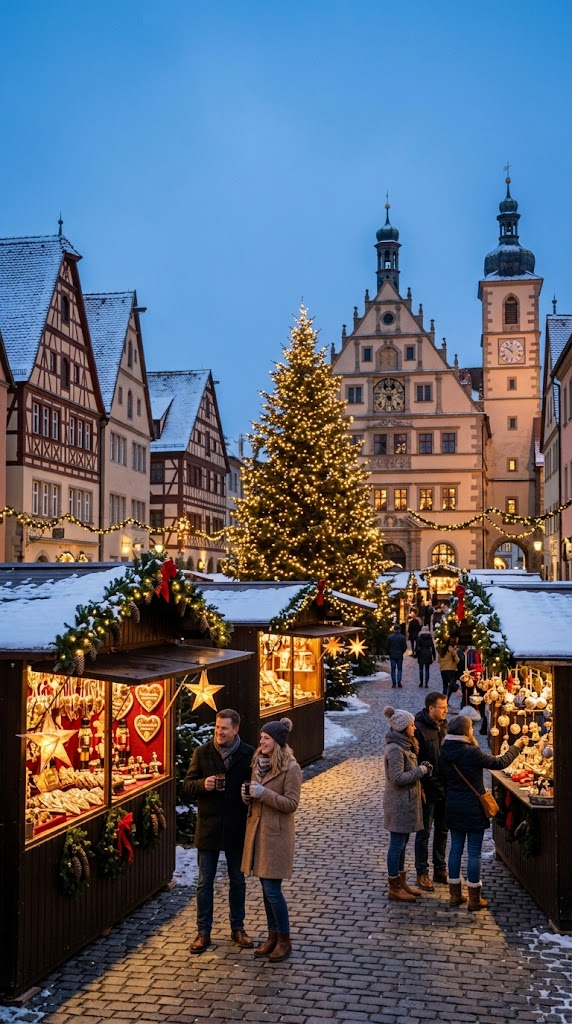
For travelers who want their Christmas market to look like it belongs inside a storybook, Rothenburg ob der Tauber is difficult to resist.
The medieval walled town is already famous for its preserved Old Town and half-timbered architecture. During Advent, the Reiterlesmarkt takes over the areas around the Market Square, Green Market, Church Square and town hall courtyard. The entire Old Town is decorated with festive lights. (Rothenburg ob der Tauber)
The market has about 61 stalls, making it more intimate than some of Germany’s huge city markets. The traditional opening includes the arrival of the Reiterle on horseback before the Christmas tree is illuminated.
Don’t miss: Walking through Rothenburg’s illuminated Old Town after the market stalls begin to glow.
5. Munich Christkindlmarkt
Munich, Bavaria
2026 dates: November 20 to December 24
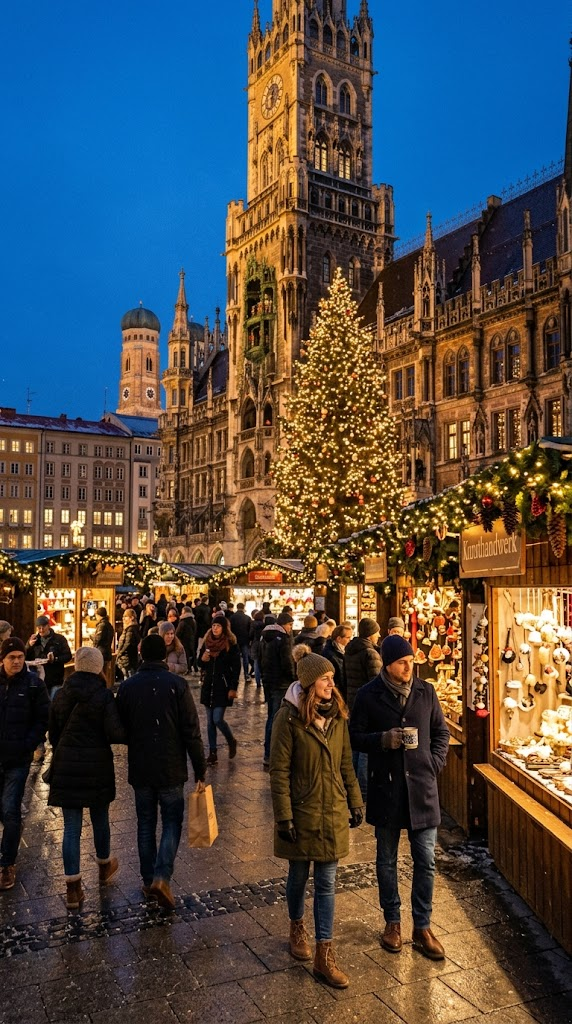
Munich’s main Christkindlmarkt is centered around Marienplatz and extends toward Rindermarkt.
The municipal market dates back to the city’s historic Christmas-market traditions and will feature more than 130 stalls in 2026. Visitors can find traditional foods, Christmas decorations, crafts and seasonal gifts, while events include Advent music from the town hall balcony and a Krampus run. (München.de)
Munich also has other seasonal markets, including a nativity market near St. Peter’s. That makes the city particularly useful for a longer Christmas trip because you aren’t limited to one market.
Don’t miss: Marienplatz at night, followed by a stroll through Munich’s illuminated Old Town.
6. Frankfurt Christmas Market
Frankfurt am Main, Hesse
2026 dates: November 23 to December 22
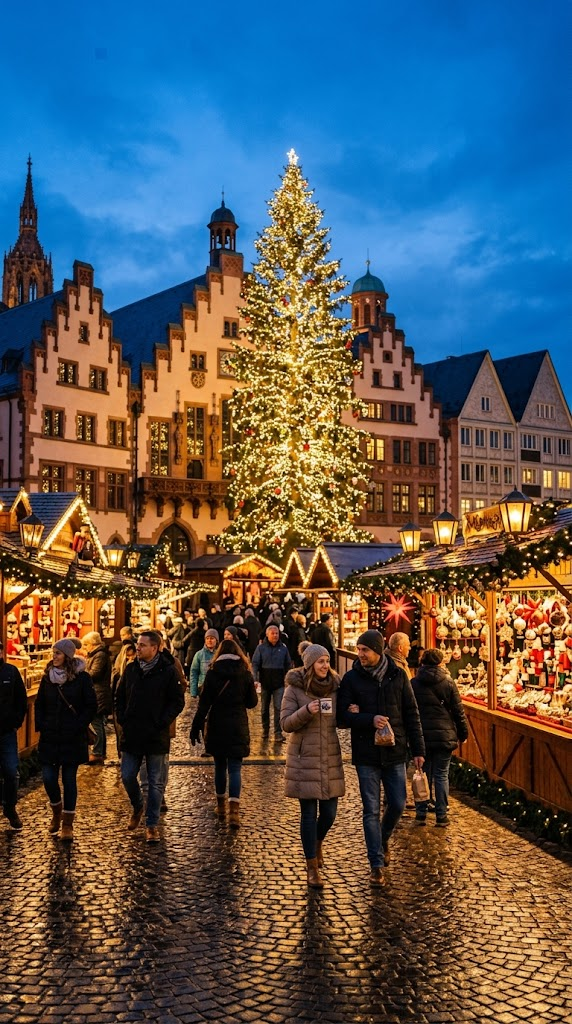
Frankfurt brings a big-city feel to the traditional German Christmas market.
The main market stretches across several central locations, including Römerberg, Paulsplatz, Mainkai, Hauptwache, Roßmarkt and Friedrich-Stoltze-Platz. More than 230 decorated stalls are spread across the city center, giving visitors plenty of ground to cover. (Visit Frankfurt)
Römerberg is the centerpiece, with its historic buildings and enormous Christmas tree. Food is another major attraction here. Look for Bethmännchen, Frankfurt’s famous marzipan pastry, as well as hot apple wine.
Frankfurt is also convenient for travelers combining several German cities because its major transport connections make it an easy starting point.
Don’t miss: Bethmännchen and Frankfurt’s traditional hot apple wine.
7. Aachen Christmas Market
Aachen, North Rhine-Westphalia
2026 dates: November 20 to December 23
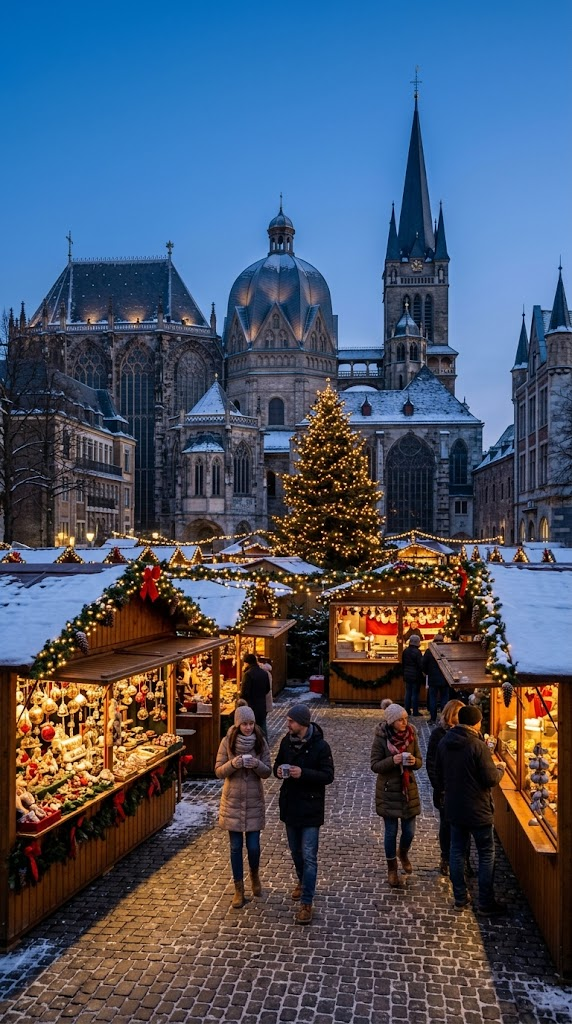
Aachen’s Christmas market occupies the area around the Cathedral and Town Hall, creating a beautiful historic setting.
The city’s regional specialty is Aachener Printen, a type of spiced gingerbread that features prominently during the Christmas season. Germany Travel specifically highlights the market’s Printen tradition, along with handicrafts, regional products and seasonal food. (aachen tourist service)
The market is open daily during the main period, with special hours on certain dates. Aachen also makes an interesting stop for travelers exploring western Germany because Belgium and the Netherlands are close by.
Don’t miss: A warm Printen treat while wandering between the cathedral and town hall.
8. Stuttgart Christmas Market
Stuttgart, Baden-Württemberg
2026 dates: November 25 to December 23
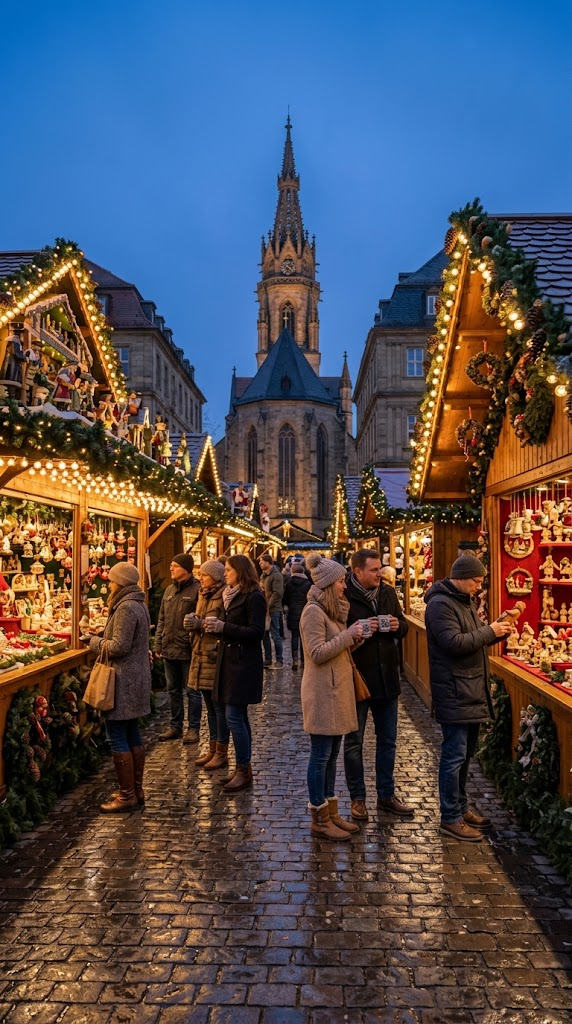
Stuttgart’s Christmas market combines a large-scale city experience with an especially elaborate tradition of decorating the market stalls.
The market dates back at least to a documented reference in 1692 and takes place around the city’s central historic landmarks. Approximately 300 stalls are expected in the 2026 market, with food, drinks, ceramics, Christmas decorations, gifts and other goods. (Stuttgarter Weihnachtsmarkt)
One of the pleasures of Stuttgart is simply looking upward. Many stall roofs are decorated with elaborate Christmas scenes, miniature figures and lights, so even the individual booths become part of the attraction.
Don’t miss: The decorated rooftops and the historic architecture around Schlossplatz and Schillerplatz.
9. Hamburg Rathausmarkt Christmas Market
Hamburg
2026 dates: November 23 to December 23
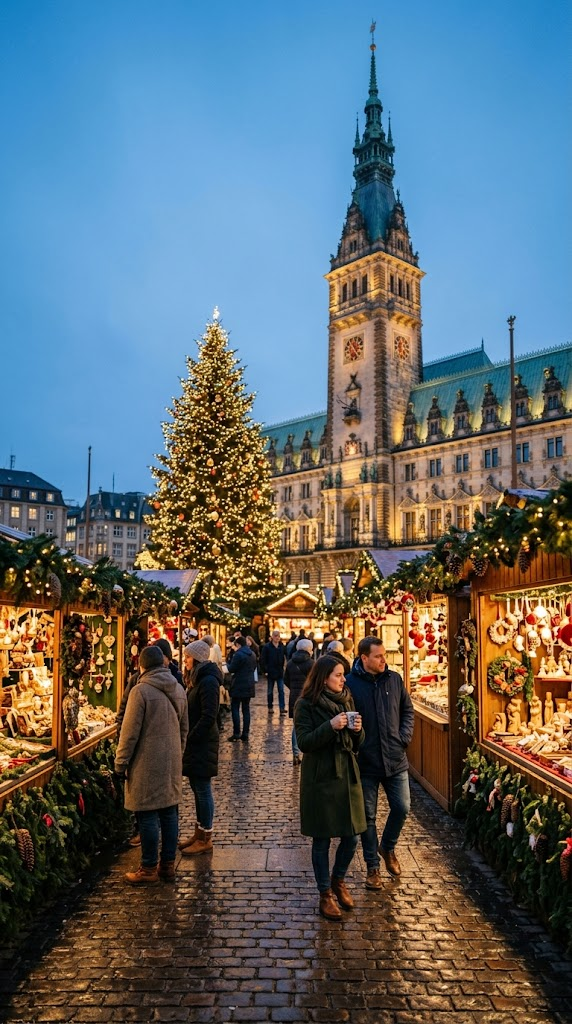
Christmas in Hamburg has a different flavor from markets in southern Germany. Here, the atmosphere comes with a distinctly northern and maritime city backdrop.
The Historic Christmas Market at Rathausmarkt is held directly in front of Hamburg’s impressive Town Hall. It emphasizes sustainability, regional and fairly traded products, traditional decorations and seasonal food. (Hamburg)
One of the market’s most playful traditions is the flying Santa Claus, who makes appearances above the market in his sleigh.
Hamburg is also home to several other Christmas markets, so you can turn a single visit into a full festive-market crawl around the city.
Don’t miss: Rathausmarkt after sunset, then continue toward the Binnenalster and Hamburg’s central shopping district.
10. Leipzig Christmas Market
Leipzig, Saxony
2026 dates: November 24 to December 23
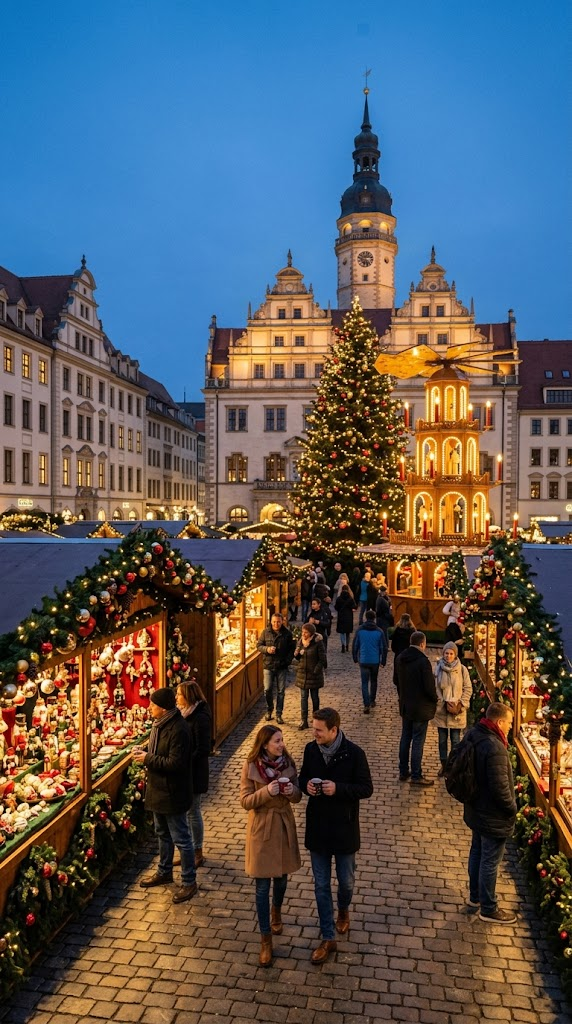
Leipzig’s Christmas market spreads through the historic city center, with around 300 festive stalls across several locations.
The Market Square provides the central traditional setting, while other sections appear around Augustusplatz, Naschmarkt and Nikolaikirchhof. The market includes international food and cultural offerings alongside traditional German Christmas fare. (Leipzig Travel)
One charming detail is the regular sound of brass instruments from the balcony of the Old Town Hall. It gives the central square a distinctly old-fashioned Advent feeling.
Leipzig is also a great city for travelers who want Christmas markets combined with museums, music, architecture and cafés rather than spending the entire trip outdoors.
Don’t miss: The Market Square and the musical program around the Old Town Hall.
11. Düsseldorf Christmas Market
Düsseldorf, North Rhine-Westphalia
2026 dates: November 19 to December 30
Düsseldorf is a useful choice for travelers who don’t want their Christmas experience to end on December 23.
The city’s Christmas market season runs through December 30 in 2026, with festive areas spread across central Düsseldorf. The city center is decorated with hundreds of fir trees and themed market areas, while attractions include the Ferris wheel at Burgplatz and an ice rink near the Königsallee. (Visit Düsseldorf)
The combination of Christmas markets, shopping streets and Düsseldorf’s Old Town gives visitors plenty to do even outside the market itself.
And that late closing date? Very handy for travelers planning a post-Christmas European getaway.
Don’t miss: Burgplatz, the Old Town and a festive evening walk along the Königsallee.
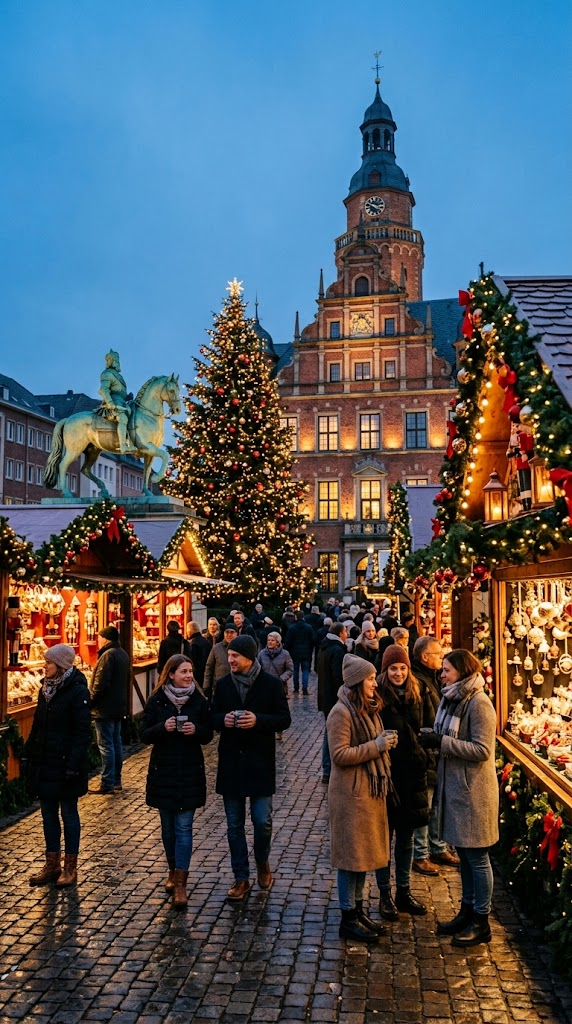
12. Erfurt Christmas Market
Erfurt, Thuringia
2026 dates: November 24 to December 22
Erfurt has one of Germany’s most visually impressive Christmas-market settings, thanks to the enormous Domplatz, framed by Erfurt Cathedral and St. Severus Church.
The 2026 market is scheduled for November 24 through December 22. It features around 200 stalls, a large Christmas tree, a substantial Christmas pyramid, handcrafted nativity figures and traditional Thuringian food and crafts. (Festivals in Deutschland)
The medieval character of Erfurt’s Old Town adds another layer to the experience. After visiting the market, make time for the famous Krämerbrücke and surrounding historic streets.
Don’t miss: Seeing the Christmas tree and cathedral ensemble from Domplatz after dark.
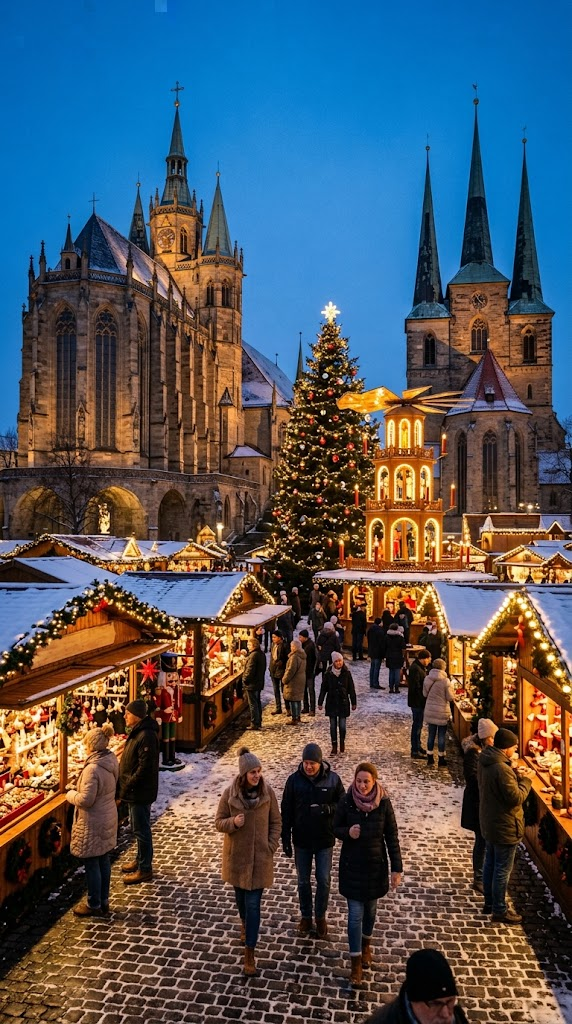
13. Berlin Christmas Market at Gendarmenmarkt
Berlin
2026 dates: November 23 to December 31
Berlin takes the Christmas market concept and makes it very Berlin: bigger, more varied and spread across the city.
Among its many markets, the Christmas market at Gendarmenmarkt is one of the most traditional choices. In 2026, it is scheduled to run through December 31, making it another excellent option for travelers staying in Berlin after Christmas. (Berlin.de)
The historic setting is spectacular, while the market is known for craftspeople demonstrating traditional skills such as wood carving, tailoring and candle making.
Berlin has dozens of other Christmas and winter markets, ranging from historic markets to modern themed events, so one trip can easily turn into several different festive experiences. (visitBerlin)
Don’t miss: Gendarmenmarkt in the evening, when the surrounding architecture is illuminated.
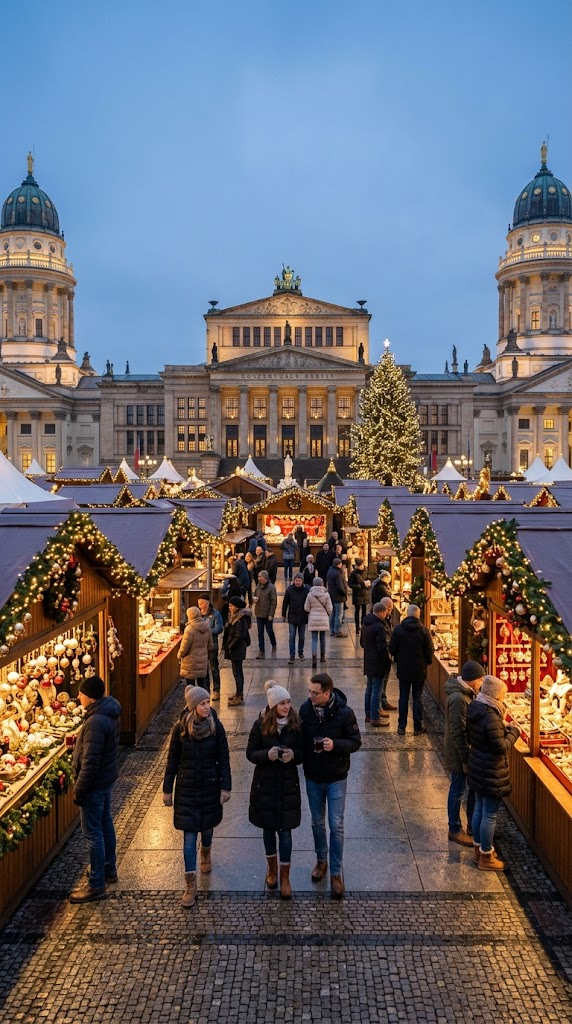
14. Trier Christmas Market
Trier, Rhineland-Palatinate
2026 dates: November 20 to December 22
Trier offers something particularly special for history lovers: a Christmas market set against the medieval Main Market and Trier Cathedral.
The 2026 Trier Christmas Market is scheduled for November 20 to December 22. Opening hours extend later on Fridays and Saturdays, making those evenings particularly lively. (Trier Christmas Market)
Trier itself is famous for its Roman heritage, so a Christmas trip here can combine seasonal traditions with ancient monuments and historic architecture.
The result is a wonderfully layered winter city break: Roman ruins by day, Christmas lights by evening.
Don’t miss: The market with Trier Cathedral behind it, followed by a walk through the historic center.
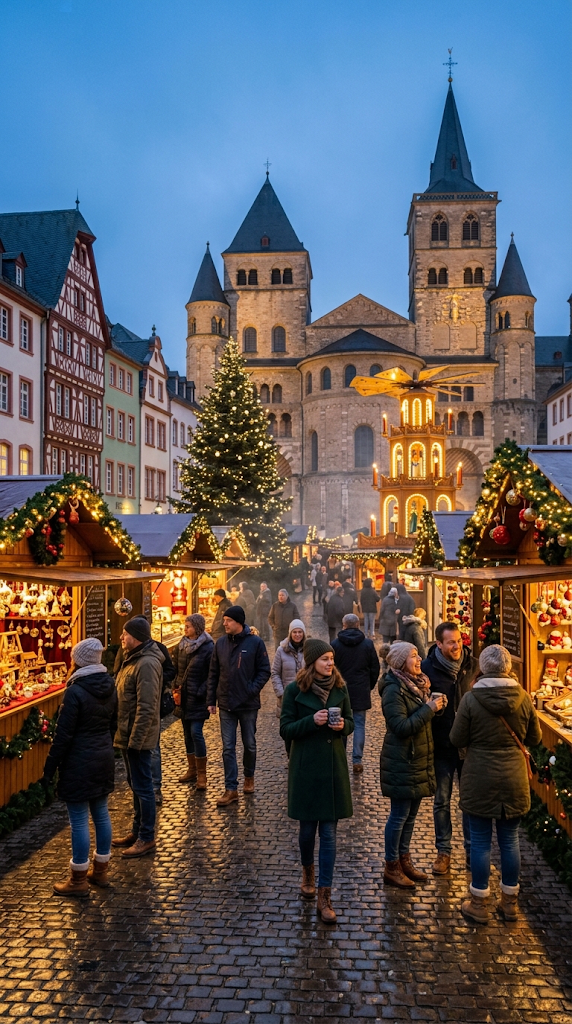
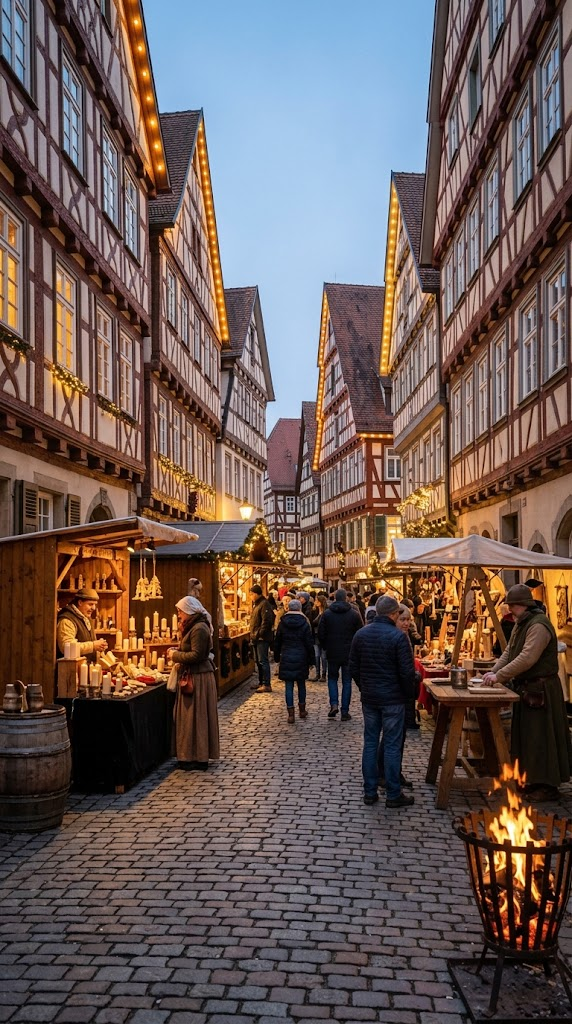
15. Esslingen Medieval Market and Christmas Market
Esslingen am Neckar, Baden-Württemberg
2026 dates: November 24 to December 22
Want something a little different? Head to Esslingen.
The city combines a traditional Christmas market with a medieval market, transforming its historic center into a setting filled with more than 180 stalls and an extensive cultural program. (Esslingen)
You’ll encounter craftspeople, entertainers, traditional foods and medieval-inspired activities alongside the familiar Christmas-market atmosphere.
For travelers who have already visited some of Germany’s classic markets, Esslingen offers a welcome change of pace. It feels less like simply shopping for Christmas gifts and more like stepping into another period.
Don’t miss: The medieval market after sunset, when the historic streets become especially atmospheric.
16. Kassel Märchenweihnachtsmarkt
Kassel, Hesse
2026 dates: November 23 to December 30
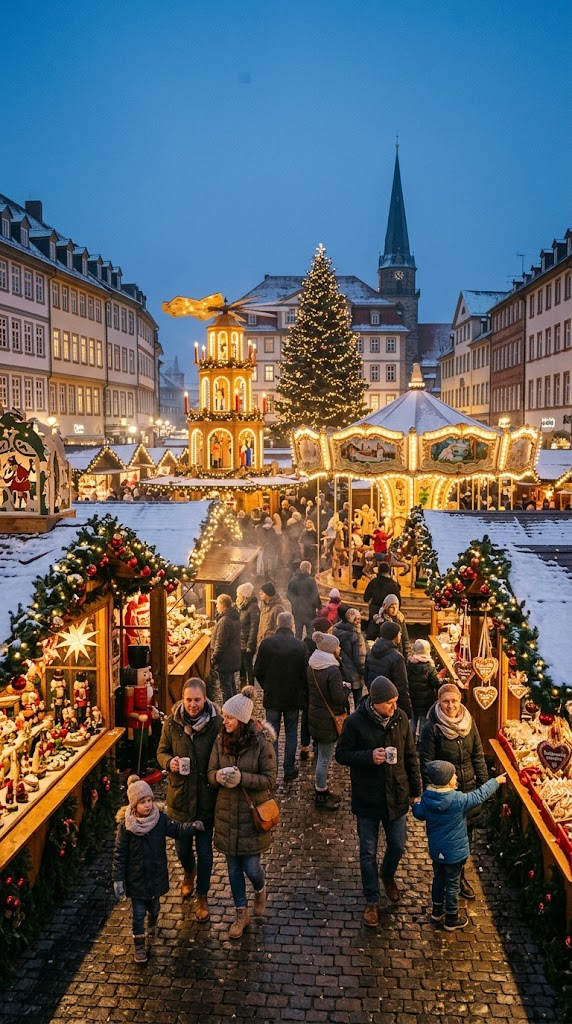
Kassel’s Märchenweihnachtsmarkt takes inspiration from the fairy tales of the Brothers Grimm, making it one of Germany’s more distinctive Christmas-market concepts.
For 2026, the theme is “Das tapfere Schneiderlein”, or The Brave Little Tailor. The market runs across areas including Königsplatz, Friedrichsplatz and Opernplatz. (Visit Kassel)
Visitors can expect fairy-tale decorations, market stalls, a giant Christmas pyramid, a fairytale forest, a Ferris wheel and other attractions. The market is scheduled to continue until December 30, although it closes from December 24 to 26. (Visit Kassel)
This one is particularly fun for families, but adults who grew up with Grimm’s fairy tales may find themselves getting just as nostalgic.
Don’t miss: The fairy-tale displays and panoramic view from the Ferris wheel.
17. Freiburg Christmas Market
Freiburg im Breisgau, Baden-Württemberg
2026 dates: November 19 to December 23
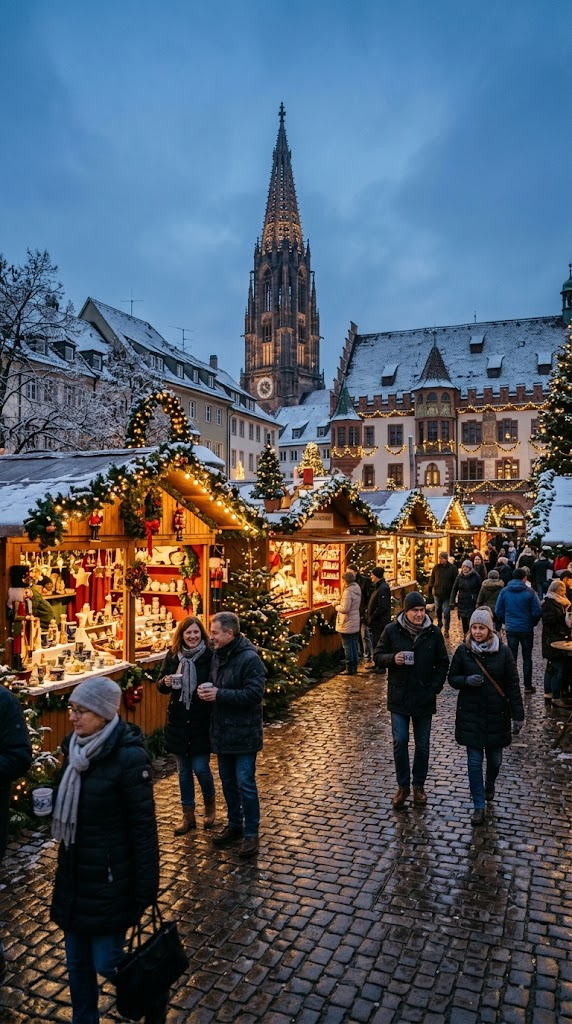
Freiburg’s Christmas market offers a lovely combination of historic architecture, Black Forest atmosphere and a market that spreads through several parts of the Old Town.
The 2026 market runs from November 19 through December 23, with stalls distributed across multiple squares and streets including Rathausplatz, Franziskanerstraße, Unterlindenplatz, Kartoffelmarkt and Colombipark. (Freiburg Christmas Market)
Instead of feeling like one giant market squeezed into a single square, Freiburg encourages visitors to wander. Along the way, you’ll find Christmas decorations, crafts, food, roasted almonds and regional specialties.
Its location near the Black Forest also makes Freiburg an appealing base for adding winter landscapes and nearby day trips to your itinerary.
Don’t miss: A slow evening walk through the Old Town between the different market areas.
The Best Christmas Markets in Germany for Different Travel Styles
One thing I love about German Christmas markets is that “best” really depends on what kind of holiday you want.
For a classic traditional Christmas experience, Nuremberg and Dresden are natural choices. Their long histories, regional foods and distinctive traditions make them particularly appealing for first-time visitors. (Nuremberg Tourism)
For fairy-tale scenery, Rothenburg ob der Tauber and Erfurt are hard to beat. Both place the markets among historic architecture, while Erfurt’s cathedral square creates an especially dramatic setting.
For big-city Christmas energy, Cologne, Munich, Frankfurt, Hamburg, Düsseldorf and Berlin offer markets combined with shopping, museums, restaurants and nightlife.
For something more unusual, Esslingen’s medieval market and Kassel’s Brothers Grimm theme stand out.
And for food lovers, I would pay particular attention to regional specialties. Nuremberg has Lebkuchen and sausages, Dresden has Christstollen, Aachen has Printen, and Frankfurt has Bethmännchen and hot apple wine. (Germany Travel)
When Should You Visit Germany’s Christmas Markets?
The main Christmas-market season generally begins in the second half of November and continues through December.
For the most traditional Advent atmosphere, early to mid-December is a particularly useful period because most of the major markets are operating while the holiday season is in full swing.
There is one catch: some markets can be extremely busy on Friday and Saturday evenings. A weekday afternoon can be much more relaxed, especially if you want photographs without quite so many people appearing in the background of every shot. A tiny human traffic jam is charming until you realize you’ve been standing in the same three-meter stretch for ten minutes.
Markets also don’t all close on the same date. Most finish shortly before Christmas, but Düsseldorf, Berlin’s Gendarmenmarkt market and Kassel continue beyond Christmas. (Visit Düsseldorf)
What Should You Eat at a German Christmas Market?
You could theoretically visit Germany’s Christmas markets without eating. I simply do not recommend making that your personal challenge.
Start with Glühwein, the classic hot spiced wine, or choose a non-alcoholic version if that’s more your style. Then look for roasted almonds, gingerbread, sausages, potato pancakes and baked treats.
Regional specialties make the experience even better. In Nuremberg, try Nürnberger Lebkuchen and Rostbratwurst. In Dresden, look for Christstollen. Aachen is associated with Printen, while Frankfurt has Bethmännchen and hot apple wine. (Germany Travel)
And don’t overlook the non-food stalls. Christmas markets are particularly good places to find handmade ornaments, carved wooden decorations, candles, ceramics, textiles and small gifts.
How to Plan a Christmas Market Trip in Germany
The easiest approach is to group markets geographically rather than trying to cross the entire country every other day.
A Bavaria and southern Germany trip could combine Munich, Nuremberg, Rothenburg ob der Tauber, Stuttgart, Esslingen and Freiburg.
A western Germany route could include Cologne, Aachen, Düsseldorf and Trier.
For eastern Germany, Dresden, Leipzig and Erfurt make a particularly interesting combination.
Then there is Berlin, which deserves its own trip if you want to explore several different markets rather than visiting just one.
Germany’s rail network makes multi-city trips practical, although Christmas-period travel can be busy. Reserving accommodation early is particularly sensible in famous destinations such as Nuremberg, Rothenburg and Cologne.
Christmas Market Tips for First-Time Visitors
Bring warm layers and comfortable shoes. This sounds painfully obvious until you’re four hours into a market crawl and discover that festive cobblestones have declared war on your feet.
Carry a small reusable bag for purchases, especially if you’re planning to buy handmade decorations or food gifts.
Go during daylight at least once, then return after dark. The same market can feel almost like two different places once the lights come on.
Also pay attention to market-specific opening dates and holiday closures. For example, the 2026 schedules differ significantly between cities, and some markets have special closures around Totensonntag or shortened hours on their final day. (Nuremberg Tourism)
Most importantly, don’t try to see everything. Christmas markets are at their best when you slow down, browse the stalls, stop for something warm to eat and enjoy the atmosphere instead of treating the whole experience like a checklist.
A Wonderful Way to See Germany in Winter
Germany’s Christmas markets offer much more than rows of decorated stalls. They bring together historic cities, regional food, traditional craftsmanship and centuries of seasonal customs in a way that feels distinctly local.
The magic also changes from place to place. Nuremberg feels deeply traditional. Dresden celebrates Saxon heritage. Rothenburg leans into its medieval setting. Cologne puts the cathedral at center stage. Hamburg adds a northern character, while Berlin offers an enormous variety of festive experiences.
That variety is what makes planning a German Christmas trip so much fun. You can choose a famous market for your first visit, then venture into smaller cities for something completely different.
And honestly, once the sun goes down, the lights come on and the smell of roasted almonds reaches you from somewhere ahead, the planning tends to become wonderfully simple: keep walking toward the delicious smell.
Watch: German Christmas Markets
For a visual introduction to Germany’s traditional, unusual and regional Christmas markets, this DW Travel video offers a useful overview of several destinations and the traditions and foods associated with them.
2026 Christmas Markets at a Glance
| Christmas market | City | 2026 dates |
|---|---|---|
| Nuremberg Christkindlesmarkt | Nuremberg | Nov. 27–Dec. 24 |
| Dresden Striezelmarkt | Dresden | Nov. 25–Dec. 24 |
| Cologne Cathedral Market | Cologne | Nov. 16–Dec. 23 |
| Rothenburg Reiterlesmarkt | Rothenburg | Nov. 20–Dec. 23 |
| Munich Christkindlmarkt | Munich | Nov. 20–Dec. 24 |
| Frankfurt Christmas Market | Frankfurt | Nov. 23–Dec. 22 |
| Aachen Christmas Market | Aachen | Nov. 20–Dec. 23 |
| Stuttgart Christmas Market | Stuttgart | Nov. 25–Dec. 23 |
| Hamburg Rathausmarkt | Hamburg | Nov. 23–Dec. 23 |
| Leipzig Christmas Market | Leipzig | Nov. 24–Dec. 23 |
| Düsseldorf Christmas Market | Düsseldorf | Nov. 19–Dec. 30 |
| Erfurt Christmas Market | Erfurt | Nov. 24–Dec. 22 |
| Gendarmenmarkt | Berlin | Nov. 23–Dec. 31 |
| Trier Christmas Market | Trier | Nov. 20–Dec. 22 |
| Esslingen Medieval & Christmas Market | Esslingen | Nov. 24–Dec. 22 |
| Kassel Märchenweihnachtsmarkt | Kassel | Nov. 23–Dec. 30* |
| Freiburg Christmas Market | Freiburg | Nov. 19–Dec. 23 |
*Kassel’s market is scheduled to close December 24–26 before reopening afterward. (Visit Kassel)
Planning note: Christmas-market dates and opening hours can occasionally be adjusted, so it is worth checking the market’s current information before booking transport or accommodation.