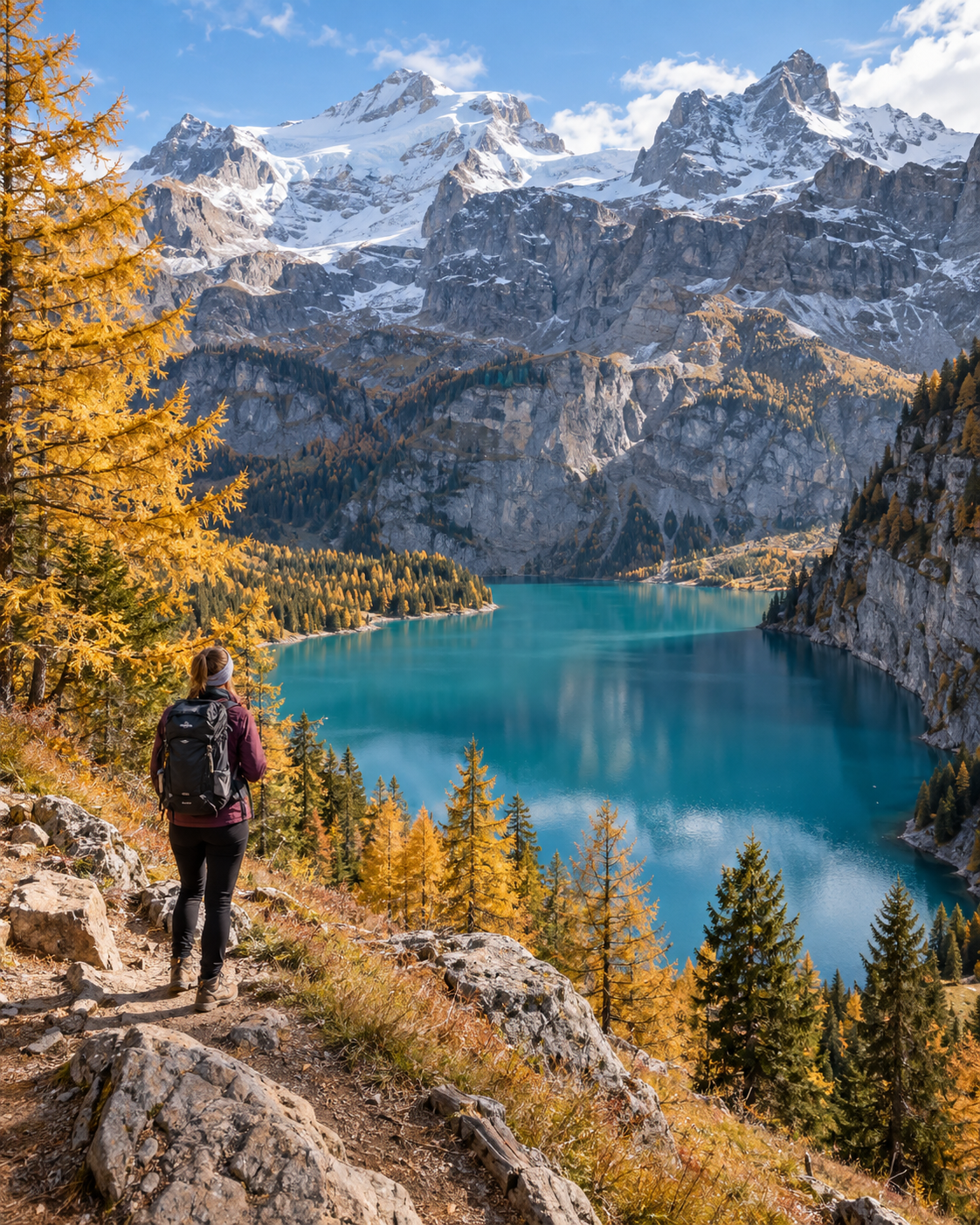
17 Best Places to Visit in Switzerland in Fall
Switzerland in fall is the kind of destination that makes you question whether nature has been secretly practicing its photography skills all year.
Imagine golden forests surrounding turquoise lakes, charming Alpine villages beneath snow-dusted mountains, vineyards glowing in the afternoon sunshine, and little trains winding through landscapes that look almost too beautiful to be real.
Now add cozy cafés, fresh mountain air, fewer summer tourists, and a very good excuse to eat cheese fondue.
I think we have ourselves a rather wonderful autumn vacation.
While Switzerland is famous for its snowy winters and flower-filled summers, September, October, and November offer a completely different side of the country. Autumn brings colorful forests, grape harvests, seasonal food, traditional Alpine celebrations, and some spectacular opportunities for hiking and photography.
Switzerland’s famous larch forests are particularly impressive during this season. Unlike most conifers, larches turn golden before dropping their needles, creating extraordinary contrasts against evergreen forests, blue lakes, and snow-covered peaks. (Switzerland Tourism)
The best part? You don’t have to choose between mountains, cities, and countryside. Switzerland is compact enough to combine several very different landscapes into one unforgettable trip.
From the famous valleys of Lauterbrunnen to the golden vineyards of Lavaux and the Mediterranean atmosphere of Ticino, here are 17 of the best places to visit in Switzerland in fall.
Lauterbrunnen
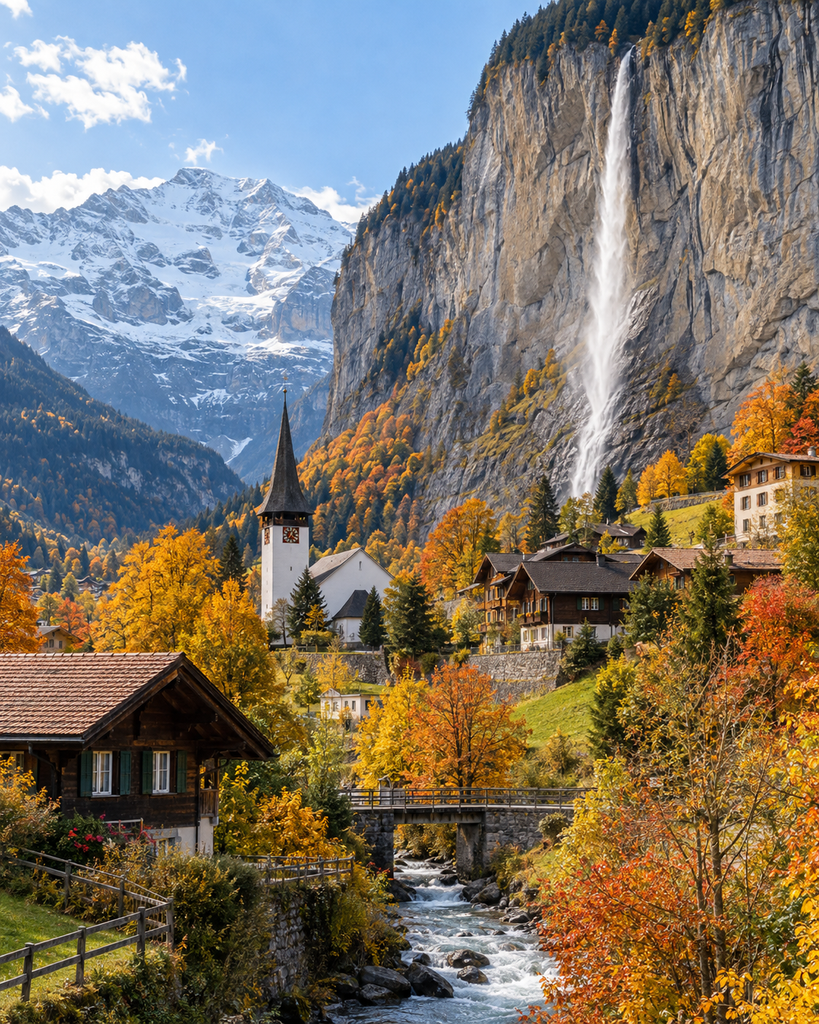
If you’ve ever seen photographs of Switzerland featuring a tiny village surrounded by towering cliffs and waterfalls, there’s a good chance you’ve already fallen in love with Lauterbrunnen.
And in autumn, this incredible valley becomes even more beautiful.
Lauterbrunnen sits in the Bernese Oberland, surrounded by dramatic mountain scenery, traditional wooden chalets, green meadows, and waterfalls cascading from enormous cliffs.
During fall, the surrounding forests begin turning golden, while occasional mist drifts through the valley in the early morning.
It creates the kind of atmosphere that makes you want to put your phone away and simply enjoy being there.
Well, after taking approximately 200 photographs.
The famous Staubbach Falls remains one of the valley’s most recognizable landmarks. Other highlights include the Trümmelbach Falls, the peaceful village of Wengen, and the car-free mountain village of Mürren.
One of the loveliest autumn experiences is taking the Wengernalp Railway from Lauterbrunnen toward Kleine Scheidegg. The journey passes traditional villages, forests, and extraordinary views of the surrounding mountains. (Switzerland Tourism)
My travel tip: Stay overnight in Lauterbrunnen or nearby Wengen rather than visiting only on a day trip. Early mornings and evenings are especially atmospheric when the valley becomes quieter.
Grindelwald
Grindelwald looks like a place where someone designed the perfect Alpine village and then decided to make the mountains unnecessarily spectacular.
Located beneath the dramatic north face of the Eiger, Grindelwald is surrounded by mountain peaks, traditional Swiss chalets, meadows, and hiking trails.
During autumn, golden trees and changing vegetation add warmth to the landscape, while higher peaks may already have their first seasonal snowfall.
One of the most popular excursions is Grindelwald-First, where visitors can enjoy panoramic views and access hiking routes toward Bachalpsee.
On a clear day, the lake reflects the surrounding mountains, creating one of Switzerland’s most recognizable Alpine scenes.
The First Cliff Walk is another highlight for travelers who enjoy spectacular mountain viewpoints.
If you’re looking for a more relaxed experience, simply wander through Grindelwald village, enjoy coffee with a mountain view, and explore the surrounding countryside.
You don’t have to conquer every mountain to appreciate Switzerland.
Sometimes sitting on a terrace and admiring the Eiger while eating cake is a perfectly respectable outdoor activity.
Best time to visit: September through October, depending on mountain conditions and the availability of hiking trails and lifts.

Lake Brienz
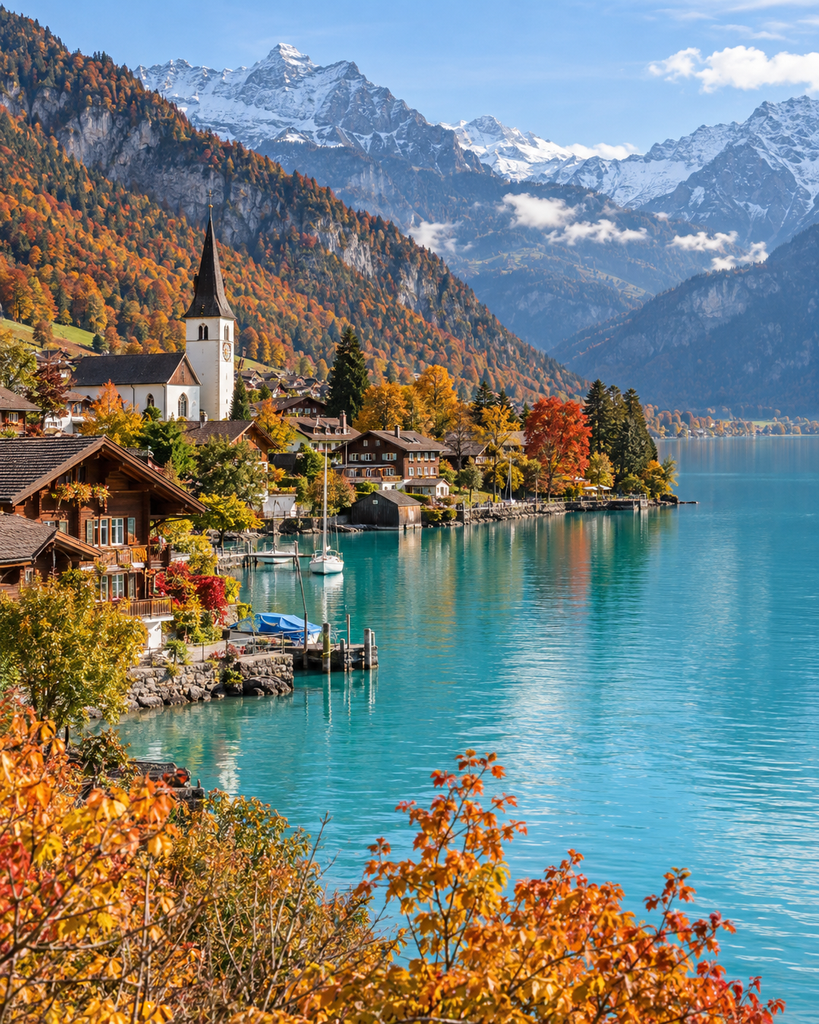
Lake Brienz is one of those places where the color of the water almost looks edited.
Its extraordinary turquoise appearance comes from fine mineral particles carried into the lake by glacial streams.
Now imagine that turquoise water surrounded by golden and orange autumn trees.
Exactly.
Lake Brienz is located near Interlaken and makes an excellent addition to a Bernese Oberland itinerary.
The picturesque village of Brienz is particularly lovely, with traditional wooden houses, lakeside walks, and mountain views.
Another beautiful destination is Iseltwald, a small lakeside village with charming houses and peaceful scenery.
If lake cruises are operating during your visit, they offer a wonderful way to admire the surrounding mountains and autumn forests from the water.
You could also visit Giessbach Falls, which cascade down a forested mountainside above the lake.
Autumn makes this area especially attractive for photography because the changing vegetation creates a striking contrast with the lake’s blue-green water.
My travel tip: Combine Lake Brienz with Lauterbrunnen and Grindelwald for an unforgettable Alpine itinerary without spending too much time changing hotels.
Lucerne
Lucerne is one of Switzerland’s loveliest cities, and autumn makes it even more atmospheric.
Located beside Lake Lucerne and surrounded by mountains, the city offers a beautiful combination of historic architecture, lakeside scenery, and easy access to nature.
Start by exploring the famous Chapel Bridge, wandering through the colorful Old Town, and visiting the Lion Monument.
Then spend time along the waterfront, where autumn trees add golden colors to the surrounding scenery.
One of the biggest advantages of visiting Lucerne is how easily you can combine a city break with a mountain excursion.
Mount Rigi is particularly appealing during autumn. You can travel up the mountain for panoramic views of the surrounding lakes and peaks, followed by a walk through the crisp mountain air.
The nearby villages of Weggis and Vitznau are also lovely for lakeside relaxation, wellness experiences, and leisurely meals. (Switzerland Tourism)
And if the weather turns rainy?
Lucerne still has museums, historic streets, restaurants, chocolate shops, and plenty of cozy places to disappear into for an afternoon.
Best for: Romantic city breaks, lake cruises, mountain excursions, and relaxed autumn travel.

Zermatt
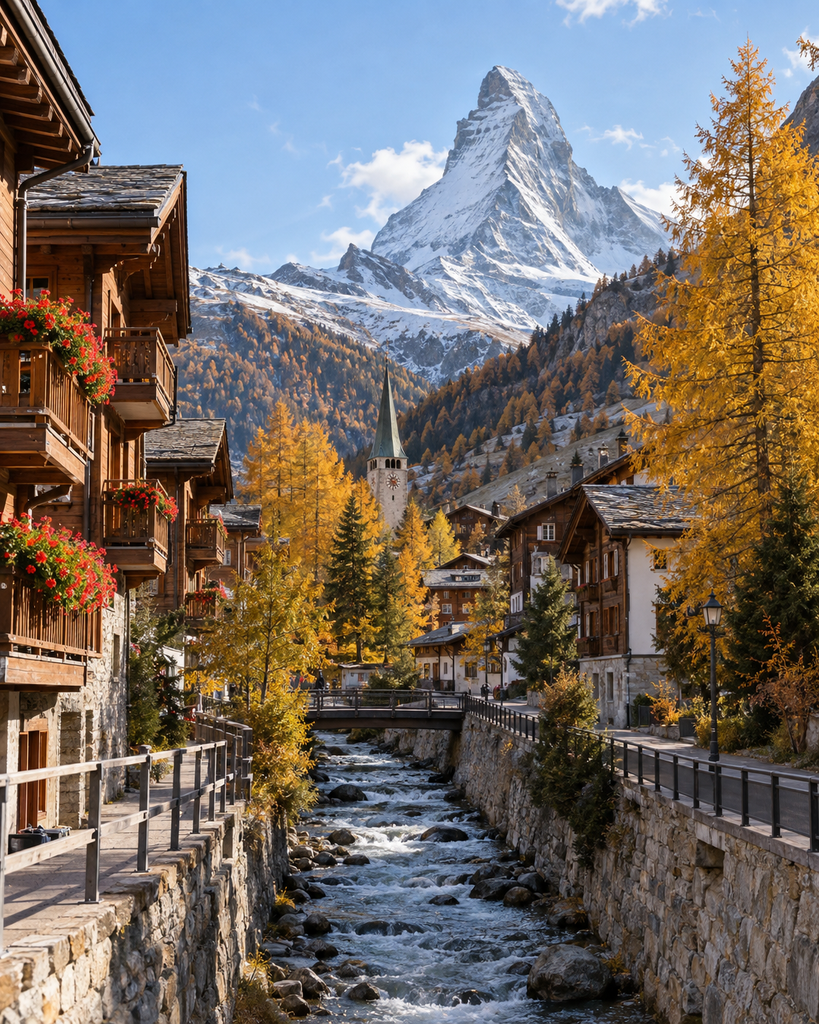
Zermatt is famous for the Matterhorn, but autumn gives travelers another reason to visit.
The surrounding forests begin transforming into beautiful shades of yellow and gold, creating an incredible contrast with the mountain’s unmistakable pyramid-shaped silhouette.
Zermatt itself is a charming, car-free mountain village filled with traditional wooden chalets, hotels, restaurants, and spectacular views.
One of the most rewarding autumn experiences is taking the Gornergrat Railway.
As the train climbs through the mountains, you can enjoy views of the Matterhorn, surrounding peaks, forests, and Alpine landscapes.
The Five Lakes Walk is another famous attraction when trail and lift conditions permit.
This route connects several mountain lakes, including Stellisee and Grindjisee, where the Matterhorn can appear reflected in the water.
Grindjisee is particularly special during autumn because golden larch trees surround the lake. (Switzerland Tourism)
Imagine standing beside a quiet lake with golden trees in the foreground and the Matterhorn rising behind them.
That is the kind of photograph that deserves a permanent place on your wall.
My travel tip: Give yourself at least two or three nights in Zermatt. Mountain visibility changes quickly, and having an extra day increases your chances of enjoying clear Matterhorn views.
The Engadin Valley
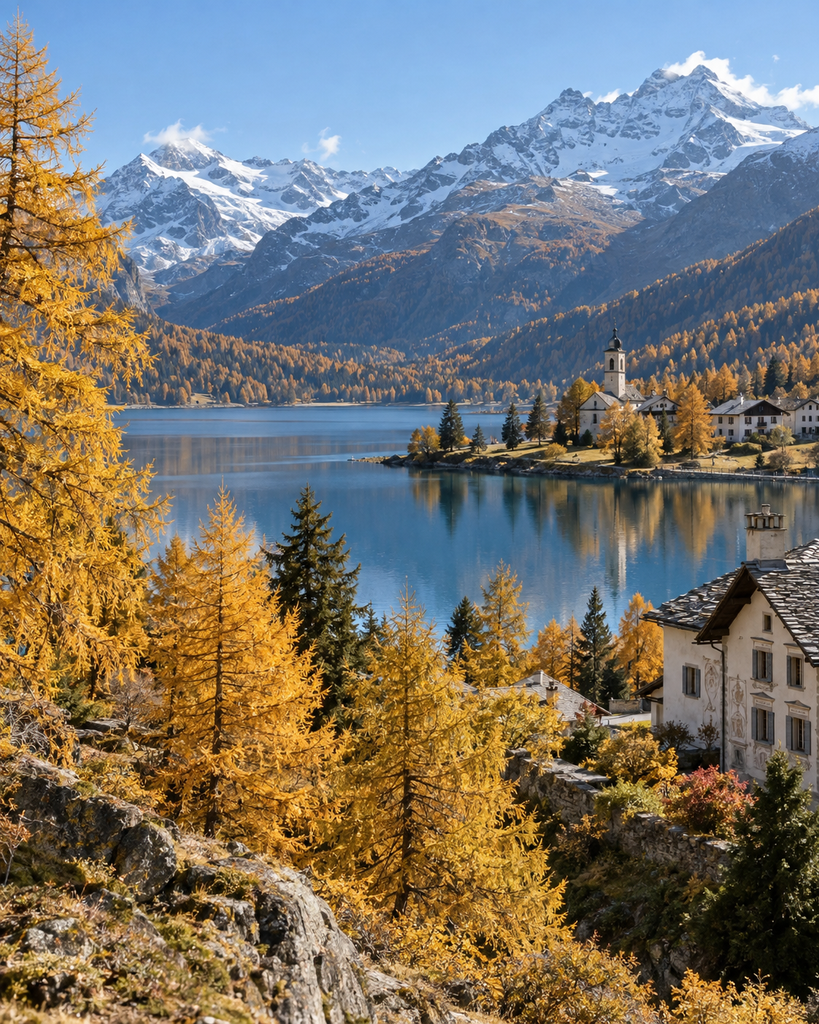
If your dream Switzerland vacation involves extraordinary fall foliage, I would put the Engadin Valley very high on your list.
Located in the canton of Graubünden, this Alpine region is famous for its beautiful lakes, traditional villages, mountain scenery, and extensive larch forests.
In autumn, those larches turn brilliant shades of yellow and gold.
The contrast between golden trees, deep-blue lakes, and snow-dusted mountains is simply spectacular.
Some of the most beautiful places to explore include Sils im Engadin, Lake Sils, Lake Silvaplana, St. Moritz, Pontresina, and the surrounding valleys.
Sils is particularly attractive for autumn photography.
The lakeside landscape features forests, mountain backdrops, and peaceful walking routes that become especially colorful as the season progresses.
You can also explore portions of the Via Engiadina, which passes through extraordinary Alpine scenery between traditional villages.
Switzerland Tourism specifically recommends the Engadin’s larch forests and the Via Engiadina for experiencing the country’s golden autumn landscapes. (Switzerland Tourism)
For travelers who enjoy scenic train journeys, the region is also connected to the famous Rhaetian Railway network.
Best time to visit: Often October for golden larches, although the timing changes with elevation and weather.
Lavaux Vineyards
Switzerland has vineyards?
Oh yes. And they are absolutely beautiful.
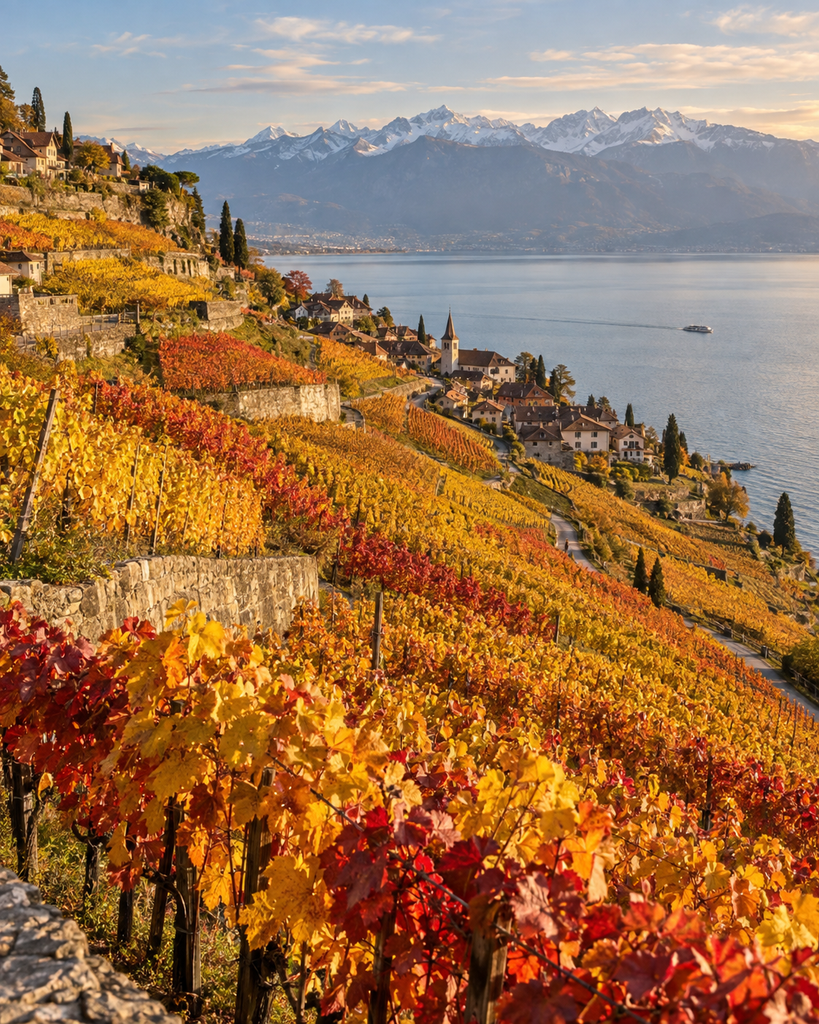
The Lavaux Vineyard Terraces stretch along the northern shores of Lake Geneva, creating one of the most spectacular wine-growing landscapes in Europe.
These historic terraced vineyards are recognized as a UNESCO World Heritage Site.
During autumn, the vines begin changing from green into beautiful shades of yellow, orange, and red.
The vineyards overlook the blue waters of Lake Geneva, with mountains rising across the lake.
It is a particularly beautiful destination for travelers who enjoy walking, photography, wine, and romantic countryside scenery.
Explore picturesque villages such as Saint-Saphorin, Epesses, Rivaz, and Cully.
You can follow vineyard walking paths, visit local wine cellars, enjoy lakeside meals, and admire the landscape from scenic viewpoints.
The region is particularly associated with Chasselas, a white grape variety widely cultivated in Switzerland.
The Lavaux terraces cover approximately 800 hectares and represent Switzerland’s largest contiguous vineyard area. (Switzerland Tourism)
My travel tip: Visit during October if your main goal is photographing golden vineyards, but remember that the timing of peak foliage varies from year to year.
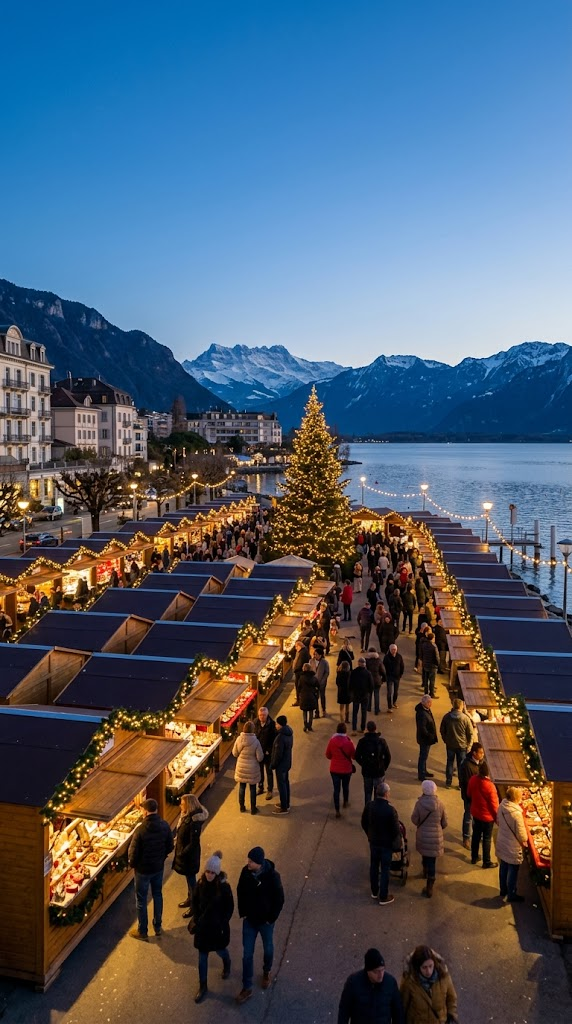
Montreux
Montreux has a completely different atmosphere from Switzerland’s traditional mountain villages.
Located along Lake Geneva, this elegant lakeside town is known for its beautiful waterfront, historic hotels, mountain backdrop, and relatively mild surroundings.
During autumn, Montreux feels especially romantic.
Trees along the lake begin changing color, the summer crowds gradually ease, and the waterfront becomes a lovely place for leisurely walks.
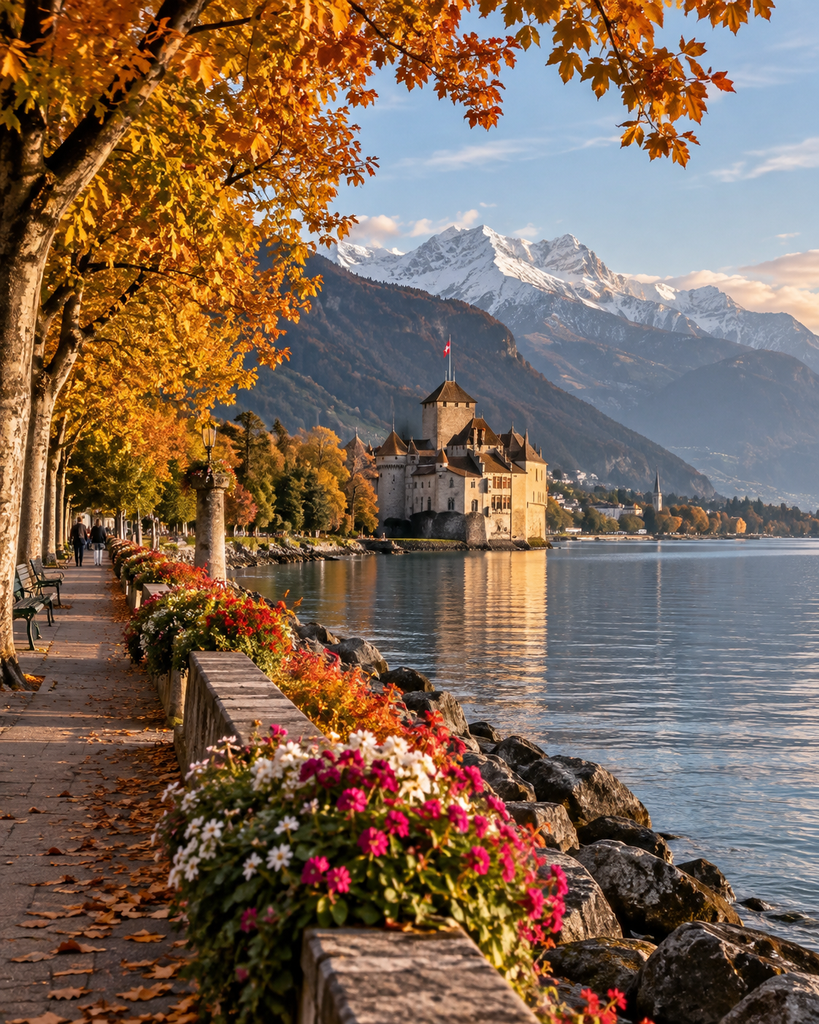
One of the town’s most famous attractions is Chillon Castle.
This medieval castle sits directly beside Lake Geneva and looks particularly beautiful when framed by autumn foliage and dramatic mountain scenery.
You can walk along the lakeside promenade, explore the castle, visit nearby vineyards, or simply enjoy a relaxing afternoon at a café overlooking the water.
Montreux also makes an excellent base for visiting Lavaux, Vevey, and other destinations around Lake Geneva.
If you enjoy elegant European towns with beautiful waterfronts, I think Montreux deserves a place on your Switzerland itinerary.
Best for: Romantic getaways, lakeside walks, castles, scenic train journeys, and relaxed travel.
Bern
Bern may be Switzerland’s capital, but it has a surprisingly intimate and peaceful atmosphere.
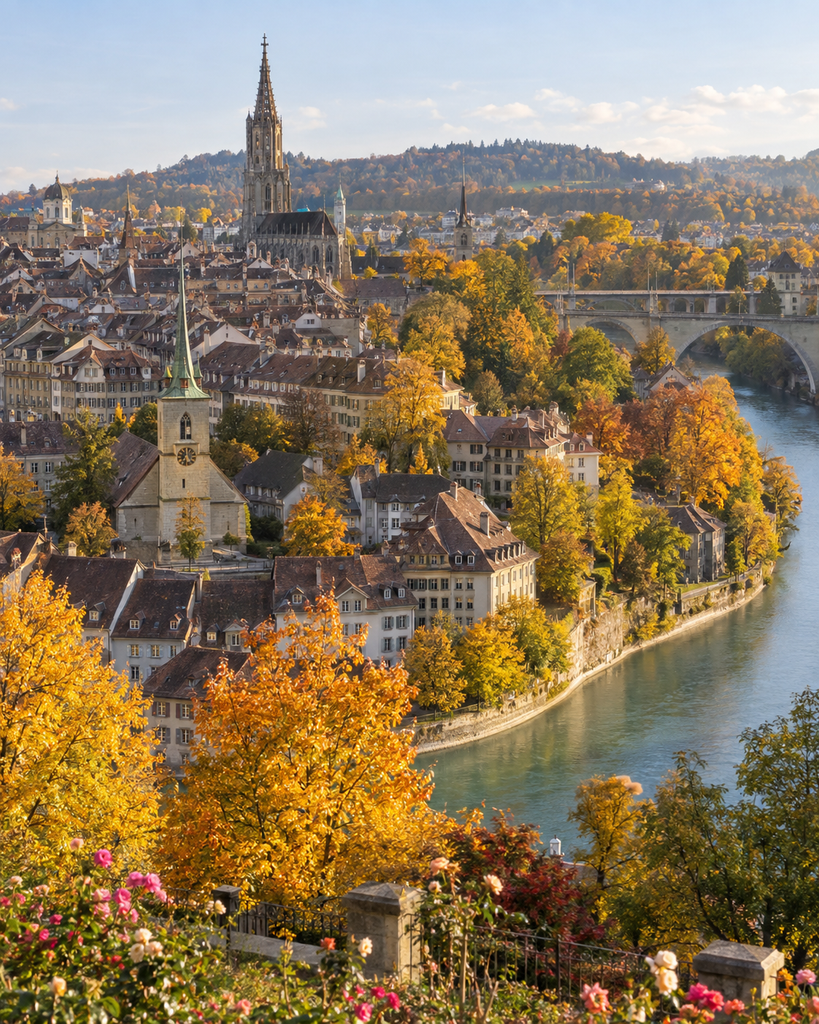
Its UNESCO-listed Old Town features medieval architecture, colorful fountains, cobbled streets, and historic buildings surrounded by the beautiful Aare River.
During autumn, trees along the river and throughout the city begin turning golden.
One of the loveliest places to enjoy these colors is the Rose Garden.
Located above the Old Town, this beautiful park offers panoramic views of Bern’s rooftops, church towers, and surrounding landscapes.
From here, you can admire the city’s historic architecture framed by seasonal foliage.
Other highlights include the Zytglogge clock tower, Bern Minster, the Federal Palace, and the charming streets of the historic center.
Bern’s covered arcades are another reason I like recommending the city for autumn travel.
If the weather suddenly decides to become dramatic, you can continue exploring under shelter.
Switzerland’s capital combines a UNESCO-listed historic center with easy access to parks, river scenery, and nearby nature destinations. (Switzerland Tourism)
My travel tip: Stay at least one night to enjoy Bern after the busiest daytime visiting hours.
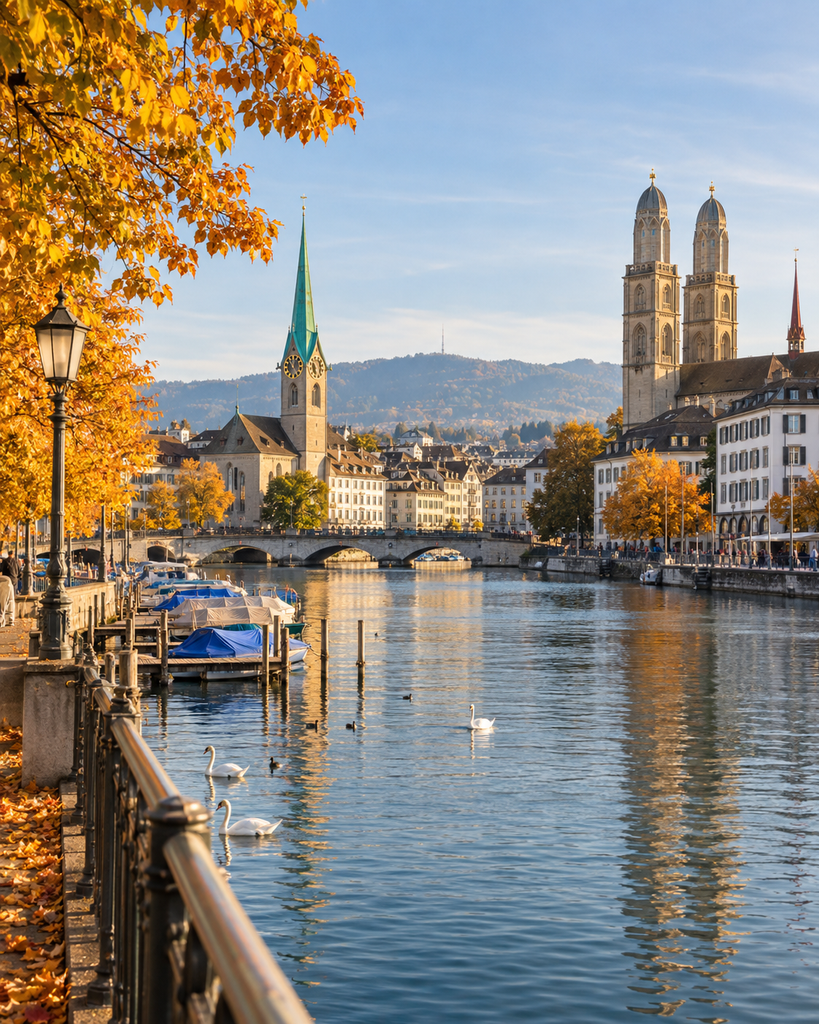
Zurich
Zurich is often treated as an arrival or departure point, but I think it deserves more attention as an autumn destination.
Switzerland’s largest city combines historic streets, elegant architecture, lakeside scenery, museums, cafés, restaurants, and plenty of green spaces.
During fall, the city’s parks and tree-lined streets become particularly attractive.
Start with a walk through the Old Town, explore Niederdorf, and visit Lindenhof for views across the historic center.
Then head toward Lake Zurich for a leisurely waterfront walk.
One of the best autumn excursions is Uetliberg, Zurich’s local mountain.
On clear days, the viewpoint offers panoramic views across the city, lake, and distant Alps.
Autumn can also create an interesting weather phenomenon here: the mountain sometimes rises above low-lying fog, giving visitors sunshine and panoramic views while the city below remains covered in mist. (Switzerland Tourism)
If you’re visiting during rainy weather, Zurich has plenty of indoor attractions, including museums, galleries, restaurants, and chocolate experiences.
Best for: City breaks, shopping, culture, autumn parks, and easy nature excursions.
Appenzell
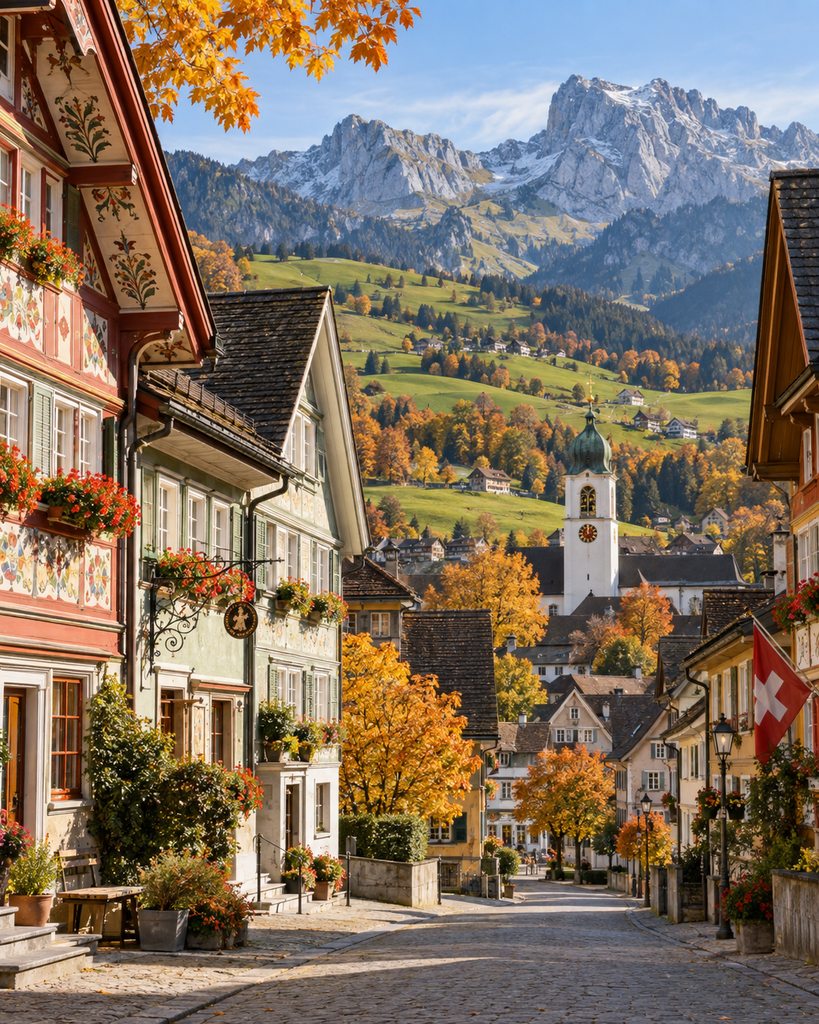
If you’re looking for the Switzerland of traditional wooden houses, rolling hills, peaceful villages, and mountain scenery, Appenzell deserves your attention.
Located in northeastern Switzerland, this region is famous for its beautiful countryside and strong Alpine traditions.
The village of Appenzell is particularly charming, with colorful painted buildings, small shops, traditional restaurants, and a wonderfully relaxed atmosphere.
Autumn adds another layer of beauty to the surrounding landscape.
The forests begin changing color, the air becomes cooler, and the green hills gradually take on warmer seasonal tones.
The nearby Alpstein mountains offer some extraordinary scenery.
Popular destinations include Seealpsee, Ebenalp, and the famous Äscher mountain inn.
These places can be wonderful for autumn excursions when hiking routes and mountain transport remain accessible.
Appenzell is also associated with traditional cattle processions, cheese-making, and Alpine farming culture. Some seasonal cattle descents take place in September, so travelers interested in witnessing these events should check the local calendar before planning their trip. (Switzerland Tourism)
My travel tip: Appenzell is a lovely destination for travelers who want traditional Swiss countryside rather than only famous tourist attractions.
Lugano
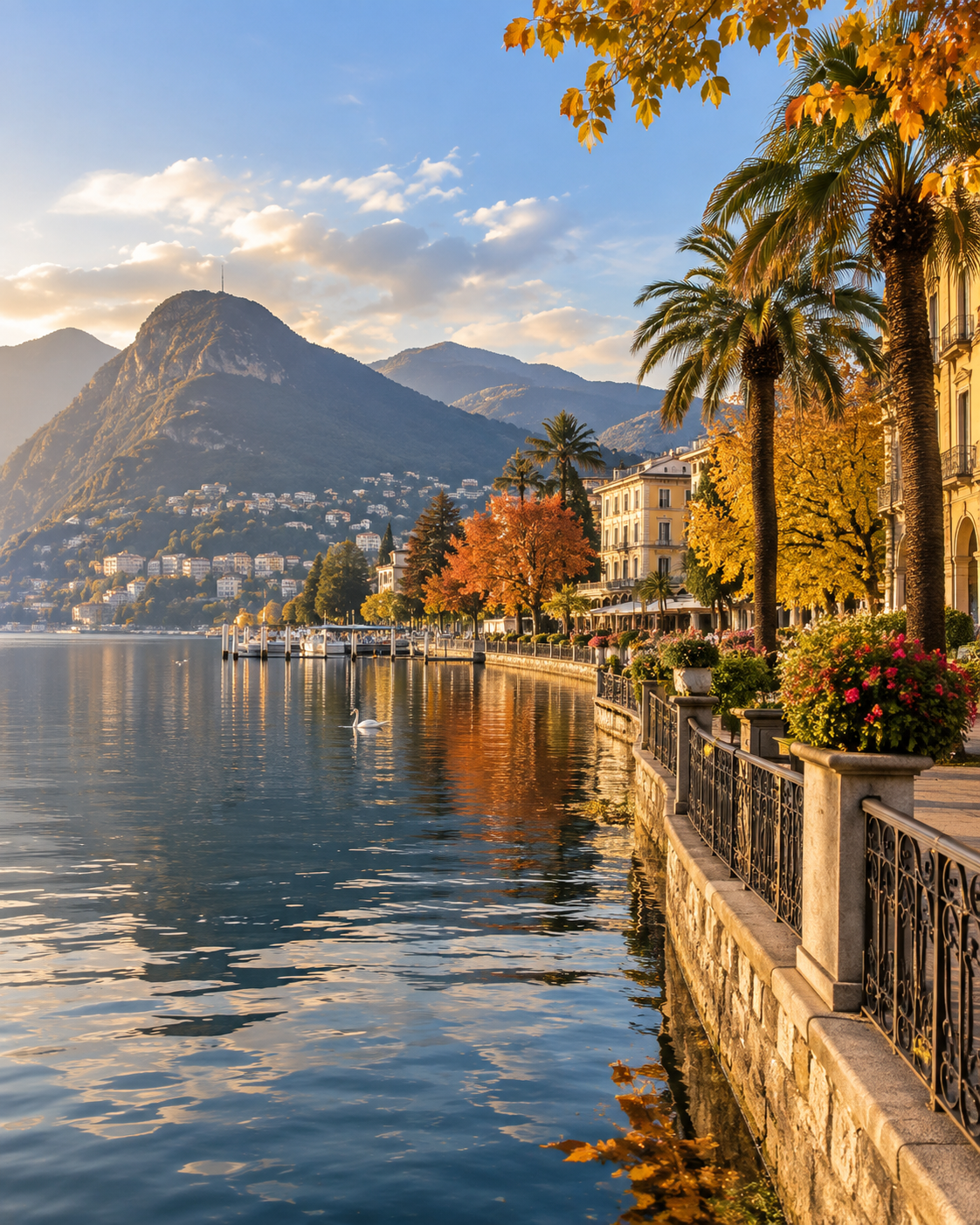
Lugano is where Switzerland starts feeling a little Italian.
Located in the southern canton of Ticino, this lakeside city enjoys a relatively mild climate and a Mediterranean-influenced atmosphere.
Palm trees, elegant waterfront buildings, beautiful gardens, Italian-speaking locals, and surrounding mountains give Lugano a very different personality from Switzerland’s northern Alpine destinations.
During autumn, the nearby forests begin changing color while the city can still enjoy pleasant afternoons.
Explore the historic center, walk along the waterfront, visit Parco Ciani, and enjoy the surrounding mountain scenery.
Monte Brè and Monte San Salvatore are popular viewpoints, although you should check transport schedules before planning an excursion.
Lugano is also an excellent base for exploring the surrounding Ticino countryside.
The nearby Malcantone region is particularly associated with chestnut forests and traditional villages.
Autumn is chestnut season in Ticino, and regional festivals celebrate seasonal foods, local traditions, and the harvest. (Switzerland Tourism)
And yes, Italian food in Switzerland is an excellent reason to extend your visit.
Best for: Mild autumn weather, lakeside scenery, Italian-influenced culture, food, and relaxed city breaks.
Ascona
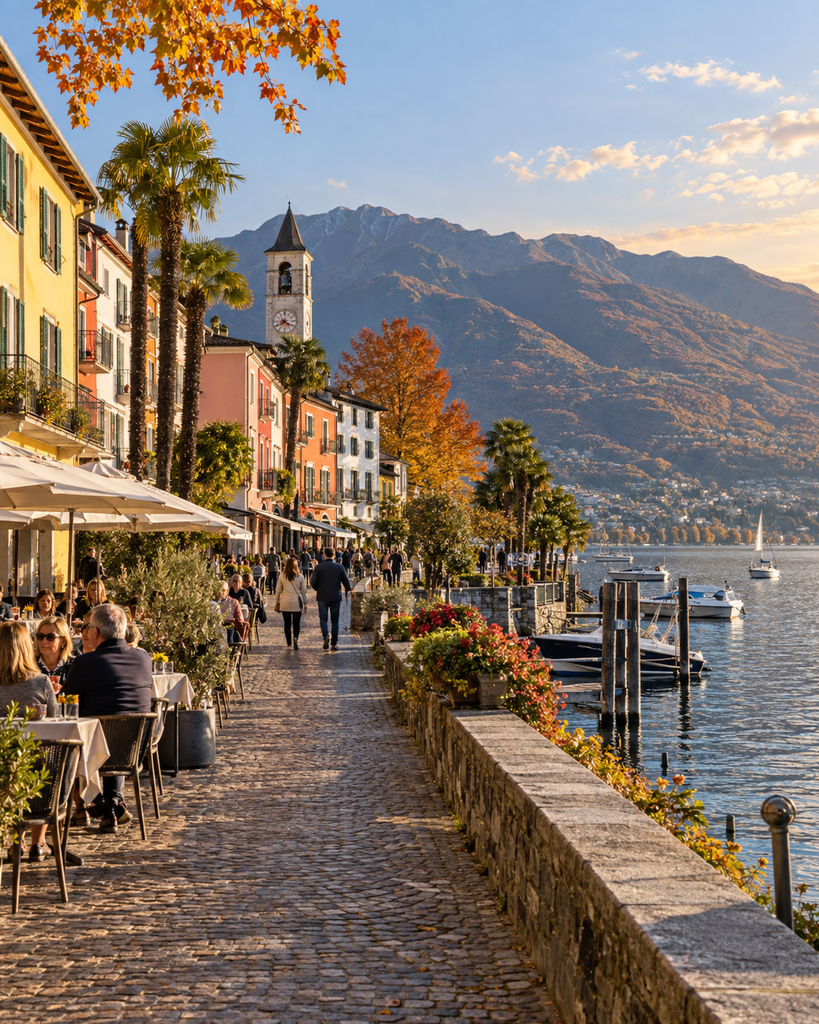
Ascona is one of Switzerland’s most charming lakeside towns.
Located on Lake Maggiore in Ticino, it features colorful buildings, palm trees, narrow streets, waterfront restaurants, and beautiful mountain scenery.
The atmosphere feels almost Mediterranean.
During autumn, Ascona becomes particularly attractive for travelers who prefer a slower pace.
Wander through the historic center, enjoy coffee beside the lake, explore the surrounding countryside, and take in the scenery from the waterfront promenade.
The town is also a great base for visiting Locarno and the beautiful valleys of Ticino.
One of the most enjoyable reasons to visit during fall is the region’s traditional chestnut celebrations.
In October, Ascona hosts seasonal festivities associated with local food, handicrafts, and Ticino’s chestnut traditions. (Switzerland Tourism)
This is a wonderful destination if you want to enjoy autumn without spending your entire vacation bundled up in heavy winter clothing.
My travel tip: Combine Ascona and Lugano for a beautiful southern Switzerland itinerary filled with lakes, villages, seasonal food, and mountain scenery.
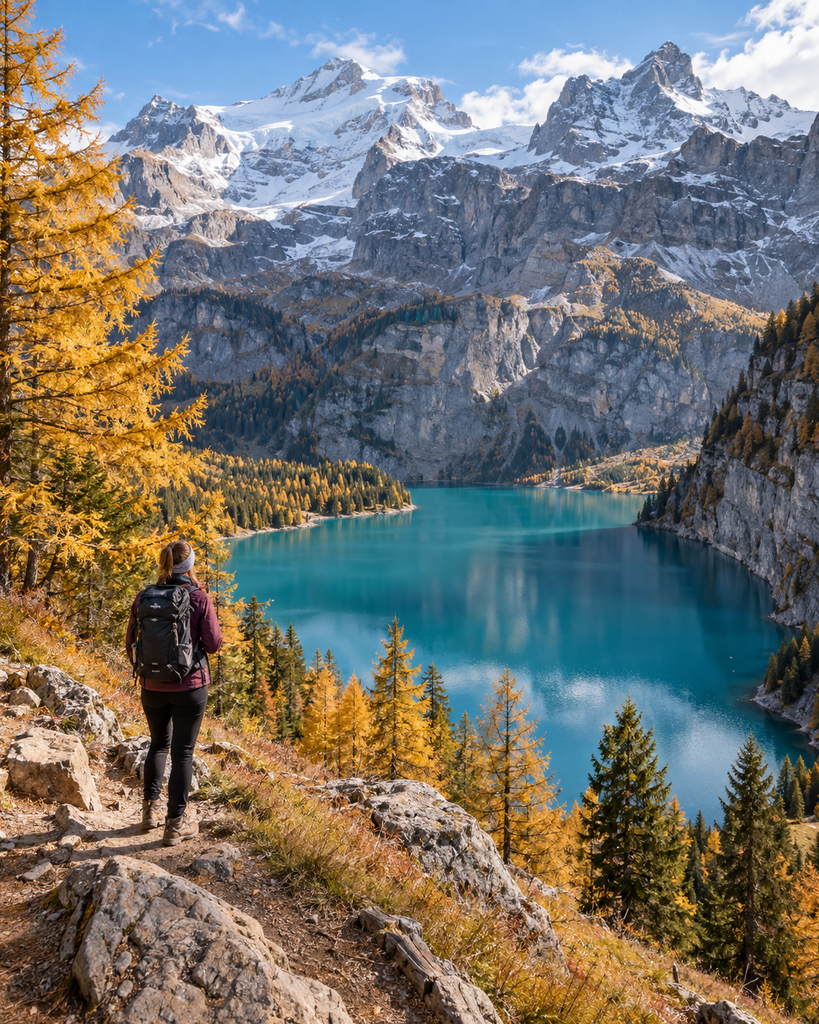
Kandersteg and Oeschinensee
Oeschinensee is one of Switzerland’s most extraordinary mountain lakes.
Located above the village of Kandersteg, this Alpine lake is famous for its turquoise water, dramatic surrounding cliffs, and spectacular mountain backdrop.
During autumn, the surrounding vegetation begins changing color, creating beautiful contrasts against the lake.
The landscape can be particularly impressive in late September and October, although conditions depend heavily on the weather.
Kandersteg itself is a peaceful mountain village with traditional chalets and beautiful valley scenery.
You can explore the village, visit Oeschinensee, and enjoy the surrounding walking routes.
The lake is accessible using the mountain gondola, followed by a walk to the lakeshore.
For travelers who want spectacular Alpine scenery without visiting only the most famous Swiss resort towns, this region is a fantastic addition to an itinerary.
Important travel tip: High-altitude conditions can change quickly in autumn. Check gondola schedules and hiking conditions before traveling. Some panoramic trails may become unsafe or close after early snowfall, even when the main lake remains accessible.
Aletsch Arena
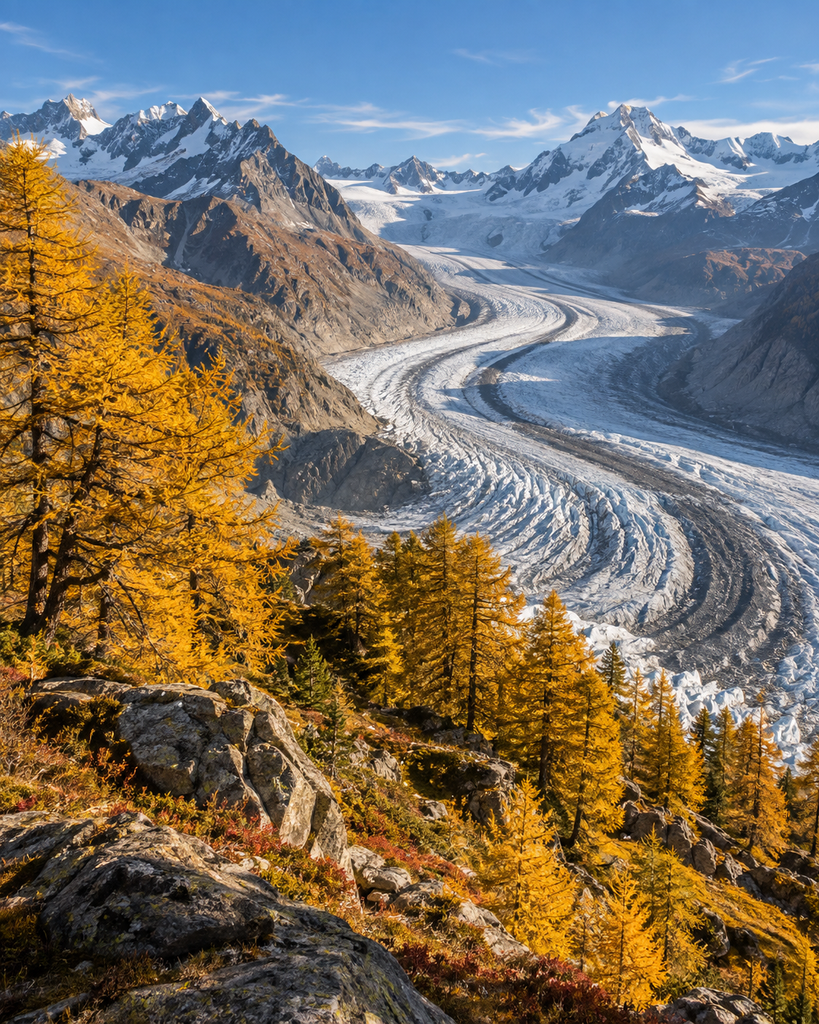
For something genuinely extraordinary, head to the Aletsch Arena in the canton of Valais.
This mountain region is home to the Great Aletsch Glacier, the largest glacier in the Alps.
But autumn brings another attraction: golden forests surrounding the glacier landscape.
The Aletsch Arena includes the car-free mountain villages of Riederalp, Bettmeralp, and Fiescheralp.
These villages make excellent bases for exploring the surrounding mountains and enjoying the peaceful Alpine atmosphere.
One of the highlights is the Aletsch Forest.
The protected forest contains ancient Swiss stone pines and larches, creating beautiful autumn scenery alongside views of the glacier and surrounding peaks.
You can also visit viewpoints such as Moosfluh, Bettmerhorn, and Eggishorn when the relevant mountain transport is operating.
The Aletsch Glacier forms part of the UNESCO Swiss Alps Jungfrau-Aletsch World Heritage Site, and the region offers extraordinary opportunities to appreciate Switzerland’s natural landscapes. (Switzerland Tourism)
Best for: Alpine scenery, glaciers, autumn forests, photography, and mountain villages.
Gruyères
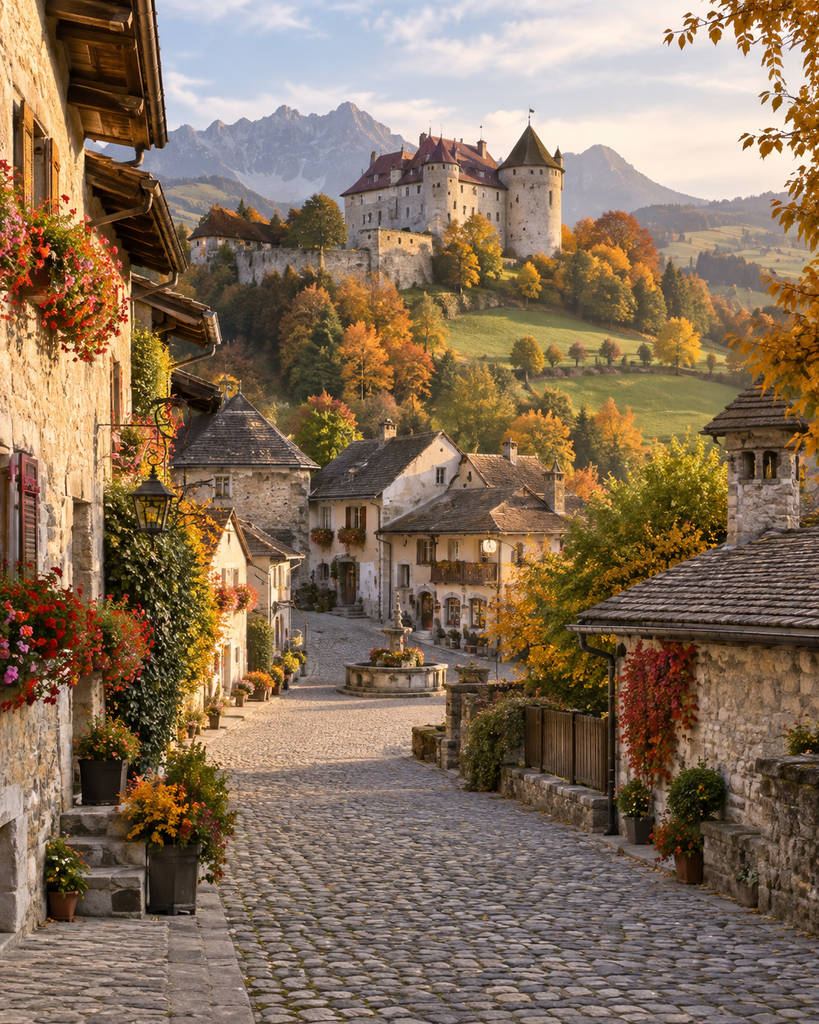
If autumn in Switzerland sounds like castles, medieval villages, chocolate, cheese, and cozy restaurants, Gruyères is calling your name.
This beautiful village in western Switzerland sits on a hill surrounded by rolling countryside and mountain scenery.
Its historic center features cobbled streets, traditional buildings, charming shops, and the impressive Gruyères Castle.
During autumn, the surrounding forests and countryside take on warmer seasonal colors.
It is a wonderful destination for a relaxed day trip or an overnight countryside escape.
One of the highlights is visiting La Maison du Gruyère, where travelers can learn about the region’s famous cheese-making traditions.
Chocolate lovers can also visit the nearby Maison Cailler chocolate factory in Broc.
And of course, you should try traditional Swiss fondue.
Preferably somewhere with a beautiful mountain view and enough time to enjoy it properly.
I firmly believe that cheese fondue should never be rushed.
My travel tip: Combine Gruyères with Montreux or the Lake Geneva region for a lovely autumn itinerary featuring historic villages, vineyards, and lakeside scenery.
Stein am Rhein
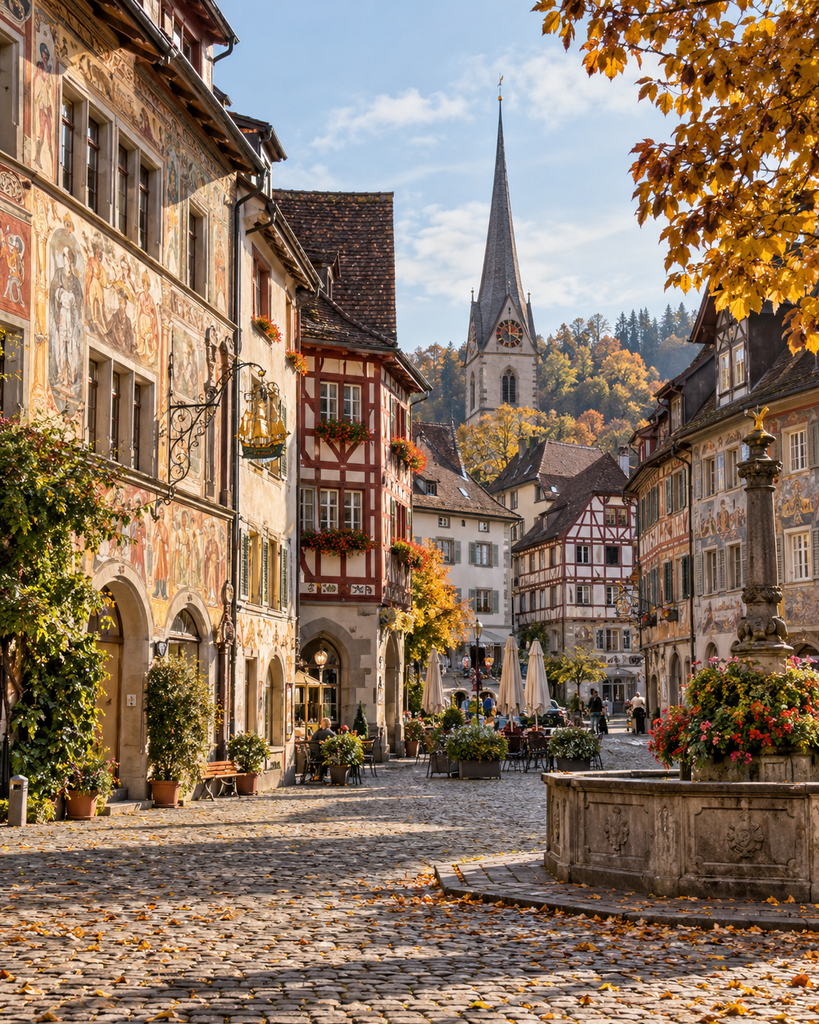
Stein am Rhein is one of Switzerland’s prettiest historic towns, and it feels particularly atmospheric during autumn.
Located beside the Rhine River in northeastern Switzerland, this small town is famous for its beautifully preserved medieval architecture.
Its Old Town features colorful painted façades, half-timbered houses, narrow streets, and charming squares.
The town is especially beautiful around Rathausplatz, where elaborately decorated buildings create an almost storybook setting.
During autumn, the surrounding trees and countryside begin changing color, adding seasonal warmth to the historic scenery.
Take your time wandering through the Old Town, enjoy a riverside walk, and explore the nearby countryside.
You can also visit Hohenklingen Castle for panoramic views of the town and surrounding landscape.
Stein am Rhein’s historic center is particularly notable for its painted façades and well-preserved medieval buildings. (Switzerland Tourism)
The town makes a lovely day trip from Zurich or a worthwhile stop while exploring eastern Switzerland.
Best for: Medieval architecture, photography, romantic villages, and peaceful autumn walks.
When Is the Best Time to Visit Switzerland in Fall?
One of the most important things to know about Switzerland is that autumn does not arrive everywhere at the same time.
The country’s varied geography means that mountain valleys, high-altitude forests, lakeside cities, and southern regions can experience very different conditions.
Here’s how I would think about planning an autumn trip.
September
September is a wonderful time for travelers who want comfortable sightseeing temperatures and opportunities for mountain hiking.
Many Alpine destinations still retain their summer greenery, while the first autumn colors begin appearing in certain areas.
This is also an important period for traditional cattle descents from Alpine pastures and seasonal harvest celebrations.
October
October is particularly attractive for travelers searching for colorful autumn landscapes.
The Engadin’s golden larches, Lavaux’s changing vineyards, and the forests around mountain villages can be spectacular.
However, the precise timing of peak autumn foliage changes every year.
Higher elevations often experience seasonal changes earlier than lower valleys, although individual species and local weather conditions also influence the timing.
November
November brings a quieter, colder atmosphere.
Some lower-elevation areas may still have autumn colors, particularly earlier in the month, while higher mountains can begin experiencing winter conditions.
Some mountain hotels, hiking facilities, restaurants, and lifts may close temporarily between the summer and winter seasons.
Switzerland Tourism maintains a regularly updated autumn foliage map that tracks color changes across the country from early September into November. (Switzerland Tourism)
For a trip specifically focused on photographing golden autumn landscapes, I would generally start by researching early to late October, adjusting the dates for the exact region.
Where to See the Most Beautiful Fall Foliage in Switzerland
Switzerland offers several completely different types of autumn scenery.
If your main goal is photographing brilliant golden forests, the Engadin Valley is particularly appealing.
The extensive larch forests around Sils, St. Moritz, and Pontresina can create extraordinary landscapes during October.
Zermatt also offers beautiful golden larches, especially around its mountain lakes.
For travelers who prefer autumn vineyards, Lavaux is a wonderful option.
For colorful forests combined with turquoise lakes, consider Lake Brienz, Oeschinensee, and the surrounding Bernese Oberland.
And if you’re interested in historic cities surrounded by autumn parks, Bern, Zurich, and Lucerne are excellent choices.
My favorite combination for an autumn photography trip would be the Engadin Valley, Zermatt, Lauterbrunnen, and Lake Brienz.
That itinerary offers beautiful variations in scenery without feeling like you’re photographing the same mountain every day.
Although, frankly, Switzerland has some very photogenic mountains.
What to Expect From the Weather in Switzerland in Fall
Switzerland’s autumn weather varies considerably depending on altitude and location.
Lower-elevation cities such as Zurich, Bern, and Lucerne generally experience cooler conditions as autumn progresses, but daytime sightseeing can remain comfortable.
Mountain villages such as Zermatt and Grindelwald can become much colder, especially during mornings and evenings.
High-altitude destinations may experience snow even when the valleys below are enjoying sunshine.
Southern Switzerland, particularly Ticino, generally offers milder conditions than many high-altitude Alpine areas.
However, no region is completely protected from rainy weather.
I would pack clothing that works across several different conditions rather than relying entirely on one seasonal outfit.
Because the weather in Switzerland occasionally likes to demonstrate all four seasons in the same afternoon.
What to Pack for Switzerland in Fall
Packing for Switzerland in autumn requires a little more planning than preparing for a typical European city break.
You might spend the morning walking beside a relatively mild lakeside promenade and the afternoon riding a mountain railway into much colder conditions.
I would bring:
- Comfortable waterproof walking shoes
- Warm trousers or jeans
- Long-sleeved tops
- Sweaters or fleece layers
- An insulated jacket for mountain excursions
- A waterproof outer layer
- A scarf, gloves, and a warm hat for colder destinations
- Sunglasses and sunscreen
- A reusable water bottle
- A small backpack for day trips
If your itinerary includes high-altitude hiking, make sure your footwear and clothing are appropriate for the actual trail conditions.
Autumn snow and ice can make certain mountain routes unsafe even when the weather in nearby villages looks perfectly pleasant.
Is Switzerland Expensive in Fall?
Switzerland is generally an expensive travel destination, but autumn can offer opportunities to manage your budget.
Accommodation in certain destinations may be more affordable outside the busiest summer and winter periods.
However, prices vary depending on local demand, school holidays, major events, and hotel availability.
Popular places such as Zermatt, Lucerne, and the Jungfrau Region can still be expensive.
One of the easiest ways to reduce costs is to avoid changing hotels every night.
Instead, choose a few convenient bases and explore nearby destinations by train.
For example, you could stay in Interlaken and visit Lauterbrunnen, Grindelwald, and Lake Brienz without constantly moving your luggage.
Lucerne also makes a convenient base for exploring central Switzerland.
If you’re planning several train journeys, compare individual tickets with available rail passes and discount cards before purchasing.
Switzerland’s public transportation network is one of the country’s greatest advantages for independent travelers.
And not renting a car means more time looking out the window instead of arguing with mountain roads.
A win for everyone.
A Beautiful 10-Day Switzerland Fall Itinerary
If I were planning a first-time autumn trip to Switzerland, I would focus on combining picturesque cities with beautiful mountain landscapes.
Here’s a suggested 10-day route.
| Day | Destination | Experience |
|---|---|---|
| 1 | Zurich | Explore the Old Town and lakefront |
| 2 | Lucerne | Chapel Bridge, historic center, lakeside walks |
| 3 | Lucerne | Mount Rigi and surrounding lake scenery |
| 4 | Lauterbrunnen | Waterfalls, villages, Alpine valley |
| 5 | Grindelwald | Mountain views and seasonal hiking |
| 6 | Lake Brienz | Brienz, Iseltwald, and lakeside scenery |
| 7 | Bern | Historic Old Town and autumn parks |
| 8 | Zermatt | Explore the mountain village |
| 9 | Zermatt | Gornergrat and Matterhorn views |
| 10 | Montreux | Lake Geneva and Chillon Castle |
This itinerary offers a good mixture of historic cities, lakes, mountain scenery, and charming villages.
If you have another three or four days, consider extending your trip to the Engadin Valley for its famous golden larches.
And if you’re specifically visiting in October, I would seriously consider including Lavaux.
The vineyard scenery is beautiful.
Frequently Asked Questions About Switzerland in Fall
Is fall a good time to visit Switzerland?
Yes. Autumn offers beautiful seasonal scenery, cooler sightseeing weather, traditional harvest celebrations, and opportunities to explore many destinations outside the busiest summer travel period.
What month has the best fall colors in Switzerland?
October is particularly attractive for autumn foliage, although the timing varies by elevation, weather, and location. Some areas change earlier, while lower-elevation forests may retain color into November.
Does Switzerland get snow in October?
Yes, particularly at higher elevations. However, snowfall is not guaranteed in mountain villages or lower-elevation cities during October.
Is Switzerland crowded in autumn?
Many destinations become quieter after the summer season, but famous attractions and popular mountain areas can still attract substantial visitor numbers. Weekends and school holidays may also be busy.
Can you hike in Switzerland in October?
Many hiking routes remain accessible during October, depending on altitude, weather, snow conditions, and seasonal mountain transport schedules.
Always check current trail conditions before setting out.
Which part of Switzerland is warmest in autumn?
Southern Switzerland, particularly Ticino, generally offers a milder atmosphere than high-altitude Alpine destinations. Lugano and Ascona are attractive choices for travelers who prefer lakeside scenery and comparatively gentle autumn conditions.
Final Thoughts on Visiting Switzerland in Fall
There is something special about Switzerland when the seasons begin changing.
The country feels softer, quieter, and wonderfully atmospheric.
Golden forests frame mountain villages. Turquoise lakes reflect colorful hillsides. Vineyards glow beneath the autumn sunshine. Historic towns become even more charming, and the smell of roasted chestnuts and warm food begins filling the air.
You can spend one morning exploring Lucerne, the next admiring waterfalls in Lauterbrunnen, and another watching the Matterhorn rise above golden forests in Zermatt.
Or perhaps your ideal autumn vacation involves sitting beside Lake Geneva, enjoying coffee, and doing absolutely nothing productive for a few hours.
That sounds wonderful too.
The beauty of Switzerland in fall is that you don’t have to rush through every famous attraction to appreciate the country.
Sometimes the most memorable moments are the simplest ones.
A quiet lakeside walk.
A mountain train passing through golden trees.
A charming village beneath the Alps.
A warm meal after a chilly afternoon outdoors.
And that magical moment when the autumn sunshine catches the mountains just right, making you stop and think:
Okay, Switzerland. That was a little unnecessary. You didn’t have to be this beautiful.