15 Best Places to Visit in Spain in October
Spain in October hits that wonderful travel sweet spot. The intense summer heat has eased, many destinations are noticeably calmer, autumn colors begin appearing across the country, and southern Spain can still feel delightfully warm.
It is also a month when Spain seems to offer several seasons at once. You can wander through golden vineyards in La Rioja, sit outside for tapas in Seville, explore Madrid without melting into the pavement, hike through mountain landscapes near Ronda, or escape to Tenerife for sunshine and beaches.
Autumn officially begins in Spain in late September, bringing seasonal foods such as mushrooms and chestnuts, changing foliage, cultural events, and the grape harvest in major wine regions. Spain’s tourism authorities specifically highlight October as an excellent time for exploring La Rioja and its colorful vineyards. (Spain.info)
And honestly, Spain without the full force of July and August crowds? I am listening.
Here are 15 of the best places to visit in Spain in October, from Mediterranean cities and Andalusian treasures to vineyards, Atlantic coastlines, and sunny islands.
Why Visit Spain in October?
October is one of my favorite months for the simple reason that traveling becomes easier.
In much of central and southern Spain, daytime sightseeing is far more comfortable than during the hottest part of summer. You can wander through palace gardens, old towns, plazas, parks, and archaeological sites without planning your entire day around finding the nearest patch of shade.
Spain still gets plenty of sunny days in autumn, particularly from Madrid southward, although mornings and evenings become cooler and occasional rain is possible. Layers are much more useful than a heavy winter coat at this point in the season. (Spain.info)
October is not completely quiet, though. October 12 is Spain’s national holiday, and certain cities host major celebrations around this time. Madrid, Zaragoza, and other popular destinations can become noticeably busier.
So yes, October can offer smaller crowds. Just do not assume you will have the Alhambra entirely to yourself while dramatic Spanish guitar music magically plays in the background.
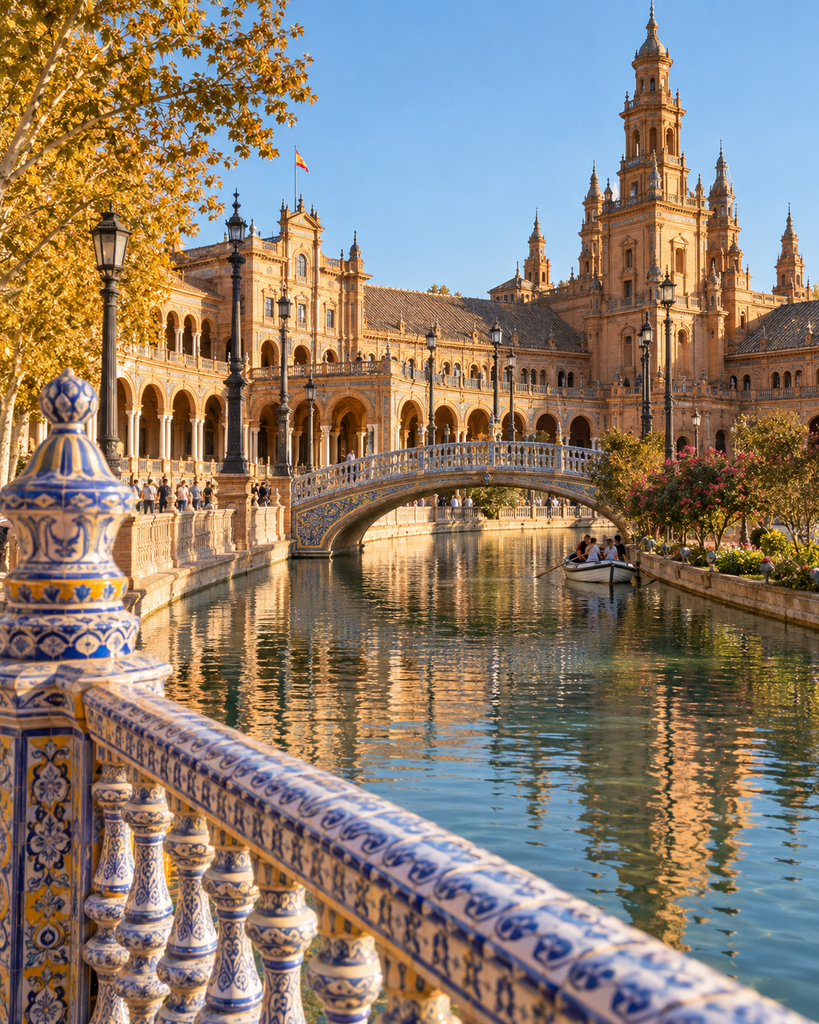
Seville
If I were planning an Andalusia trip in October, Seville would be near the top of my list.
Summer in Seville can be brutally hot. By October, the city becomes much easier to explore on foot. The softer temperatures are perfect for wandering through Barrio Santa Cruz, crossing the Guadalquivir River to Triana, exploring the Royal Alcázar, climbing the Giralda, and spending an afternoon around Plaza de España.
Autumn also brings softer golden light to the city, while parks such as María Luisa begin taking on seasonal colors. Seville’s official tourism site describes autumn as a period of pleasant temperatures, lively terraces, cultural activities, and ideal conditions for exploring the city’s monuments. (Visita Sevilla)
Do not rush your visit. Seville rewards slow travel.
Spend the morning sightseeing, disappear into a tapas bar for lunch, wander around Triana in the afternoon, then find a rooftop or riverside terrace around sunset.
October evenings are also excellent for flamenco performances. Even if you normally avoid tourist performances, seeing flamenco in Seville can be incredibly atmospheric when you choose a smaller venue.
Best for: architecture, tapas, flamenco, romantic walks, warm autumn weather.
Granada
Granada somehow becomes even more atmospheric once autumn arrives.
The city sits beneath the Sierra Nevada, which means October can bring crisp mornings and cooler evenings even when afternoons remain comfortable.
The obvious highlight is the Alhambra, but the city deserves more than a rushed palace visit.
Walk through the Albaicín, stop at the Mirador de San Nicolás for views across to the Alhambra, wander through Sacromonte, and spend an evening hopping between traditional tapas bars.
Autumn foliage around the Alhambra and Generalife adds another layer of color to an already spectacular setting.
October is particularly attractive because walking Granada’s hills becomes much less exhausting than during summer. Those Albaicín streets are beautiful, but your legs will definitely know they have been to Granada.
Book Alhambra tickets well ahead of time. Visitor numbers may ease outside peak summer, but this is one attraction where relying on last-minute luck is rarely a great strategy.
Best for: Moorish architecture, photography, tapas, history, mountain scenery.

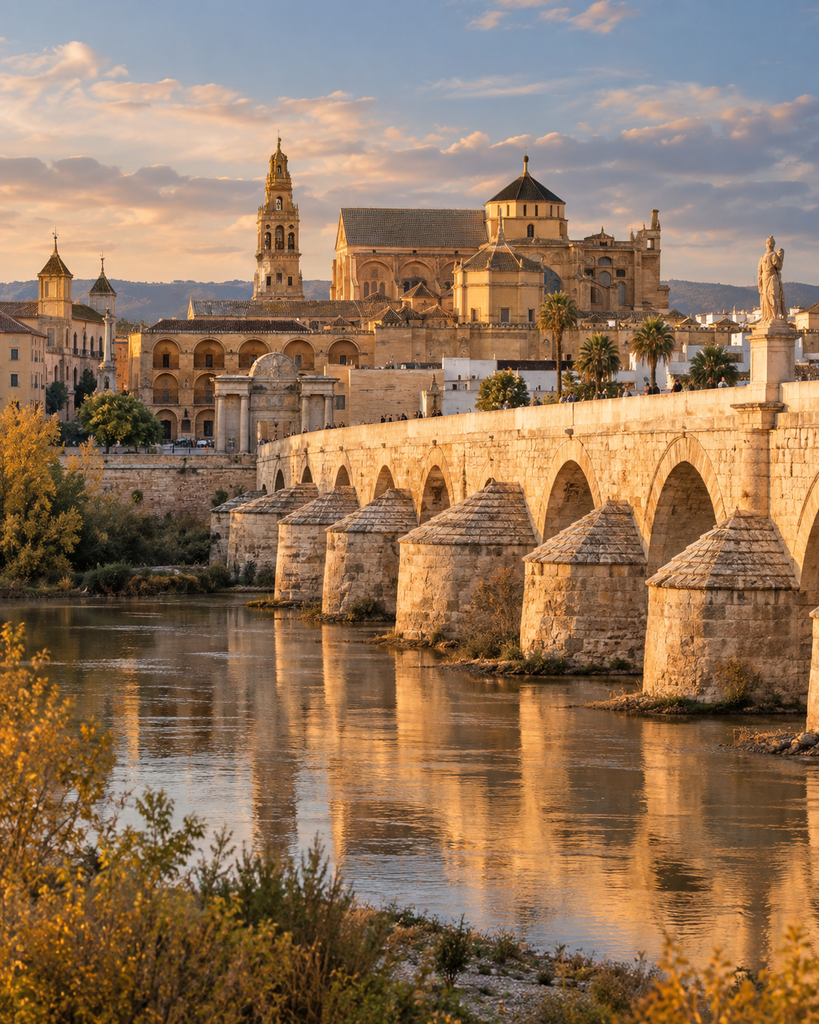
Córdoba
Córdoba is another Spanish city that becomes much more comfortable once summer loosens its grip.
Start with the extraordinary Mosque-Cathedral, then walk through the Jewish Quarter, cross the Roman Bridge, visit the Alcázar de los Reyes Cristianos, and explore some of Córdoba’s famous courtyards.
Those patios are associated most strongly with the May festival, but several patios can actually be visited throughout the year, and visiting outside the festival period can mean fewer people competing for the same tiny doorway. (Turismo de Córdoba)
October also brings a lively cultural calendar. Córdoba’s autumn programming includes music, arts and cultural events, and the city’s FLORA International Flower Festival takes place in October. (Turismo de Córdoba)
Córdoba works wonderfully as a two-night stop between Madrid and Seville, although I would happily linger longer.
There is something wonderful about seeing the Mezquita early, taking a ridiculously long lunch, wandering without an agenda, and realizing your entire afternoon somehow disappeared.
That is not poor time management. That is Spain.
Best for: history, architecture, patios, food, cultural events.
Madrid
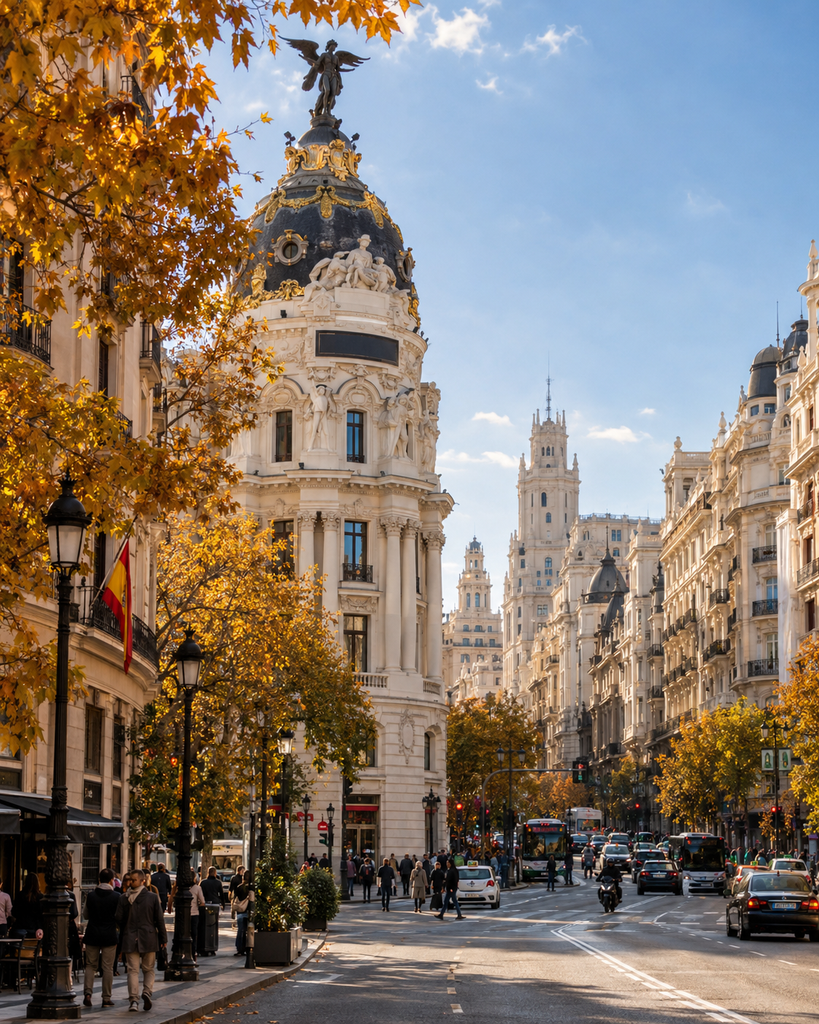
Madrid feels completely different once summer ends.
Temperatures become milder in October, while El Retiro Park begins shifting into autumn colors. Madrid’s tourism board lists an average October temperature of around 15°C and specifically recommends autumn for seeing parks dressed in reds and ochres. (EsMadrid)
October is perfect for combining outdoor exploring with Madrid’s extraordinary indoor attractions.
Spend a morning in the Prado Museum, walk along Paseo del Prado, relax in El Retiro, explore neighborhoods such as Malasaña, Chueca, La Latina, and Barrio de las Letras, then finish with tapas or dinner somewhere around La Latina.
Madrid’s cultural calendar also gets busy in autumn, with exhibitions, theatre seasons and festivals filling the city. (EsMadrid)
One thing to keep in mind is October 12, Spain’s national holiday. Madrid hosts major celebrations around this period, including events associated with Hispanidad, so accommodation and central areas can become busier. (EsMadrid)
For travelers who love big cities but dislike extreme heat, October is an excellent compromise.
Best for: museums, nightlife, parks, food, shopping, city breaks.
Barcelona
Barcelona in October feels gentler than Barcelona in high summer.
The Mediterranean is still right there, the café terraces are still alive, but sightseeing tends to become more comfortable as temperatures gradually cool.
This is a fantastic month for exploring the city’s neighborhoods on foot.
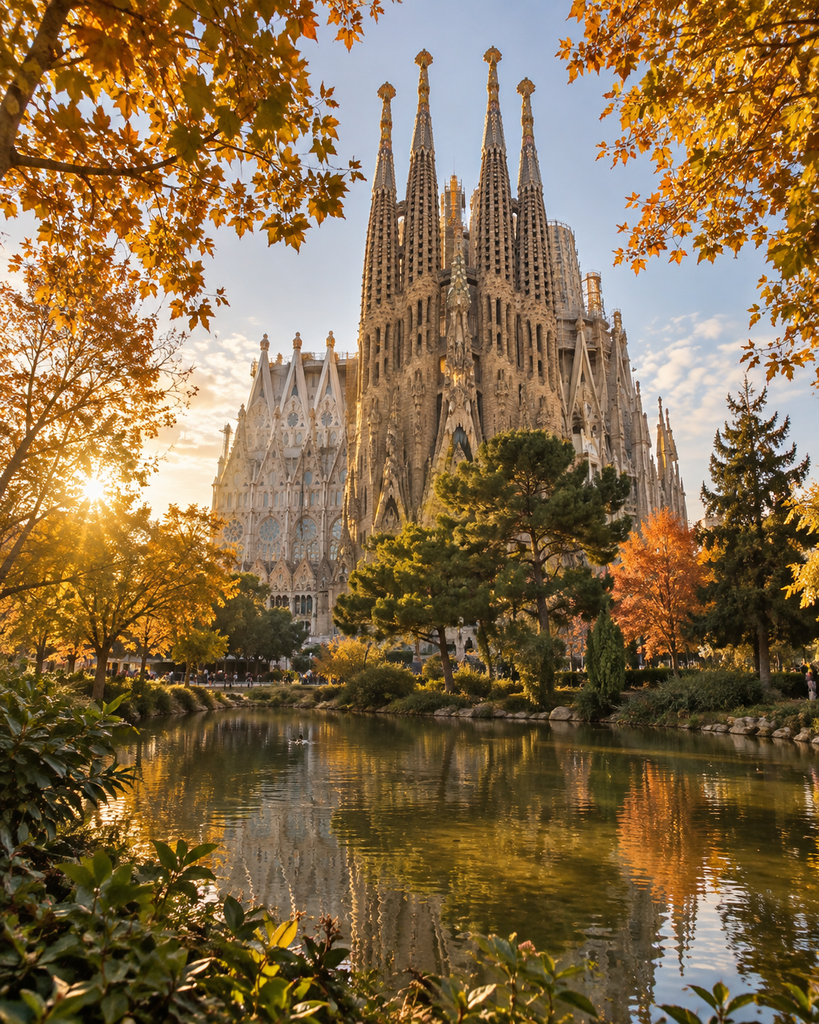
Walk through the Gothic Quarter early in the morning, wander around El Born, visit the Sagrada Família, admire the architecture of Passeig de Gràcia, spend time in Park Güell, and walk along the waterfront toward Barceloneta.
You can also use Barcelona as a base for autumn day trips. Montserrat is particularly appealing once hiking conditions cool, while Girona makes an easy cultural escape.
Rain becomes more possible during Mediterranean autumn, so I would build some flexibility into the itinerary.
Fortunately, Barcelona has enough museums, markets, restaurants, galleries, and architectural landmarks to survive a rainy afternoon quite nicely.
A rainy day involving pastries and Modernist architecture is not exactly a travel emergency.
Best for: architecture, food, culture, city-and-sea trips, day trips.
Valencia
Valencia quietly becomes one of Spain’s most appealing October destinations.
The weather usually remains mild enough for outdoor exploring, while the intense heat of summer begins fading. Valencia’s tourism board specifically promotes autumn for its mild temperatures, sunsets, beaches, parks, museums, outdoor activities, and Mediterranean lifestyle. (Visit Valencia Blog)
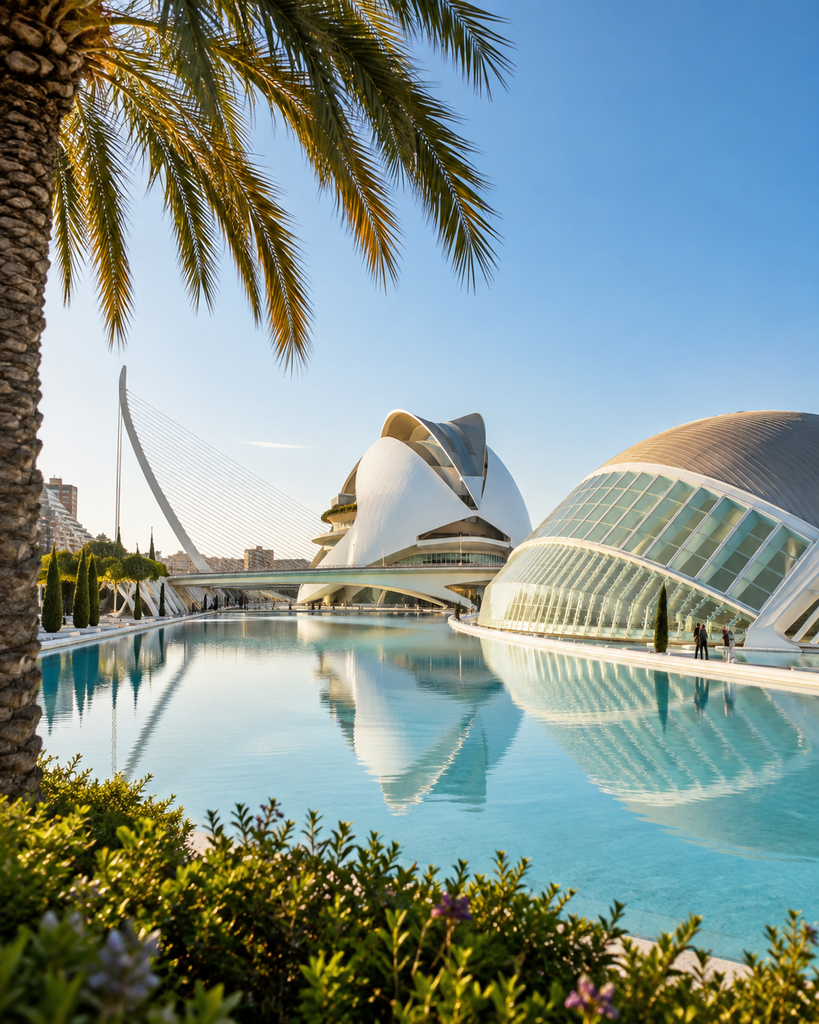
Start in the historic center with Valencia Cathedral, Plaza de la Virgen, and the Central Market.
Then switch completely into the future and spend time at the City of Arts and Sciences.
One of my favorite things about Valencia is how easily nature fits into the city. The Turia Gardens stretch through the former riverbed and create a green corridor that is perfect for walking or cycling.
You can continue toward the Mediterranean beaches or head south to Albufera Natural Park for sunset.
And yes, you should eat paella while you are here.
Preferably somewhere that does not advertise “AUTHENTIC PAELLA” using fourteen exclamation marks.
Valencia also has more than 200 kilometers of cycling infrastructure, making autumn particularly pleasant for seeing the city by bike. (Visit Valencia)
Best for: beaches, cycling, food, architecture, relaxed city breaks.
San Sebastián
October gives San Sebastián a moodier personality, and I mean that as a compliment.
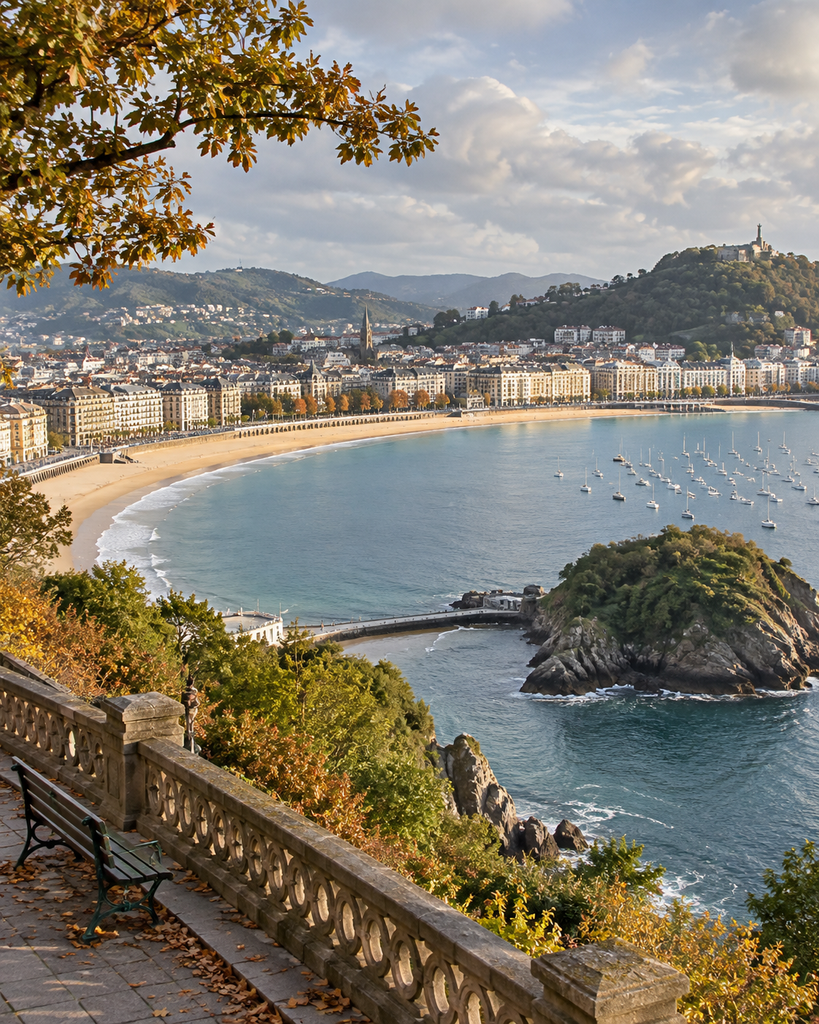
This elegant Basque coastal city combines beaches, green hills, dramatic Atlantic scenery, and one of Europe’s most celebrated food cultures.
Autumn is particularly interesting for food lovers. Markets begin filling with seasonal mushrooms, while parks and hills around San Sebastián shift toward ochre autumn tones. Local tourism authorities recommend autumn for walking routes through places such as Cristina Enea Park, the Urumea River, the coast, and the surrounding hills. (San Sebastián Turismo)
Spend time around La Concha Bay, wander through Parte Vieja, hike or ride up Monte Igueldo, and dedicate at least one evening to pintxos.
Actually, dedicate several evenings.
Research is important.
The trade-off is weather. Northern Spain is wetter and less predictable than Andalusia or the Mediterranean coast, particularly as autumn progresses.
Pack a waterproof jacket and accept that moody Atlantic skies are part of the experience.
Best for: food, pintxos, coastal scenery, walking, sophisticated city breaks.
La Rioja
For pure October magic, La Rioja is difficult to beat.
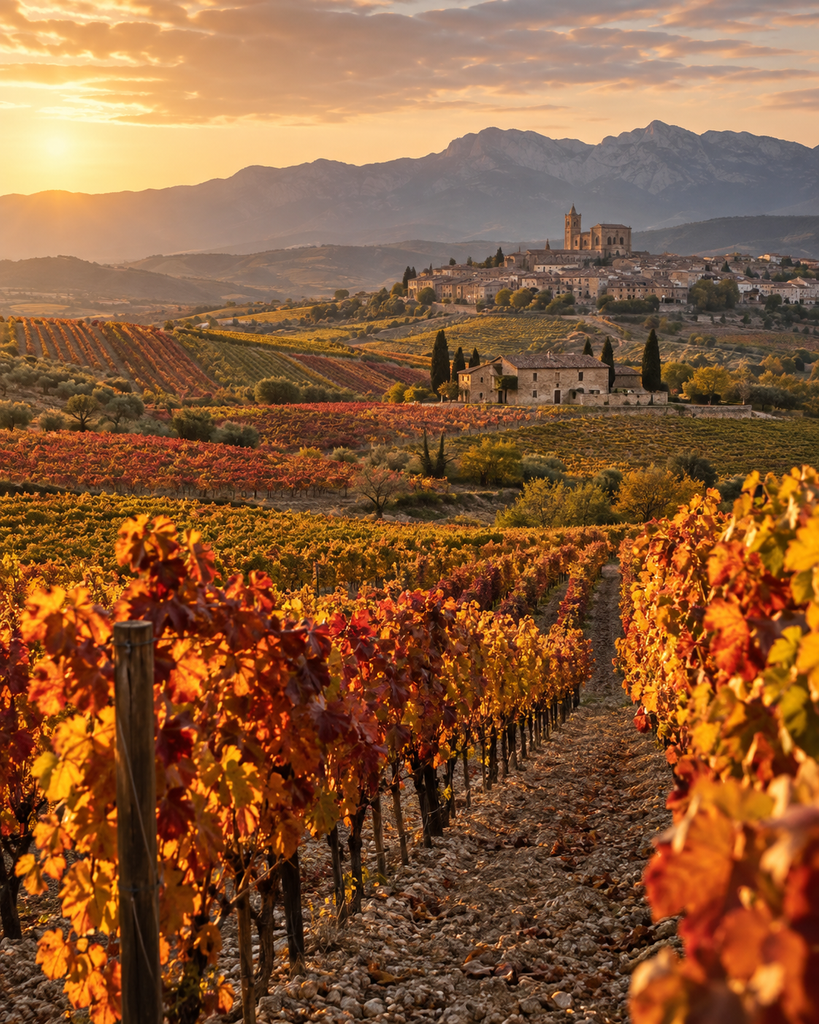
This is grape-harvest season, and vineyards begin changing from green into shades of yellow, orange, and red.
Spain’s official tourism authority specifically recommends La Rioja and neighboring Rioja Alavesa in October because of the grape harvest and changing vineyard colors. (Spain.info)
Base yourself in Logroño and explore the surrounding wine country.
You can tour wineries, walk through vineyards, visit historic villages such as Laguardia, explore Haro, and spend evenings eating tapas along Logroño’s famous Calle Laurel.
Some wine tourism operators offer harvest-related activities, while October and November are particularly scenic months for seeing La Rioja Alta from above because of the changing vineyard colors. (Spain.info)
Even travelers who are not passionate about wine can appreciate the landscape.
Rolling vineyards, medieval villages, mountain backdrops, autumn foliage, long lunches…
October basically tells La Rioja, “Fine, show off.”
Best for: wine, autumn foliage, road trips, food, romantic countryside escapes.
Zaragoza
Zaragoza earns a place on this list for one very big reason: October is festival season.
The Fiestas del Pilar are Zaragoza’s major annual celebration, filling the city with ceremonies, music, performances, gatherings, and festive energy. Spain’s official tourism site highlights October specifically as the month when Zaragoza celebrates its biggest festivities. (Spain.info)
Even outside the festival, Zaragoza deserves more attention than it sometimes receives.
The Basilica of Nuestra Señora del Pilar dominates the skyline along the Ebro River, while the city also offers Roman remains, Mudéjar architecture, museums, lively tapas areas, and the impressive Aljafería Palace.
Zaragoza also sits conveniently between Madrid and Barcelona by high-speed rail, making it surprisingly easy to include in a multi-city itinerary.
Visit during the festival if you want energy and celebration.
Visit later in the month if you prefer a calmer experience.
Best for: festivals, architecture, Spanish culture, history, rail itineraries.

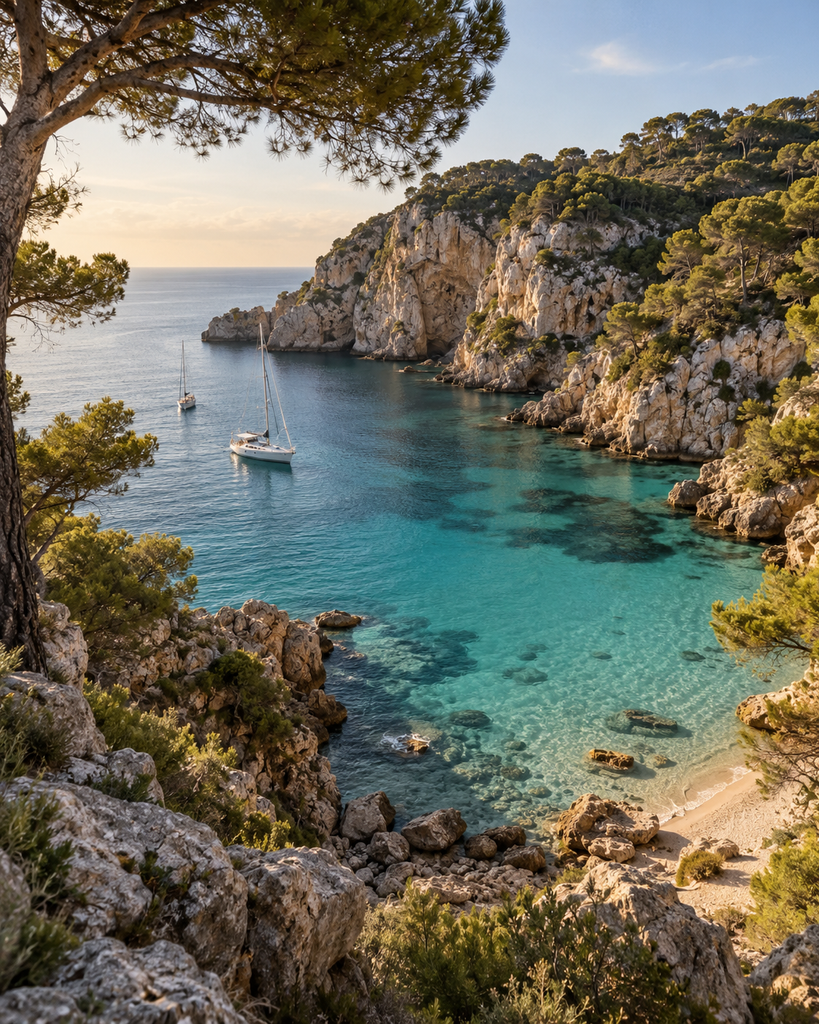
Mallorca
Mallorca is often treated purely as a summer destination, which is exactly why October can be so appealing.
The enormous summer crowds begin thinning, temperatures become more comfortable for exploring, and the island becomes much more interesting beyond the beach.
Palma deserves at least a full day. Explore its cathedral, old streets, courtyards, markets, cafés, and waterfront.
Then rent a car and head toward the Serra de Tramuntana.
Towns such as Sóller, Deià, Valldemossa, and Fornalutx look particularly beautiful against the island’s mountain landscape.
October is also a far better time for hiking than midsummer.
You may still encounter warm beach days, particularly earlier in the month, but I would treat swimming as a bonus rather than designing the entire trip around it. Mediterranean autumn weather can change quickly.
That actually makes Mallorca more interesting. Instead of simply going to the beach every day, you finally have an excuse to see what else the island has been hiding.
Best for: road trips, villages, hiking, beaches, couples.
Tenerife
If your October plans involve escaping autumn rather than embracing it, head to Tenerife.
The Canary Islands enjoy spring-like conditions through much of the year. Spain’s tourism authority notes an average annual temperature of roughly 22°C across the islands, making them one of the country’s strongest choices for autumn and winter sunshine. (Spain.info)
Tenerife offers much more than resorts.
Drive into Teide National Park, explore the historic center of San Cristóbal de La Laguna, visit black-sand beaches, discover mountain villages, hike through volcanic landscapes, and explore the greener north around places such as La Orotava and Puerto de la Cruz.
Mount Teide reaches 3,715 meters, making it Spain’s highest peak, and its volcanic landscapes feel like a completely different country compared with mainland Spain. (Spain.info)
Tenerife is especially useful if you are traveling later in October and still want reliable possibilities for sunshine.
Basically, autumn arrives in Europe and Tenerife politely declines the invitation.
Best for: sunshine, beaches, volcanic scenery, hiking, road trips.

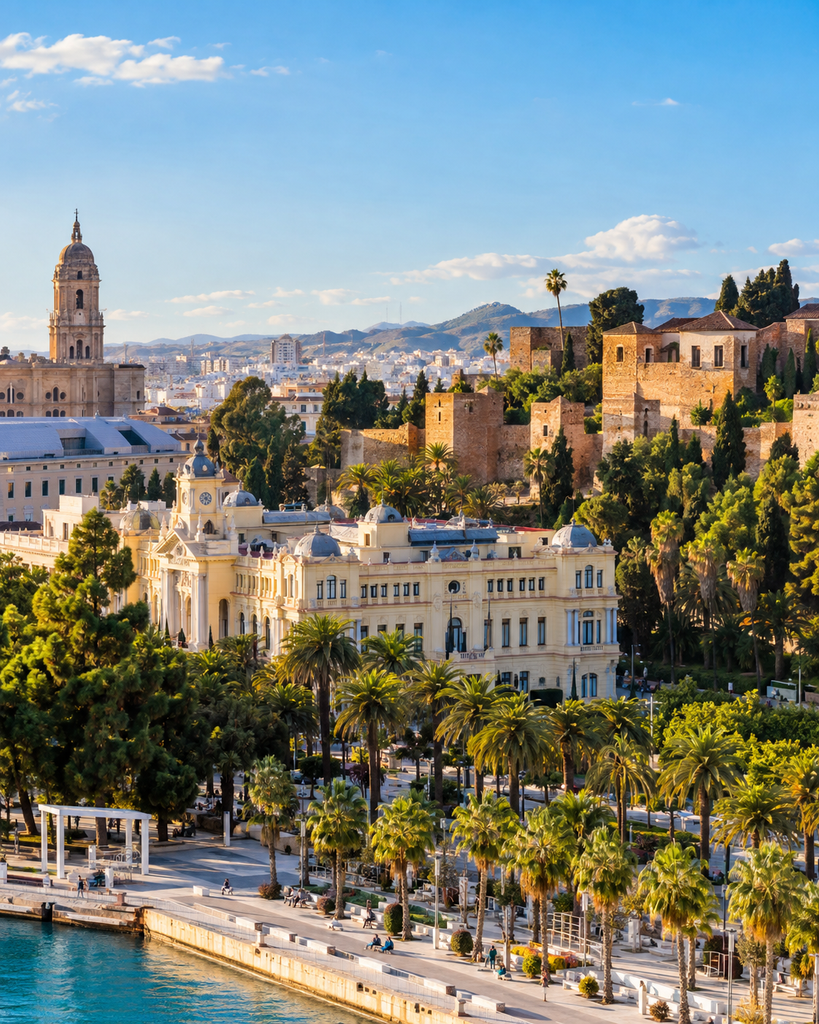
Málaga
Málaga has transformed from a place many travelers simply flew into on their way somewhere else into a genuinely worthwhile destination.
October is a lovely time to discover why.
Southern Spain remains relatively mild, while sightseeing is much more pleasant than during the peak heat of summer. Spain’s tourism authority includes the Costa del Sol among areas where travelers can enjoy mild coastal conditions from October through the cooler months. (Spain.info)
Visit the Alcazaba, climb toward Gibralfaro Castle, wander through Málaga’s historic center, explore the Picasso Museum, and stroll along the waterfront at Muelle Uno.
Beaches remain part of the experience, although October weather can vary.
Málaga also works brilliantly as a base.
From here you can visit Ronda, Nerja, Frigiliana, Caminito del Rey, Marbella, or several of Andalusia’s famous white villages.
That makes the city especially good if you want variety without constantly changing hotels.
Best for: city-and-beach trips, museums, food, day trips, warmer weather.
Ronda
Ronda is dramatic at any time of year, but autumn brings something special to the surrounding countryside.
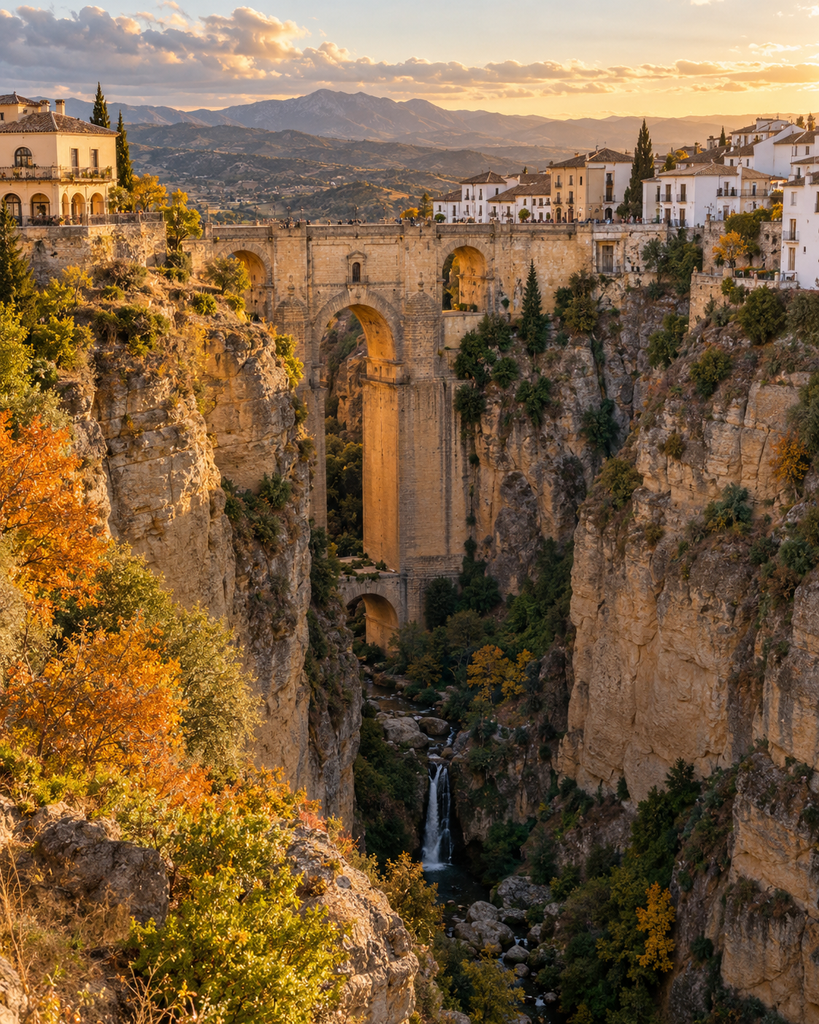
The town sits above the deep El Tajo gorge, with the famous Puente Nuevo connecting its historic districts.
You could technically see Ronda on a day trip, but staying overnight completely changes the experience.
Once the tour buses disappear, the town becomes quieter and wonderfully atmospheric.
Walk along the gorge, explore the old town, visit the Arab Baths, and enjoy viewpoints across the Serranía de Ronda.
October is also a great time to explore the surrounding natural areas. The nearby Genal Valley is known for chestnut forests that turn shades of orange and ochre during autumn. (Turismo de Ronda)
Ronda’s wider region also includes an extraordinary concentration of protected landscapes and opportunities for hiking and nature activities. (Turismo de Ronda)
If you are driving through Andalusia, Ronda is one of those places where adding “just one night” can easily turn into wishing you had booked three.
Best for: scenery, road trips, photography, hiking, romantic stays.
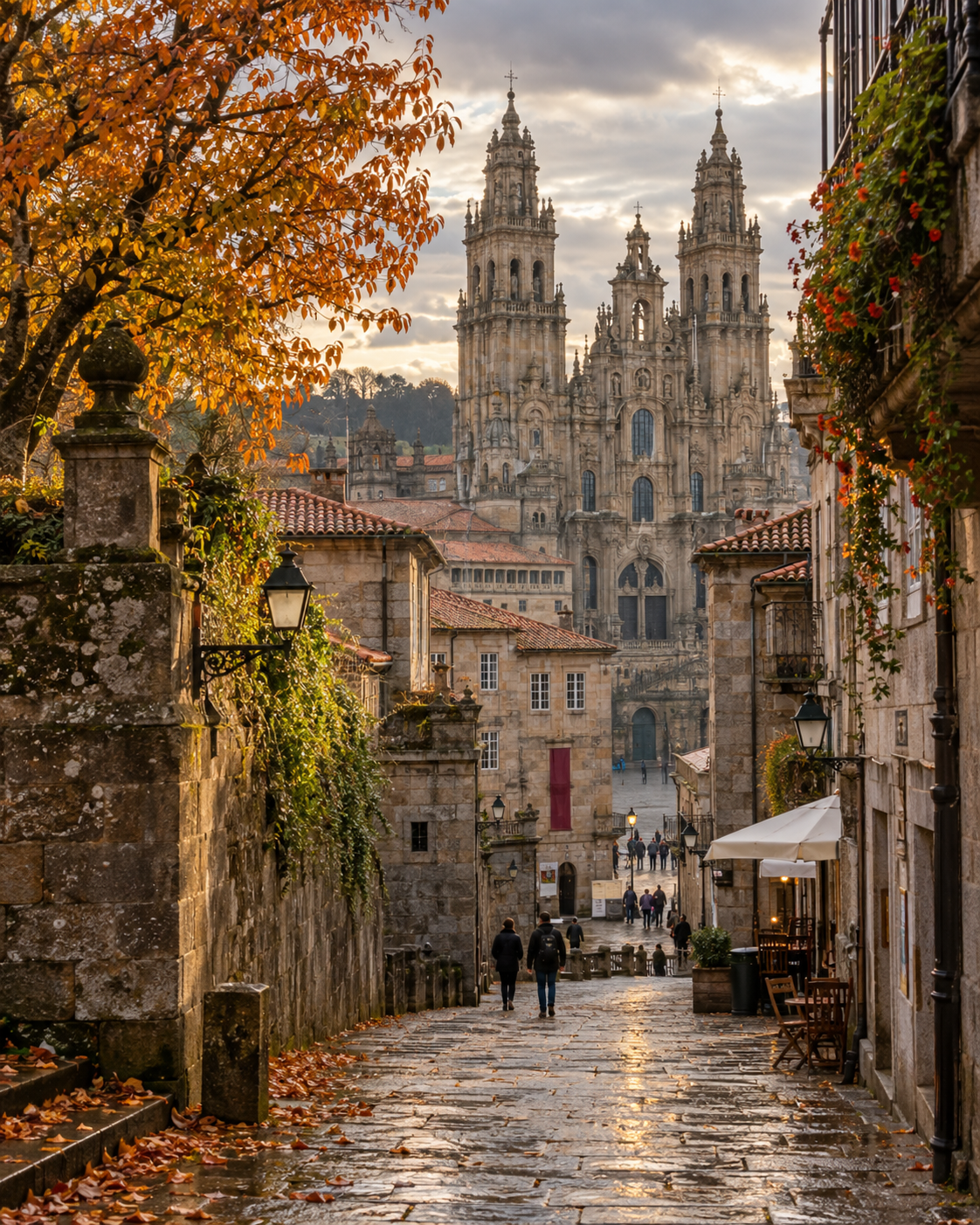
Santiago de Compostela
October brings a completely different flavor to northern Spain.
Santiago de Compostela is atmospheric even under gray skies, perhaps especially under gray skies.
The historic center is made for wandering. Stone streets wind toward the magnificent cathedral, while arcades, old university buildings, churches, cafés, and traditional restaurants seem to appear around every corner.
Autumn is also closely associated with the landscapes of northern Spain, where cooler weather, forests, mushrooms, chestnuts, and hearty regional cuisine begin taking center stage. (Spain.info)
Yes, rain is a genuine possibility.
This is Galicia. The greenery did not get that way through positive thinking.
Bring waterproof shoes and embrace it.
October can also appeal to travelers walking portions of the Camino de Santiago because conditions are cooler than midsummer, although shorter days and more variable weather mean preparation matters.
Reward yourself afterward with Galician seafood, empanada, pulpo, and perhaps a slice of Tarta de Santiago.
Best for: history, food, atmospheric cities, pilgrimage routes, northern Spain.

Toledo
If you want history without traveling far from Madrid, Toledo is an easy choice.
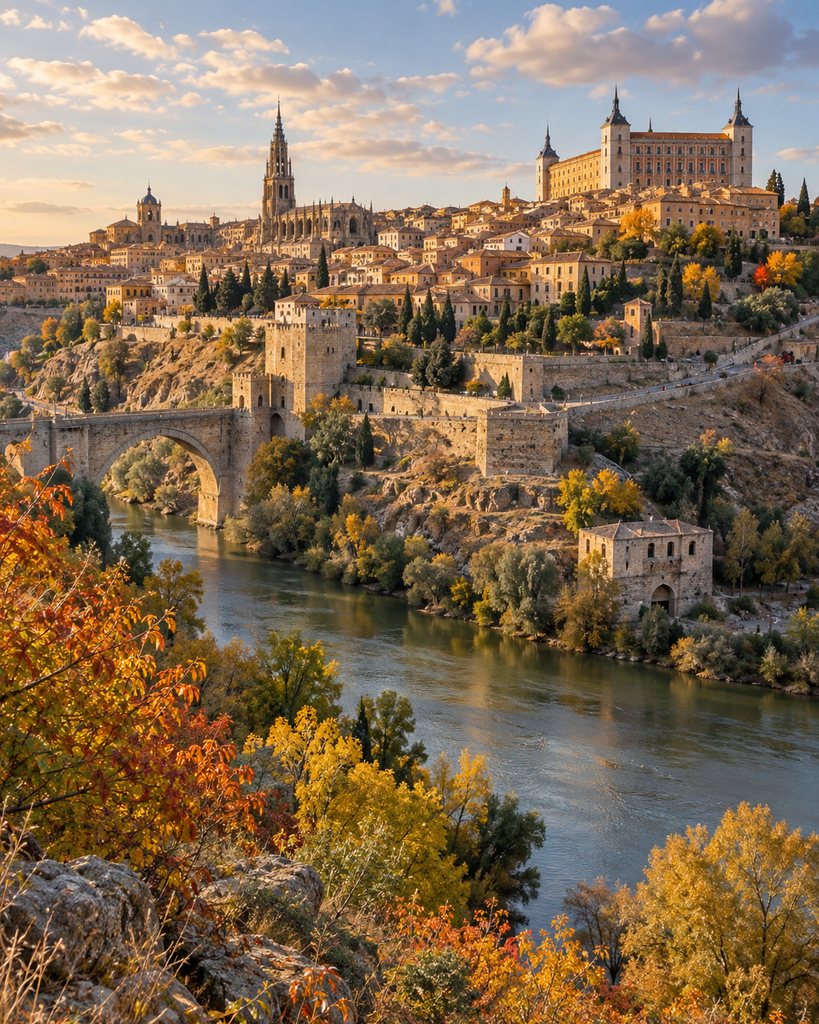
The old city rises above a bend in the Tagus River and contains an extraordinary concentration of churches, synagogues, mosques, museums, fortifications, viewpoints, and twisting medieval streets.
Toledo is a UNESCO World Heritage city, and its historic center is one of the largest in Spain. (Turismo Toledo)
October makes exploring those steep streets considerably more pleasant than midsummer.
Visit Toledo Cathedral, the Monastery of San Juan de los Reyes, the Synagogue of Santa María la Blanca, the El Greco Museum, and viewpoints overlooking the city.
Most people visit Toledo as a day trip from Madrid.
I would consider staying overnight.
After evening visitors leave, the narrow streets become quieter, monuments light up, and the city takes on an almost cinematic atmosphere.
Just remember where your hotel is.
Those medieval streets were not designed with Google Maps users in mind.
Best for: history, architecture, photography, Madrid day trips, overnight escapes.
Which Part of Spain Is Warmest in October?
If warm weather is your priority, look toward the Canary Islands and southern Spain.
Tenerife is the strongest option on this list for travelers hoping for sunshine and beach weather.
Málaga, Seville, and other parts of Andalusia can also remain pleasantly warm, although evenings become cooler and rain becomes more possible as autumn progresses.
Valencia and Mallorca can still offer beautiful Mediterranean days, particularly earlier in October, but beach conditions are less predictable than in summer.
Northern destinations such as Santiago de Compostela and San Sebastián will generally feel cooler and wetter.
That variety is actually one of Spain’s biggest advantages in October. You can design the trip around the season you want.
Where to See Autumn Colors in Spain
Travelers searching specifically for fall foliage should look beyond Spain’s beaches.
La Rioja is one of the most photogenic choices thanks to vineyards turning yellow, orange, and red.
Madrid’s El Retiro becomes increasingly colorful through autumn, while San Sebastián’s parks and hills also take on seasonal shades. (EsMadrid)
The forests surrounding Ronda and the Genal Valley can be gorgeous later in the season, particularly where chestnut trees dominate.
Granada also gives you a beautiful combination of autumn foliage, historic architecture, and mountain scenery.
Autumn colors do not peak everywhere simultaneously, though. Late October generally offers stronger foliage than the first few days of the month.
What to Pack for Spain in October
Packing for Spain in October requires a little strategy because conditions vary enormously depending on where you go.
For most itineraries, lightweight layers work best. Bring comfortable walking shoes, trousers, breathable tops, a sweater or light jacket, and something waterproof.
A compact umbrella is particularly useful for northern Spain.
For Andalusia, Valencia, Mallorca, or the Canary Islands, keep some warm-weather clothing in your suitcase too.
Spain’s official travel guidance recommends layering during autumn because mornings and evenings become cooler while sunny daytime conditions can still feel surprisingly warm. (Spain.info)
In other words, your suitcase may experience a minor identity crisis.
That is normal.
Is October a Good Time to Visit Spain?
Absolutely.
October gives travelers an impressive combination of comfortable sightseeing weather, autumn scenery, seasonal food, wine harvests, cultural events, and generally easier travel than the busiest summer months.
It is particularly appealing if your trip involves cities.
Walking around Seville, Madrid, Córdoba, Granada, or Toledo becomes considerably more enjoyable once extreme summer temperatures have passed.
You also have tremendous variety.
Head north for green landscapes and food. Explore La Rioja for vineyards. Travel through Andalusia for architecture and warm afternoons. Choose Mallorca for Mediterranean scenery. Fly to Tenerife if you would prefer to pretend autumn simply does not exist.
My Favorite Spain Itinerary for October
If I had around two weeks, I would resist the temptation to cross the entire country like I was participating in some kind of competitive sightseeing championship.
Instead, I would combine Madrid, Córdoba, Seville, Granada, and Málaga for a fantastic central and southern Spain itinerary.
For something slower and more autumnal, I would pair Madrid, La Rioja, San Sebastián, and Barcelona.
And if sunshine were the main goal, I would combine Valencia or Málaga with several days in Tenerife.
October rewards slower travel.
Spend an extra morning at the café. Take the scenic train. Stay for sunset. Order another round of tapas.
Spain will still be there tomorrow.
Final Thoughts on Visiting Spain in October
Spain in October offers something that summer sometimes struggles to provide: breathing room.
The country is still lively, sunny, colorful, and delicious, but traveling feels less like a race against heat and crowds.
You can see autumn leaves in Madrid, wander through vineyards in La Rioja, explore Moorish palaces in Granada, eat tapas outdoors in Seville, hike around Ronda, watch Atlantic waves in San Sebastián, or spend an afternoon beside the sea in Tenerife.
And because Spain’s geography is so varied, you are not choosing a single type of October vacation.
You can have autumn, Mediterranean warmth, mountains, wine country, historic cities, and beaches all in the same country.
That is precisely what makes October such a brilliant time to go.