25 Best Places to Visit in Europe in Fall
There is something ridiculously lovely about Europe in fall. Summer crowds begin to thin, trees turn shades of amber and gold, cafés become cozier, vineyards are busy with harvest season, and suddenly wandering around an old European city with a warm drink feels like an actual travel personality trait.
Fall also gives us options. September can still feel wonderfully summery in southern Europe. October is prime territory for colorful landscapes, harvest experiences, and comfortable city breaks. November becomes quieter, moodier, and increasingly festive as some Christmas markets begin appearing toward the end of the month.
Traveling during Europe’s shoulder season can also mean fewer crowds at major attractions and a more relaxed pace compared with peak summer, although weather, prices, and visitor levels vary considerably by destination. (Visit Europe)
So whether you’re dreaming about castles surrounded by orange forests, wine country at harvest time, Mediterranean sunshine, or cobblestone streets covered in fallen leaves, these are 25 of the best places to visit in Europe in fall.
When Is the Best Time to Visit Europe in Fall?
For most travelers, mid-September through late October is the sweet spot.
September is particularly good if you still want warm weather. Countries such as Spain, Portugal, Italy, Greece, and Croatia can remain pleasantly warm while the heaviest summer crowds begin disappearing.
October is my favorite all-around month for an autumn trip. Central European cities become incredibly atmospheric, fall colors intensify in many regions, and vineyard destinations are especially appealing.
November is much quieter. Northern and mountainous areas can already feel wintry, while destinations farther south can still be comfortable for sightseeing. Norway, for example, can transition toward winter surprisingly early in mountainous regions, so conditions and seasonal transportation should always be checked before planning late-autumn outdoor adventures. (Visit Norway)
And now for the fun part. Where should we actually go?
Prague, Czechia
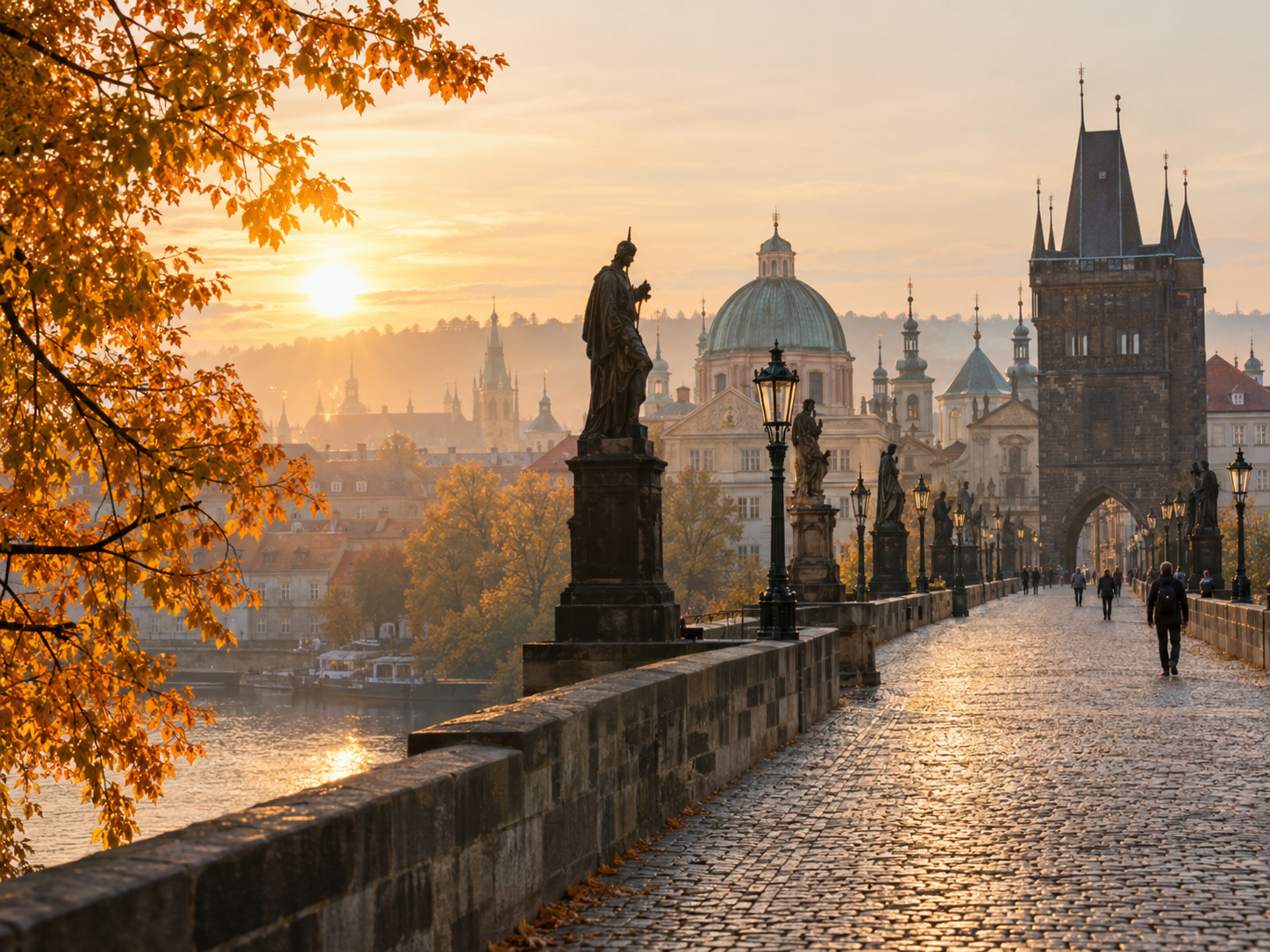
If someone asked me to design a city specifically for fall, Prague would be dangerously close to the finished product.
The Czech capital already has Gothic towers, cobblestone lanes, medieval architecture, hilltop viewpoints, bridges, and old-fashioned cafés. Add orange leaves and misty autumn mornings and the whole city starts looking suspiciously cinematic.
Walk across Charles Bridge early in the morning before exploring Prague Castle and the colorful streets of Malá Strana. Later, climb toward Petřín Hill or wander through one of the city’s parks for fall foliage and panoramic views.
Old Town Square becomes especially atmospheric once evening arrives and the temperatures drop.
Best time: Late September through October
Best for: Romantic city breaks, architecture, photography, history
Bavaria, Germany
Southern Germany is one of Europe’s great fall destinations, particularly if forests, mountains, castles, and small towns are calling your name.
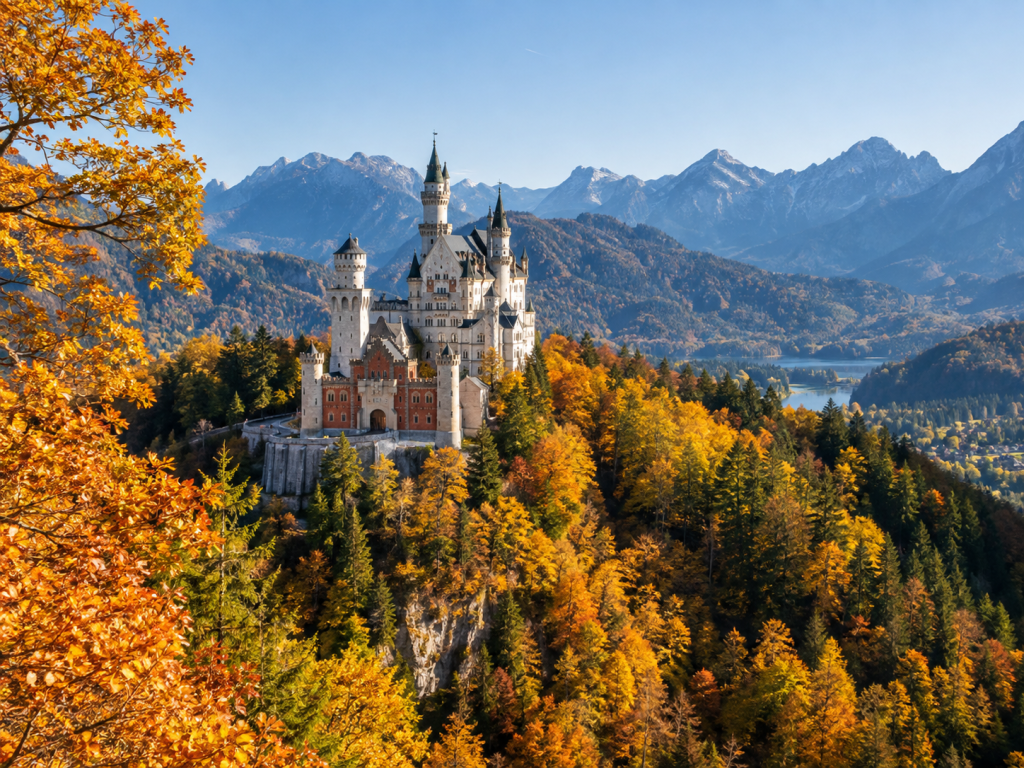
Bavaria combines autumn foliage with dramatic Alpine scenery and some seriously photogenic architecture. Neuschwanstein Castle surrounded by orange and yellow forests is basically fall showing off.
Munich makes a convenient starting point, especially in September and early October. From there, you can travel toward Füssen, Garmisch-Partenkirchen, Berchtesgaden, or smaller Bavarian villages.
September also overlaps with Germany’s famous Oktoberfest season in Munich, although exact annual festival dates should always be checked before booking.
Best time: September through mid-October
Best for: Castles, mountains, road trips, traditional towns
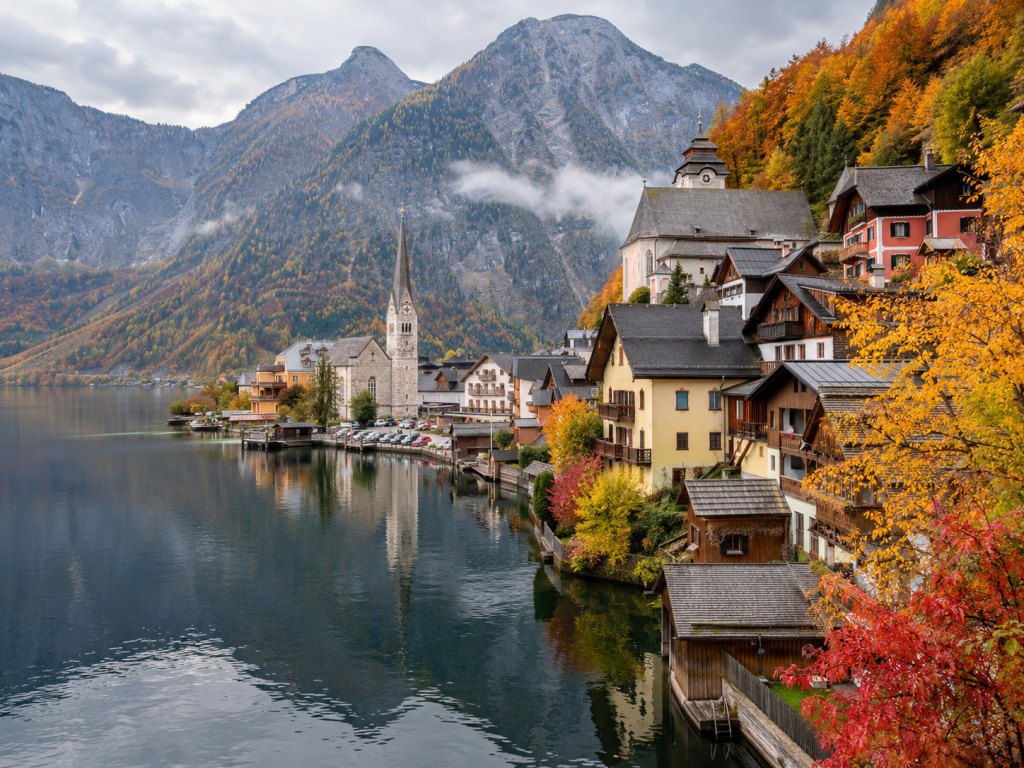
Hallstatt, Austria
Hallstatt is tiny, famous, and often very busy. Fall is one of the better times to experience its postcard scenery with a somewhat calmer atmosphere.
Imagine wooden Alpine houses beside a glassy lake, steep mountains rising behind the village, and forests changing from green to shades of gold.
You can walk along the lakefront, explore the historic village center, take a boat ride, or head higher for panoramic views.
October is especially attractive for autumn scenery, although mountain weather becomes increasingly unpredictable as the season progresses. Hallstatt is widely recommended for its colorful October landscapes and quieter atmosphere after the summer peak. (euronews)
Best time: Early to mid-October
Best for: Lake scenery, photography, romantic trips
Vienna, Austria
Vienna somehow becomes even more elegant when everyone starts wearing coats.
The city’s grand architecture looks gorgeous against golden trees, while cooler weather gives us a perfectly respectable excuse to spend excessive amounts of time inside Viennese coffeehouses eating cake.
Explore Schönbrunn Palace and its gardens, wander around the historic center, visit the museums surrounding the Ringstrasse, and stroll through parks such as the Prater or Stadtpark.
Vienna is particularly good for travelers who want autumn atmosphere without building an entire vacation around hiking or outdoor activities.
Toward late November, the city gradually begins transitioning into its famous Christmas season too.
Best time: October through November
Best for: Culture, museums, cafés, classical architecture
Salzburg, Austria
If Vienna feels sophisticated, Salzburg feels like somebody placed a storybook city underneath a mountain range.
The historic center is compact enough to explore on foot, and autumn creates beautiful contrasts between pastel buildings, church towers, fortress walls, and the surrounding hills.
Visit Hohensalzburg Fortress, walk through Mirabell Gardens, explore the Old Town, and stop for coffee when the increasingly crisp air starts winning the argument.
Salzburg also makes a useful base for exploring Austria’s surrounding lake district.
Best time: Late September through October
Best for: Old towns, mountain scenery, music, relaxed weekends
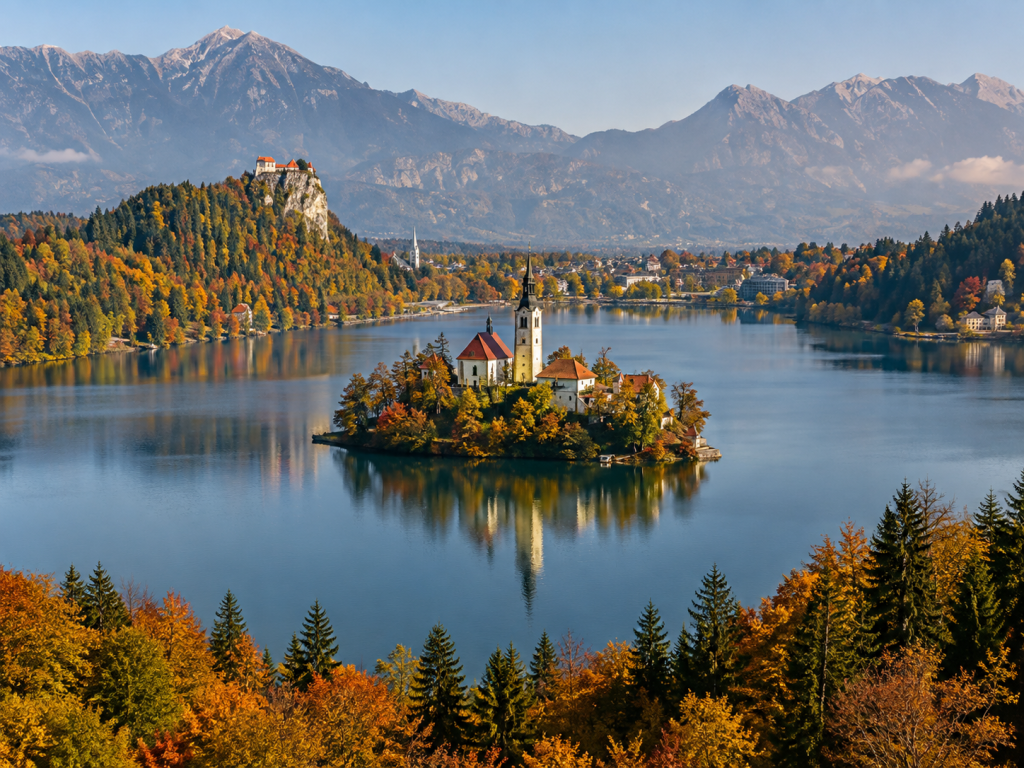
Lake Bled, Slovenia
Lake Bled becomes ridiculously photogenic in October.
The famous church sits on its tiny island while forested hills around the lake turn yellow, orange, and red. Above everything sits Bled Castle, perched dramatically on a cliff.
Walk the path around the lake, ride a traditional pletna boat toward Bled Island, or hike to viewpoints such as Ojstrica if weather conditions are suitable.
Nearby Lake Bohinj provides another beautiful option for travelers who want more mountain scenery and fewer people.
October is particularly appealing because autumn colors can surround the lake after peak summer crowds have eased. (euronews)
Best time: Early to mid-October
Best for: Nature, couples, photography, easy outdoor adventures
Ljubljana, Slovenia
Slovenia’s capital deserves much more attention than it usually gets.
Ljubljana feels small, friendly, and wonderfully walkable. The Ljubljanica River winds through the center, lined with cafés, bridges, colorful architecture, and leafy riverbanks.
Fall suits the city beautifully.
Spend your morning exploring Ljubljana Castle, wander through the Central Market, walk around Tivoli Park, then claim a riverside café table and do absolutely nothing productive for a while. Travel has responsibilities too.
Ljubljana is also an excellent base if you want to combine a European city break with Lake Bled or other Slovenian landscapes.
Best time: September through October
Best for: Slow travel, cafés, couples, city-and-nature trips
The Dolomites, Italy
For mountain scenery, northern Italy is difficult to beat.
The Dolomites become especially dramatic during fall as trees begin changing color beneath pale limestone peaks.
Areas around Val Gardena, Cortina d’Ampezzo, Alpe di Siusi, and surrounding valleys offer beautiful scenery for hiking, photography, scenic drives, and quiet mountain stays.
There is one important catch: fall is a transition season in the Alps. Cable cars, mountain huts, restaurants, and accommodations can operate on reduced schedules or close between summer hiking season and winter ski season.
Check individual attractions before building an itinerary around them.
Best time: Late September through early October
Best for: Hiking, mountain photography, road trips
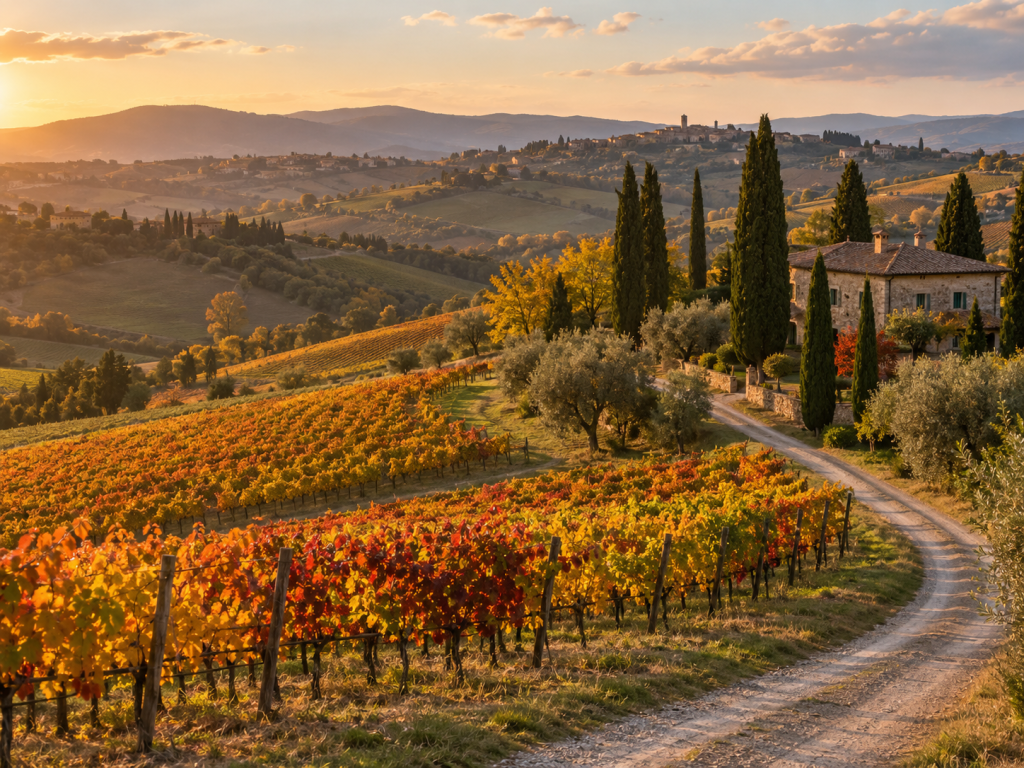
Tuscany, Italy
Fall and Tuscany were clearly meant to meet.
Rolling hills, vineyards, stone farmhouses, medieval towns, olive groves, and harvest-season food create the kind of trip that makes ordinary lunches back home feel personally offensive.
Florence makes an excellent starting point, but the countryside is where autumn really shines.
Explore Siena, San Gimignano, Montepulciano, Pienza, or smaller villages throughout the region. September and October are especially appealing for vineyard landscapes and seasonal cuisine.
Temperatures also become more comfortable for sightseeing compared with the intense heat that can hit Italy during summer.
Best time: September through October
Best for: Food, wine country, road trips, couples
Umbria, Italy
Want Tuscany’s hill-town atmosphere with a slightly quieter personality?
Meet Umbria.
Often called Italy’s green heart, this central Italian region has medieval towns, wooded hills, vineyards, olive groves, and wonderful seasonal food.
Perugia, Assisi, Spello, Orvieto, and Gubbio can all fit beautifully into a fall itinerary.
Autumn is especially interesting for travelers who plan trips around food. Seasonal specialties, mushrooms, olive harvests, and truffles become part of the experience, and Umbria is particularly associated with black-truffle season. (Lonely Planet)
Best time: October through November
Best for: Foodies, hill towns, quiet Italian escapes
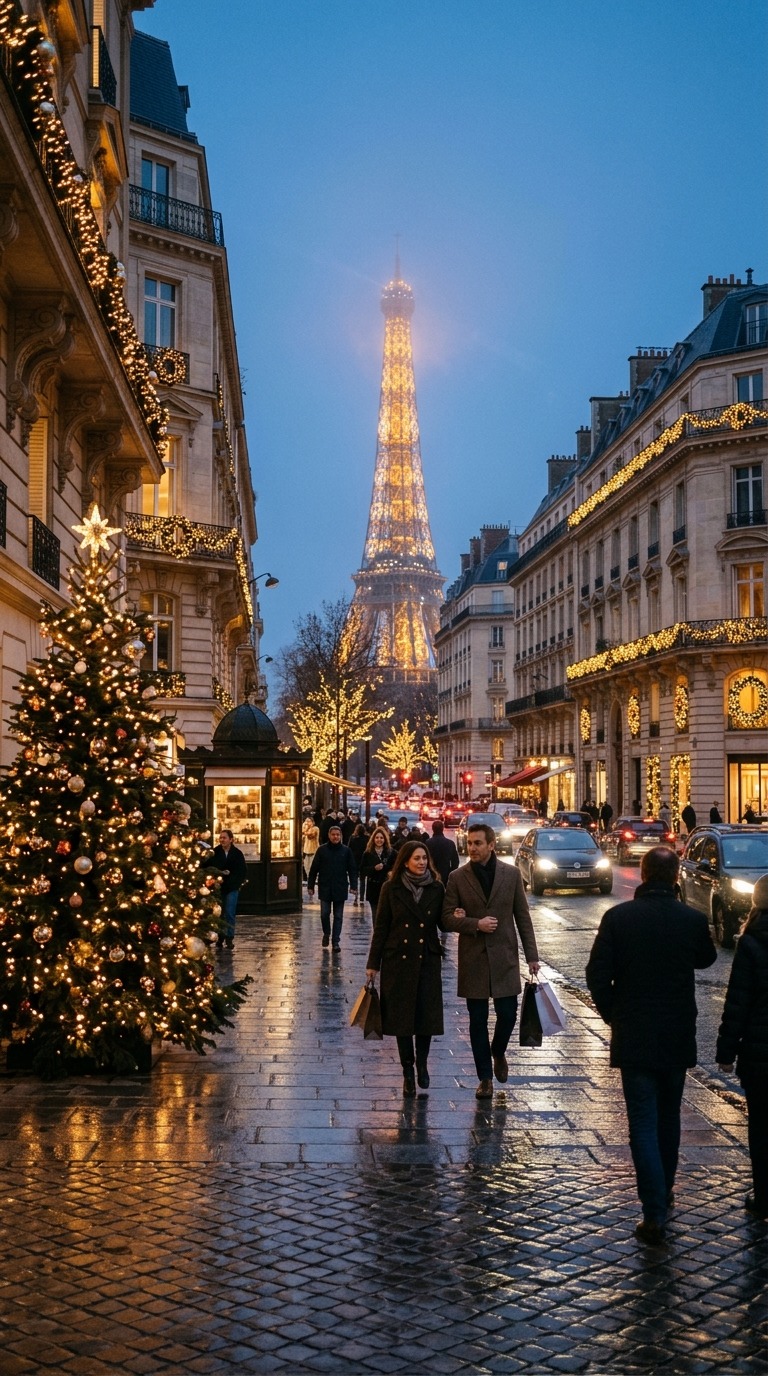
Paris, France
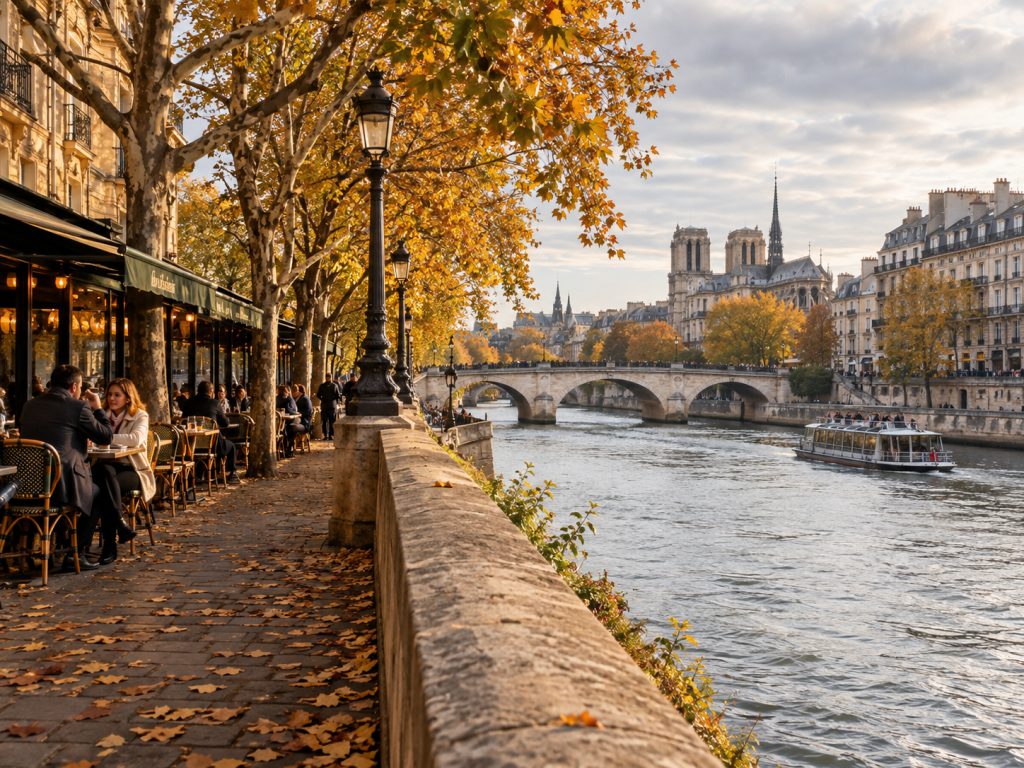
Paris isn’t exactly a secret destination, but fall changes its personality.
Tree-lined avenues become golden, temperatures become cooler, and strolling along the Seine suddenly feels much more appealing than doing it under an aggressive July sun.
The Jardin du Luxembourg and Jardin des Tuileries are lovely spots for autumn colors. Montmartre feels atmospheric on cooler mornings, while museums such as the Louvre and Musée d’Orsay provide easy rainy-day plans.
September can still be fairly busy, so October often gives travelers a better combination of seasonal atmosphere and cooler sightseeing weather.
And yes, sitting outside a café wearing a coat while pretending you’re in a French film is absolutely allowed.
Best time: Late September through October
Best for: First-time Europe trips, museums, couples, food
Alsace, France
The Alsace region feels like someone took every adorable European village and placed them within driving distance of each other.
Colmar is the star, with canals, half-timbered houses, flower-covered buildings, and colorful streets. Nearby villages such as Eguisheim and Riquewihr make a countryside itinerary even better.
Fall adds vineyards and warm autumn colors to the landscape.
The Alsace Wine Route is particularly enjoyable around harvest season, and cooler temperatures make exploring villages much more comfortable.
Visit later in November and you’ll begin seeing parts of the region prepare for its famously festive winter season.
Best time: September through October
Best for: Villages, wine, road trips, photography
Burgundy, France
If wine is going to influence your European vacation decisions, Burgundy has a pretty convincing argument.
Vineyards spread across rolling countryside surrounding historic towns and villages, and autumn coincides with one of the region’s most important times of year: grape harvest season.
Base yourself around Dijon or Beaune and explore the surrounding wine country, medieval villages, markets, and countryside.
Burgundy is particularly rewarding for travelers who prefer slower itineraries. Instead of racing through attractions, this is somewhere to linger over meals, explore small towns, and appreciate the landscape.
Recent European fall travel recommendations continue to highlight Burgundy as a standout destination for grape-harvest season. (Lonely Planet)
Best time: September through October
Best for: Wine, gastronomy, couples, countryside
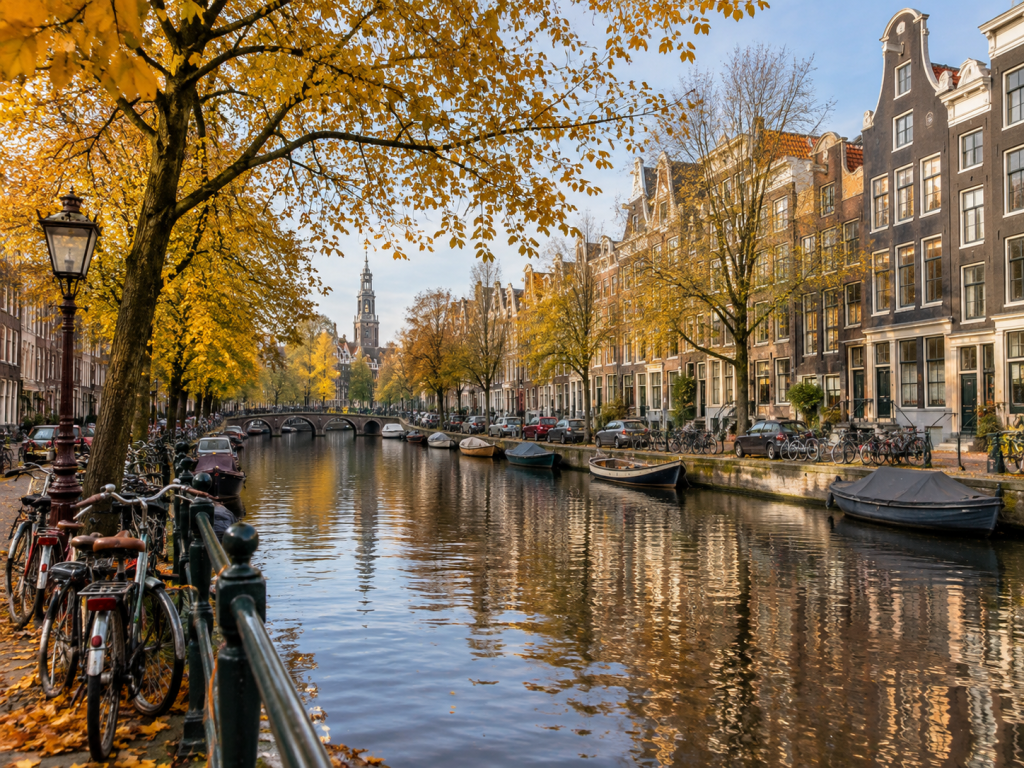
Amsterdam, Netherlands
Amsterdam’s canals somehow become even prettier when trees lining the water turn golden.
Cool autumn mornings suit the city perfectly. Wander through Jordaan, explore the canal belt, visit museums, browse local markets, or simply spend an hour watching bicycles pass while wondering how Dutch people make cycling look so effortless.
Vondelpark is particularly pleasant when the leaves change.
Fall weather can be wet and windy, especially later in the season, so this is one trip where waterproof layers earn their suitcase space.
Best time: September through October
Best for: City breaks, museums, canals, photography
Bruges, Belgium
Bruges is already medieval-Europe fantasy material.
Add autumn leaves, cooler temperatures, misty canals, and Belgian chocolate and things become slightly unfair to other destinations.
The historic center is incredibly walkable. Visit Markt Square, climb the Belfry if you’re feeling energetic, follow the canals, and wander beyond the busiest streets where the city becomes noticeably quieter.
Fall is also prime cozy-café weather.
And if it rains? You’re in Belgium. There is chocolate nearby. We adapt.
Best time: September through October
Best for: Romantic weekends, architecture, photography
Budapest, Hungary
Budapest is one of my favorite choices if you’re looking for a European fall city break that combines beautiful architecture, food, nightlife, and relaxing indoor activities.
Walk along the Danube, explore Castle Hill, visit Fisherman’s Bastion, admire Parliament, and wander the leafy paths of Margaret Island.
Then comes one of Budapest’s greatest autumn advantages: thermal baths.
When the air outside becomes chilly, soaking in naturally heated water suddenly feels like brilliant vacation planning rather than simple laziness.
September is generally warmer, while October brings stronger autumn atmosphere.
Best time: September through October
Best for: Couples, nightlife, architecture, thermal baths
Lucerne, Switzerland
Switzerland in fall deserves far more attention.
Lucerne provides a wonderful combination of city, lake, and mountain scenery without requiring you to build an expedition-level itinerary.
Walk across Chapel Bridge, explore the historic Old Town, stroll beside Lake Lucerne, or take scenic excursions into the surrounding mountains when conditions permit.
September is particularly appealing because temperatures can still be comfortable for outdoor sightseeing.
By later October and November, some mountain attractions may operate differently as Alpine destinations transition between their summer and winter seasons.
Best time: September through early October
Best for: Lakes, mountain scenery, scenic rail travel
The Scottish Highlands
Give me an old stone castle, a misty valley, a winding road, and orange hillsides and I will immediately start acting like I’m in an extremely dramatic historical film.
The Scottish Highlands are spectacular during fall.
Consider areas around Glencoe, Fort William, Cairngorms National Park, Loch Lomond, or the Isle of Skye. Forests, mountains, moors, waterfalls, and lochs create endless opportunities for scenic drives and photography.
September generally provides more daylight and somewhat milder conditions than later autumn.
October brings stronger seasonal atmosphere, but rain and rapidly changing weather are part of the package. Waterproof clothing is not optional optimism here.
Best time: September through early October
Best for: Road trips, hiking, landscapes, photography
Edinburgh, Scotland
You don’t have to venture deep into the Highlands to enjoy Scotland in autumn.
Edinburgh becomes beautifully atmospheric once cooler weather arrives.
Arthur’s Seat and Holyrood Park provide sweeping views, while Princes Street Gardens and other green areas pick up autumn colors. The Old Town, Edinburgh Castle, Victoria Street, and winding closes feel even moodier beneath cloudy fall skies.
When temperatures drop, Edinburgh’s pubs, cafés, museums, and restaurants suddenly become extremely persuasive.
It’s also easy to combine several days in Edinburgh with a longer Highlands trip.
Best time: September through October
Best for: History, city breaks, architecture, couples
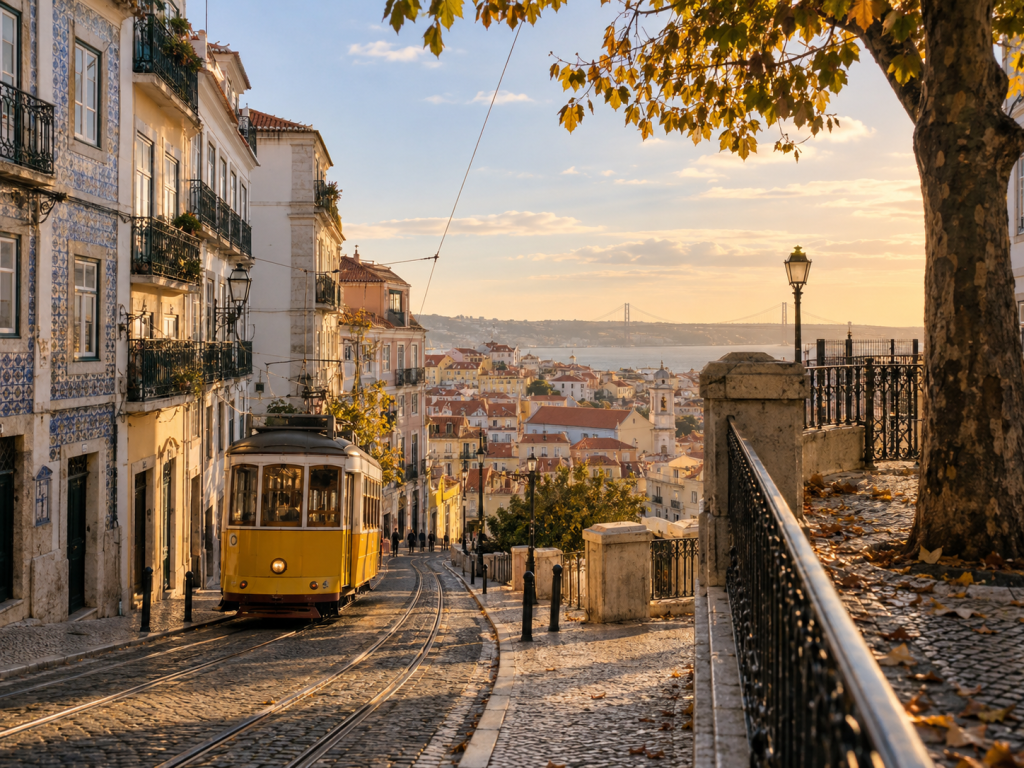
Lisbon, Portugal
Not everyone wants sweaters, fog, and falling leaves.
Some of us want October sunshine.
Lisbon is one of Europe’s strongest fall destinations for travelers hoping to extend summer without dealing with July and August heat.
Explore Alfama, ride through the city’s hilly neighborhoods, visit Belém, watch sunset from a miradouro, and take a day trip to nearby Sintra.
September and October remain particularly attractive for Portugal travel, and Lisbon works beautifully as a shoulder-season city break. (Lonely Planet)
Best time: September through October
Best for: Warm weather, food, city breaks, first-time visitors
Porto and the Douro Valley, Portugal
Portugal gives us another fantastic autumn combination: Porto plus the Douro Valley.
Porto’s historic center, tiled buildings, riverfront neighborhoods, bridges, and cafés make it a rewarding destination by itself.
Then head east toward the Douro Valley.
Vineyards cover the steep hills surrounding the river, creating one of Portugal’s most memorable landscapes. Fall brings harvest-season activity and changing colors to portions of wine country.
Travel by scenic train, car, or river cruise depending on your itinerary and seasonal schedules.
Best time: September through October
Best for: Wine, scenery, couples, train journeys
Seville, Spain
There are places where fall means digging out a thick coat.
In Seville, it can mean finally being able to walk around comfortably.
Andalusia’s summer temperatures can become seriously intense, making autumn a wonderful alternative for sightseeing.
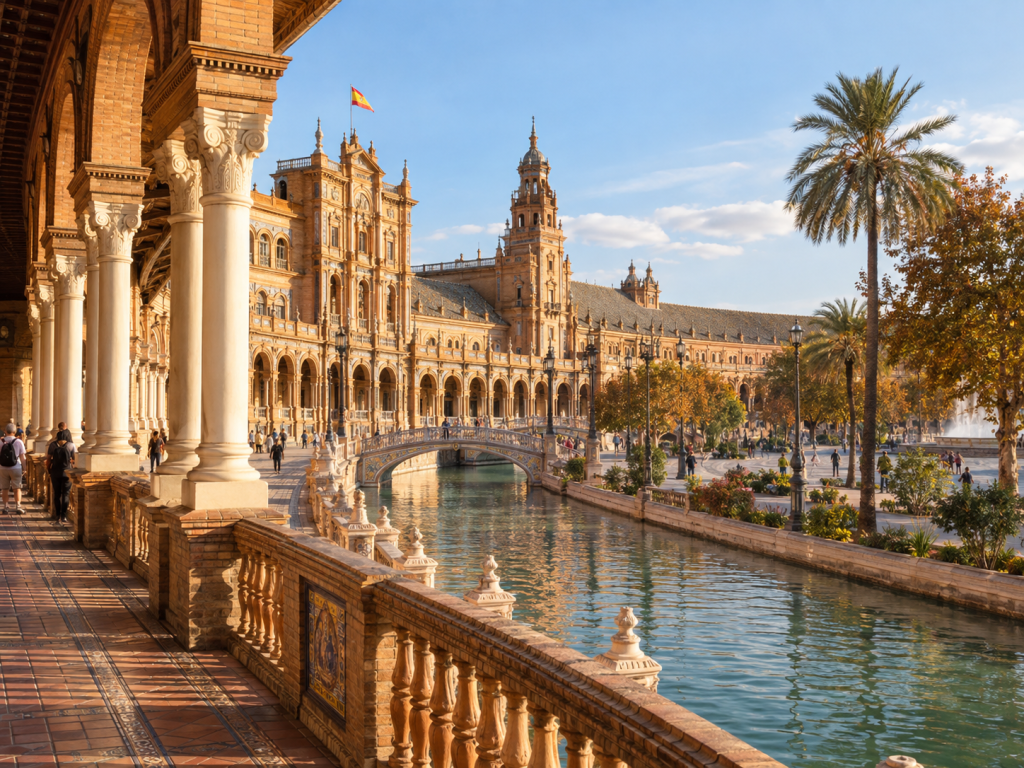
Visit the Real Alcázar, wander the narrow lanes of Santa Cruz, admire Plaza de España, explore Seville Cathedral, and spend your evenings eating tapas outdoors when conditions allow.
September can still be hot. October and November tend to feel increasingly comfortable, making Seville one of my favorite options for Europe in fall if warm weather matters.
Current fall travel recommendations also highlight southern Spain for travelers seeking autumn sunshine. (Lonely Planet)
Best time: October through November
Best for: Sunshine, architecture, food, culture
Granada, Spain
Granada pairs beautifully with Seville, but it deserves its own place on this list.
The Alhambra is the obvious highlight, and fall can make exploring its palaces, courtyards, and gardens much more comfortable than during peak summer heat.
Beyond the Alhambra, wander through Albaicín, stop at viewpoints overlooking the city, explore atmospheric streets, and experience Granada’s tapas culture.
The nearby Sierra Nevada gives the landscape a dramatic mountain backdrop, particularly as temperatures begin dropping later in the season.
Best time: October through November
Best for: History, architecture, couples, Spanish culture
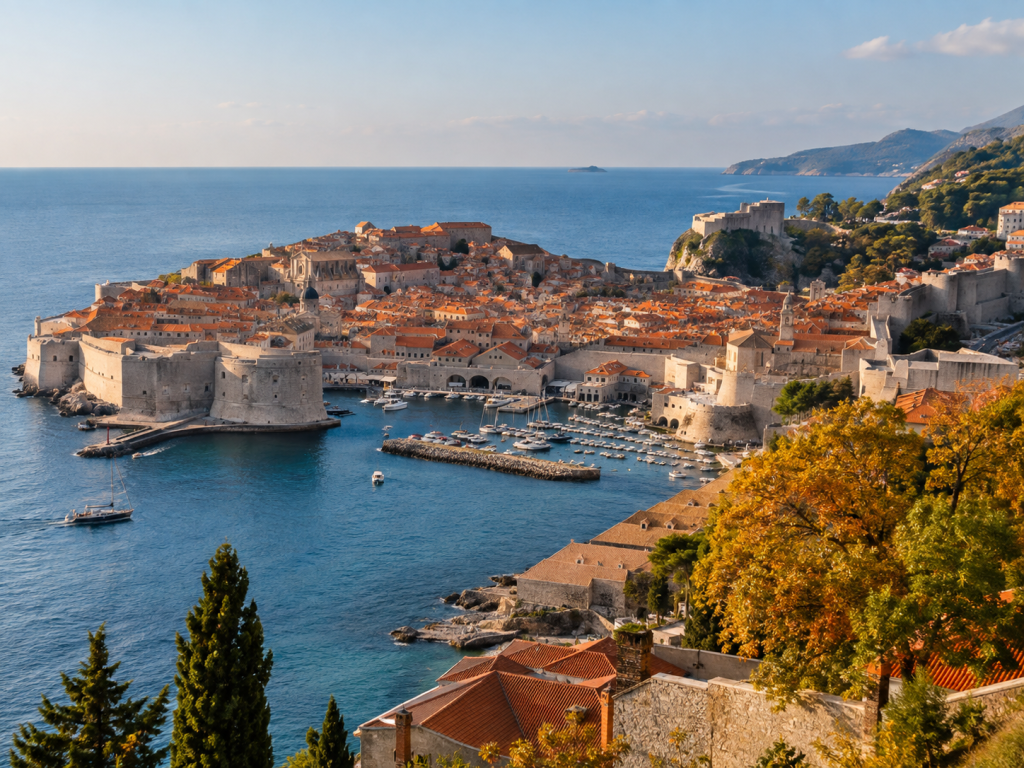
Dubrovnik, Croatia
Dubrovnik during peak summer can feel extremely crowded.
Fall offers a different experience.
September still provides a chance for warm Adriatic weather while visitor numbers begin declining. By October, the Old Town often feels calmer and sightseeing becomes considerably more pleasant.
Walk Dubrovnik’s famous city walls, explore limestone streets, ride the cable car when operating, or simply sit near the waterfront without feeling like half the continent arrived simultaneously.
Keep in mind that some coastal tourism businesses reduce hours as the season progresses.
Best time: September through early October
Best for: Coastal scenery, history, couples, photography
Copenhagen, Denmark
If your fall fantasy involves cozy cafés rather than vineyards, Copenhagen has entered the chat.
Cool temperatures suit the city’s whole personality. Wander around Nyhavn, explore colorful neighborhoods, visit museums, browse bakeries, and experience the Danish love of warm, comfortable interiors.
Parks and gardens add autumn color, while shorter days make restaurants, candlelit cafés, and indoor attractions especially inviting.
Copenhagen isn’t where I’d go searching for guaranteed sunshine. It is where I’d go if I wanted fall to feel wonderfully fall-ish.
Best time: September through October
Best for: Food, design, cafés, cozy city breaks
Bergen and the Norwegian Fjords
Norway might be one of Europe’s most dramatic autumn destinations.
Start in Bergen, where colorful historic buildings sit between mountains and water. From there, continue toward destinations such as Flåm and the fjords of western Norway.
Autumn can bring colorful mountainsides, quieter landscapes, and fewer visitors than summer. September and October remain possible months for fjord trips, although some cruises and attractions operate fewer departures later in the season. (Visit Norway)
The weather can change quickly, particularly in mountainous areas, so flexible planning is especially valuable here.
Best time: September through early October
Best for: Fjords, scenic trains, mountains, photography
Which European Destination Is Best for Fall Foliage?
If fall colors are your main priority, I would put Lake Bled, Bavaria, the Scottish Highlands, Hallstatt, Prague, and the Dolomites near the top of the list.
Timing matters enormously.
Higher elevations and northern destinations generally change earlier, while southern and lower-elevation areas may remain green later into October.
Peak color can also shift from year to year depending on temperatures and rainfall, so nobody can promise that one particular Tuesday will deliver the world’s most cooperative maple tree.
For a foliage-focused trip, keeping your itinerary somewhat flexible is ideal.
Where Is Warmest in Europe During Fall?
For warmer temperatures, head south.
Seville, Granada, Lisbon, southern Portugal, southern Italy, Greek islands, Malta, Cyprus, and Spain’s Canary Islands are among the strongest possibilities.
Tenerife is particularly notable for travelers chasing late-season sunshine, with warm conditions often lasting well into November. (Lonely Planet)
September gives you the greatest chance of combining beach weather with smaller post-summer crowds.
October is usually better for sightseeing-heavy itineraries because temperatures are less intense.
By November, southern Europe becomes increasingly attractive compared with much of northern Europe.
Where Should You Visit in Europe in September?
September is ideal for places where summer weather tends to linger.
Good options include:
- Lisbon and Porto
- Dubrovnik
- Tuscany
- Bavaria
- Lucerne
- The Scottish Highlands
- Bergen and the Norwegian fjords
September is particularly appealing if you want outdoor activities because days are longer than later in fall and many seasonal attractions are still operating.
Where Should You Visit in Europe in October?
October is the superstar month for classic autumn atmosphere.
My strongest picks would be:
- Prague
- Lake Bled
- Hallstatt
- Budapest
- Vienna
- Alsace
- Burgundy
- Tuscany
- Amsterdam
- Seville
This is when you can combine colorful scenery in central Europe with pleasantly warm sightseeing weather farther south.
Where Should You Visit in Europe in November?
November requires slightly more strategic planning.
The days become noticeably shorter across Europe, mountain regions can begin moving into winter conditions, and some seasonal attractions may close.
But city trips can be excellent.
Consider:
- Vienna
- Budapest
- Prague
- Paris
- Lisbon
- Seville
- Granada
Late November also begins blending into Europe’s Christmas-market season in several cities, making it possible to experience both late fall and early festive atmosphere on the same trip.
How Long Do You Need for a Fall Europe Trip?
A single week is plenty if you focus on one region rather than attempting the famous “seven countries before breakfast” itinerary.
For seven days, combinations such as Prague and Vienna, Salzburg and Hallstatt, Ljubljana and Lake Bled, or Porto and the Douro Valley work particularly well.
With 10 to 14 days, you can build a more relaxed regional itinerary.
For example, you could combine Prague, Vienna, Salzburg, and Budapest or create an Italian fall trip connecting the Dolomites, Tuscany, and Umbria.
Slow travel works especially well during autumn because seasonal weather occasionally changes plans. Having two nights somewhere instead of racing toward another city every morning makes the experience considerably more enjoyable.
Your suitcase will appreciate the reduced emotional trauma too.
What Should You Pack for Europe in Fall?
Layers are your best friend.
Temperatures can change dramatically between morning and afternoon, particularly during September and October.
I would pack comfortable walking shoes, lightweight layers, a warm sweater or fleece, a packable waterproof jacket, a compact umbrella, and at least one warmer outer layer for northern or mountain destinations.
If you’re visiting southern Europe in September, include lighter clothing too.
Always check the forecast shortly before departure rather than relying entirely on historical averages. Europe’s autumn weather has opinions.
Is Europe Worth Visiting in Fall?
Absolutely.
In fact, fall may be one of the best seasons to experience Europe if you’re not specifically planning a beach vacation.
We get cooler sightseeing weather, beautiful landscapes, harvest-season food, atmospheric cities, and often a noticeably calmer experience than during the height of summer.
Europe’s official tourism guidance similarly highlights shoulder-season travel for its slower pace, reduced congestion at many attractions, and seasonal experiences such as grape harvests. (Visit Europe)
And the variety is fantastic.
You can spend September beside the Mediterranean, chase golden forests through central Europe in October, then finish November drinking something warm beneath Vienna’s increasingly festive lights.
Final Thoughts on Visiting Europe in Fall
Choosing the best places to visit in Europe in fall really comes down to what kind of autumn you’re chasing.
For classic fall foliage, start with Bavaria, Lake Bled, Hallstatt, Prague, or the Scottish Highlands.
For vineyards and food, look toward Tuscany, Umbria, Burgundy, Alsace, Porto, and the Douro Valley.
For warmer weather, choose Lisbon, Seville, Granada, or Dubrovnik earlier in the season.
And if cozy cafés, grand architecture, museums, and long city walks sound perfect, Vienna, Budapest, Amsterdam, Paris, Copenhagen, and Prague are difficult to beat.
Personally, I’d happily take Europe in October over the busiest weeks of summer. Give me golden trees, comfortable walking weather, a café table, and an old European street and I’ll find a way to stay there until dinner.
Fall doesn’t simply make Europe beautiful.
It gives us a completely different way to experience it.
This travel video covers southern Germany, northern Italy, southern Spain, Switzerland, Copenhagen, Prague, Edinburgh, Ireland and other destinations:
EUROPE IN THE FALL | 10 Amazing Autumn Destinations to NOT Miss in Europe!